How does the energy output from shell hydrogen fusion compare to the star's previous core fusion rate?
Answer
It is significantly greater than the previous core fusion rate.
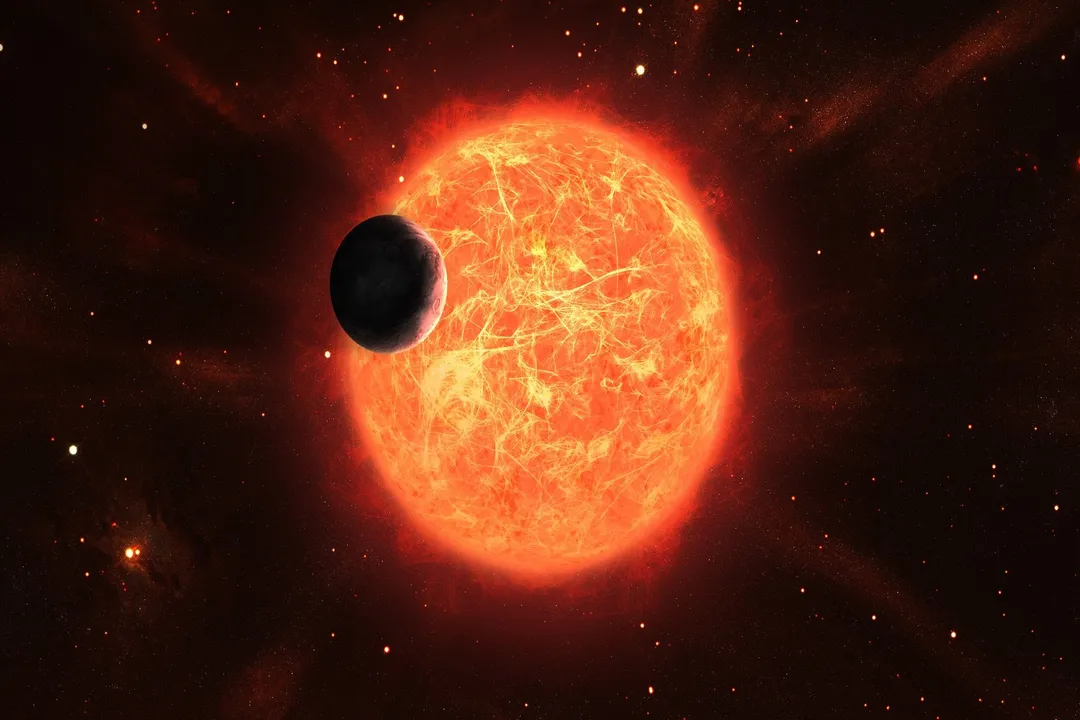
When hydrogen fusion ceases in the core and shifts to a shell surrounding the contracting helium core, the nature of the star's energy generation changes drastically. This new shell burning process produces energy at a much higher rate than the steady fusion that occurred during the main sequence phase. This surge in energy output translates directly into intense outward pressure, which is powerful enough to inflate the star's immense outer envelope to supergiant proportions.
Related Questions
What initial mass range ($M_{\odot}$) qualifies a star to become a Red Supergiant?What fusion event triggers the expansion phase away from the main sequence for massive stars?What causes the surface cooling responsible for imparting the 'red' color to a red supergiant?What is the typical surface temperature range for a red supergiant on the H-R diagram?How long does the transient existence of a red supergiant phase typically last relative to its main sequence lifetime?Which elements are fused in the successive, nested shells surrounding the core of a very massive red supergiant?What final element forms in the core that causes the star to instantly lose its primary energy source?If a progenitor star was among the most massive (exceeding 20 to 25 solar masses), what remnant forms after the supernova explosion?What is the primary difference between a star evolving into a Red Giant versus a Red Supergiant?How does the energy output from shell hydrogen fusion compare to the star's previous core fusion rate?