What is required to precisely measure the incredibly small wavelength shifts for nearby stars?
Extremely high-resolution spectrographs mounted on powerful telescopes.
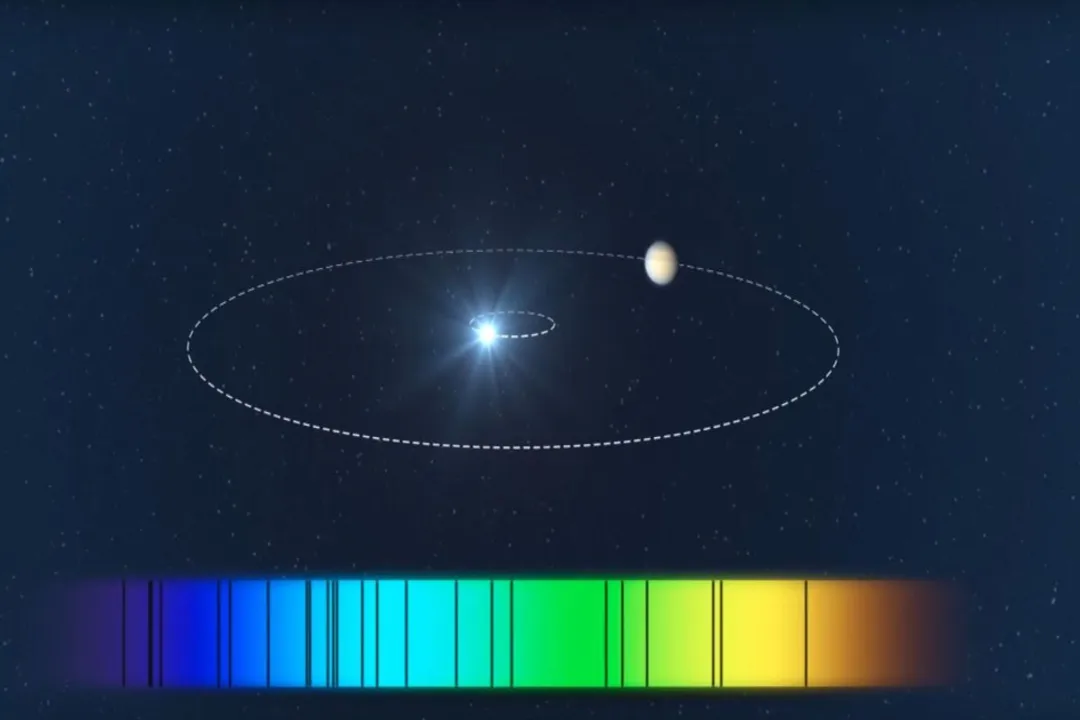
The magnitude of the wavelength shift is directly proportional to the star's velocity, but for stars in our local stellar neighborhood, even those moving quickly, the resulting blueshifts or redshifts are exceedingly small. For instance, a star moving at 20 kilometers per second results in a fractional shift of only about 67 parts per million. This level of minuscule variation cannot be detected by simple visual inspection or basic instruments. Achieving this required precision in measurement necessitates the use of sophisticated, high-resolution spectrographs attached to powerful telescopes capable of discerning these minute deviations in spectral line locations.
#Videos
Light and Motion: the Doppler Effect - YouTube