What causes the Habitable Zone to slowly migrate outward over cosmic time?
Answer
Increase in stellar luminosity as stars age
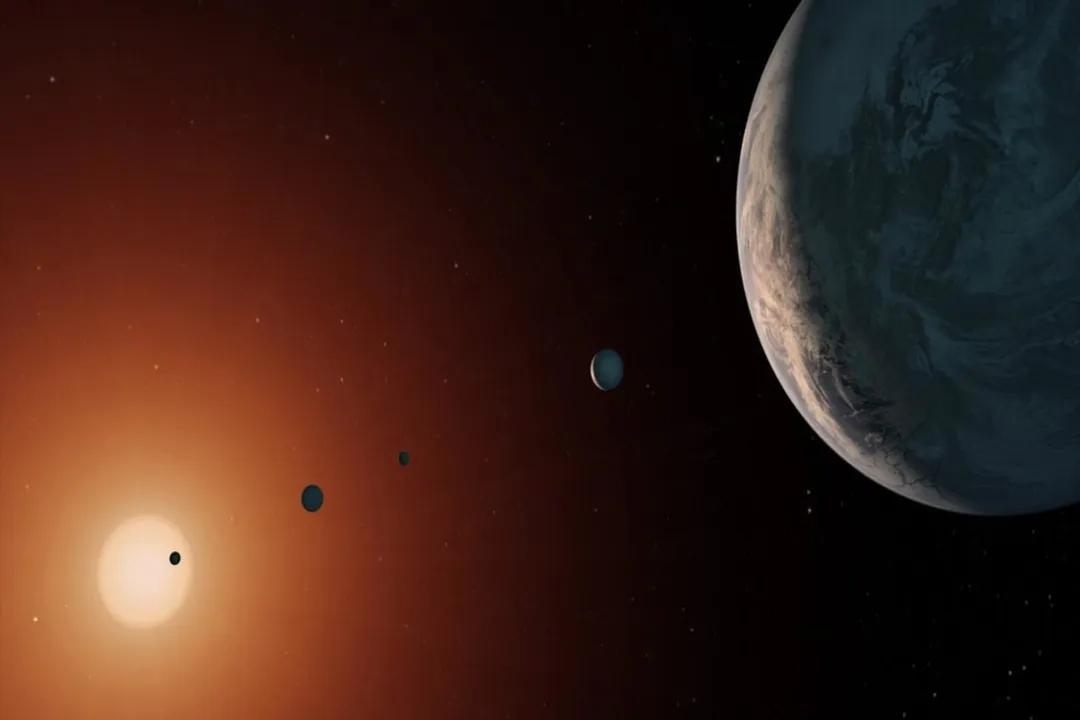
The phenomenon known as HZ drift describes the dynamic shifting of the habitable zone over deep time, primarily driven by the evolution of the host star. As stars age, their internal processes cause them to become gradually brighter and hotter, increasing their luminosity output. For instance, the Sun is predicted to become significantly brighter over the next billion years. This increased energy output means that the orbital radius necessary to maintain liquid water must also increase. Consequently, the entire habitable zone slowly expands outward, potentially warming a planet previously locked in ice, while rendering worlds that were once habitable too hot.
#Videos
What Is the Habitable Zone? - YouTube
Related Questions
What is the alternative name for the Habitable Zone, defined by optimal conditions for liquid water?What determines the inner edge of the Habitable Zone according to planetary physics models?How does a massive, hot A-type star influence the location of its Habitable Zone compared to the Sun?What geological process acts as a planetary thermostat via carbon cycling in a truly habitable world?What significant orbital hazard do planets face when orbiting in the tight Habitable Zone of M-dwarf stars?How does the Optimistic Habitable Zone differ from the Conservative Habitable Zone definition?What causes the Habitable Zone to slowly migrate outward over cosmic time?Why is a small world like Mercury unsuitable for maintaining surface liquid water over billions of years?What crucial function does Earth’s protective magnetosphere, generated by its core, provide regarding habitability?Which characteristic of a planet covered entirely in bright white ice would shift its calculated habitable distance relative to the star?