What causes 'empty magnification' when using a telescope eyepiece?
Magnifying an image beyond the telescope's resolution limit.
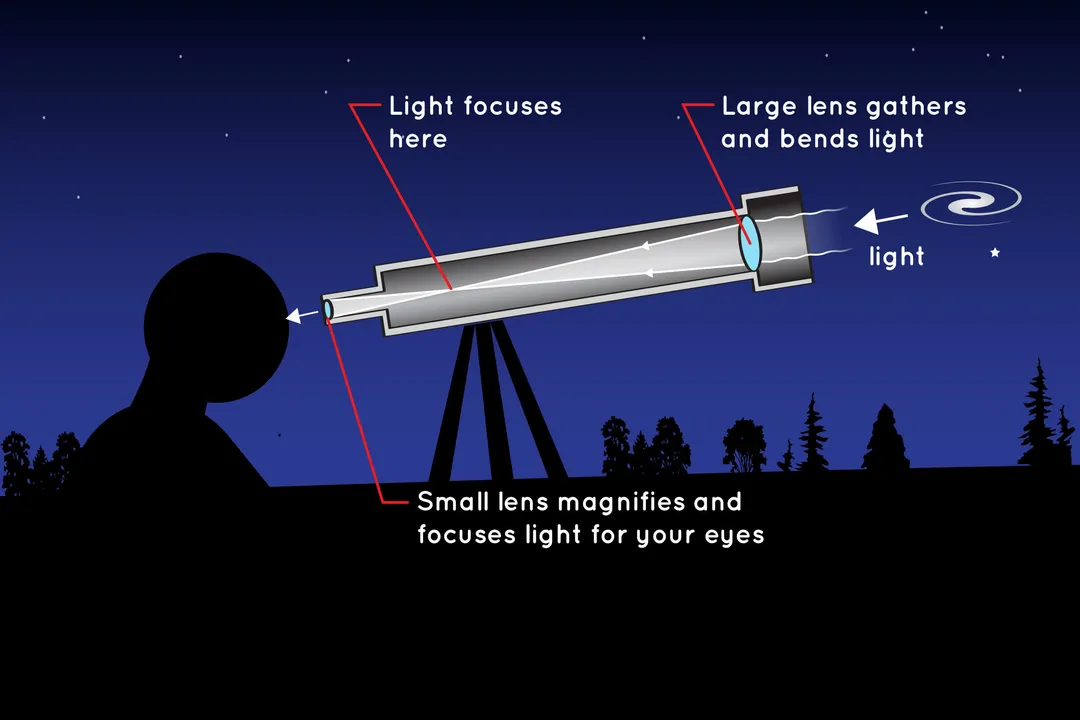
Magnification describes how much larger an image appears, while resolution describes the ability to distinguish fine, separate details within that image; the latter is fundamentally limited by the telescope's aperture size. If the optical system cannot resolve fine structures in the focused image—meaning the detail is not present to begin with due to resolution limits—then inserting an eyepiece with excessively high power will only serve to enlarge the existing blur. This condition, where increasing the eyepiece power yields no discernible increase in clarity or structural separation, is termed empty magnification. True optical performance relies on achieving sufficient light gathering and high resolution before maximizing magnification.