In mid-latitude areas, what weather condition often follows the appearance of a high-level lunar halo?
Answer
An approaching warm front signaling wetter conditions
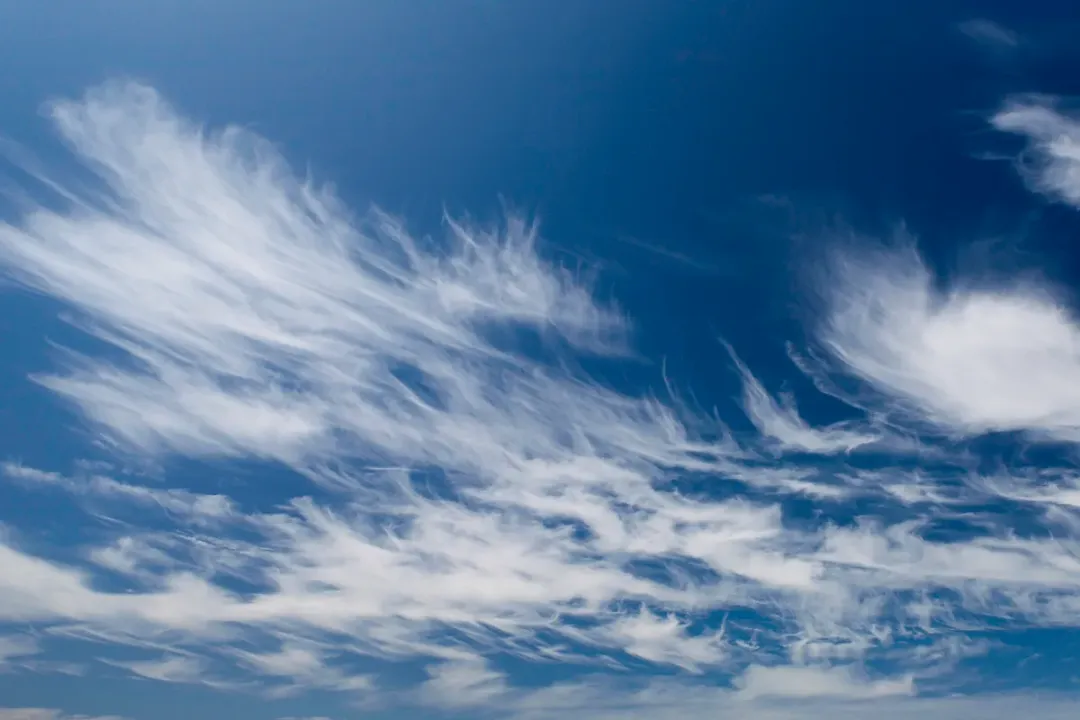
The appearance of a lunar halo acts as an ancient, natural barometer because it signifies the presence of high-altitude cirrostratus clouds. In many mid-latitude regions, the advance of these high clouds often precedes the arrival of a warm front. This warm front carries deeper layers of moisture that are still high up but will eventually descend to lower altitudes, leading to the eventual onset of rain or snow, usually within the next day or so. Observing the halo provides an early indication that weather patterns are transitioning toward wetter conditions.
#Videos
What is a lunar halo? - YouTube
Related Questions
What optical phenomenon causes the luminous ring known as a lunar halo?What precise minimum angle reflects light refraction by common hexagonal ice crystals in a lunar halo?Which specific types of high-level clouds produce the ice crystals necessary for a lunar halo?Approximately how many times the Moon's diameter must be stacked to span the $22^ ext{o}$ circle outward to the ring?What inherent geometric property of ice dictates the $22^ ext{o}$ minimum deviation angle for the halo?In mid-latitude areas, what weather condition often follows the appearance of a high-level lunar halo?For the $22^ ext{o}$ halo to form, what specific angle must the exit face be relative to the entry face of the hexagonal ice crystal?What observation suggests turbulence within the high cloud layer when viewing a lunar halo?Besides the $22^ ext{o}$ halo, what other, larger halo is sometimes produced by moonlight interacting with ice crystals?What angular span, measured by a fully stretched hand at arm's length, can help an observer estimate the $22^ ext{o}$ halo?