Why does an expanding star like the Sun appear reddish during its late stage?
Answer
Expansion causes the surface gas to cool down significantly as it moves away from the hot core
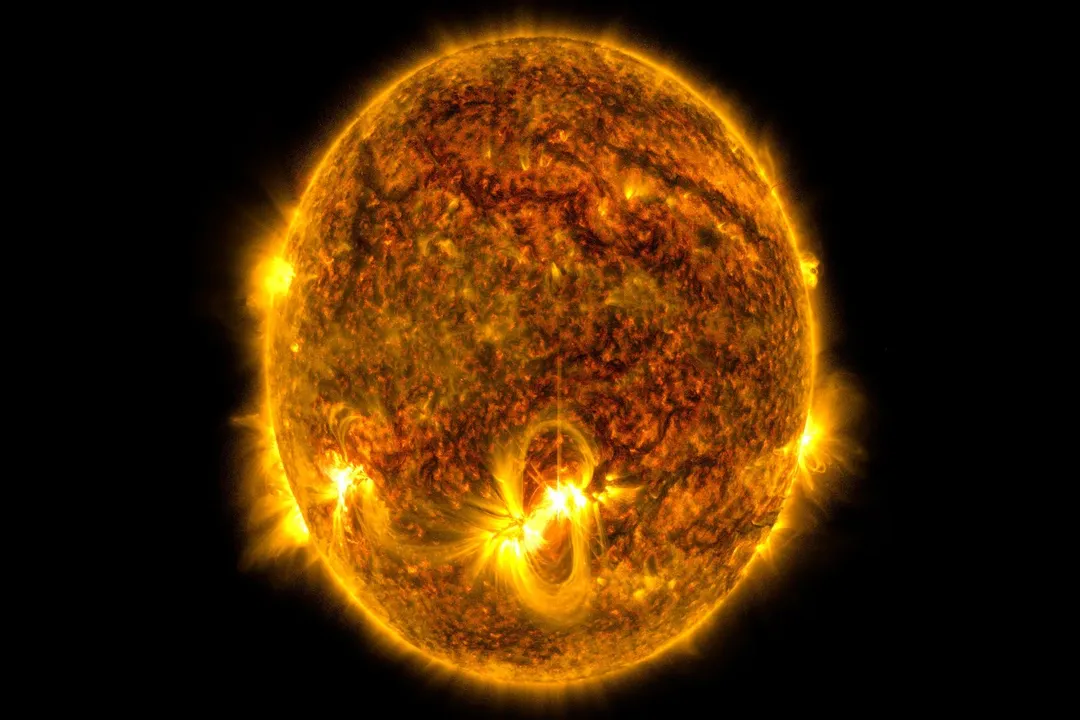
As the star swells dramatically due to the powerful outward push from the newly active hydrogen shell burning, its outer layers of gas expand substantially. This expansion moves the surface material much farther away from the central hot core. The increased distance results in significant cooling of the surface gas. Since cooler surfaces emit light at longer wavelengths, a star that was previously yellow or white (like the Sun) will exhibit a reddish hue, characterizing it as a Red Giant or Supergiant, despite having a much higher overall luminosity due to its enormous size.
#Videos
Why Do Red Giant Stars Get Bigger? - YouTube
Related Questions
What balance maintains stability during a star's Main Sequence phase?What event immediately forces the core of a star to begin contracting after the Main Sequence?Where does hydrogen ignition begin after the core runs out of hydrogen fuel?Why does an expanding star like the Sun appear reddish during its late stage?How do the *size* and *mass* of a star generally change during its late expansion stage?How does the energy output from hydrogen shell burning compare to core hydrogen burning?How large might a Sun-like star swell during expansion, potentially affecting neighboring planets?What primary conversion reaction occurs in the center of a star during the Main Sequence phase?What happens to the pressure and temperature within the core during gravitational collapse after hydrogen depletion?What characteristic process occurs in the core of stars significantly more massive than the Sun during their continuous contraction phase?