Which two stars in the Big Dipper serve as the 'Pointers' for locating Polaris?
Answer
Merak and Dubhe, forming the outer edge of the bowl
Navigators historically relied on easily recognizable asterisms to find Polaris, and the Big Dipper (part of Ursa Major) is key to this method. Specifically, one must identify the two stars that form the outer edge of the bowl, opposite the handle. These stars are named Merak and Dubhe, and they are collectively referred to as the 'Pointers.' By drawing an imaginary line connecting Merak and Dubhe and extending it outwards, travelers can trace a path directly toward Polaris, which is located about five times the distance separating the two pointer stars.
#Videos
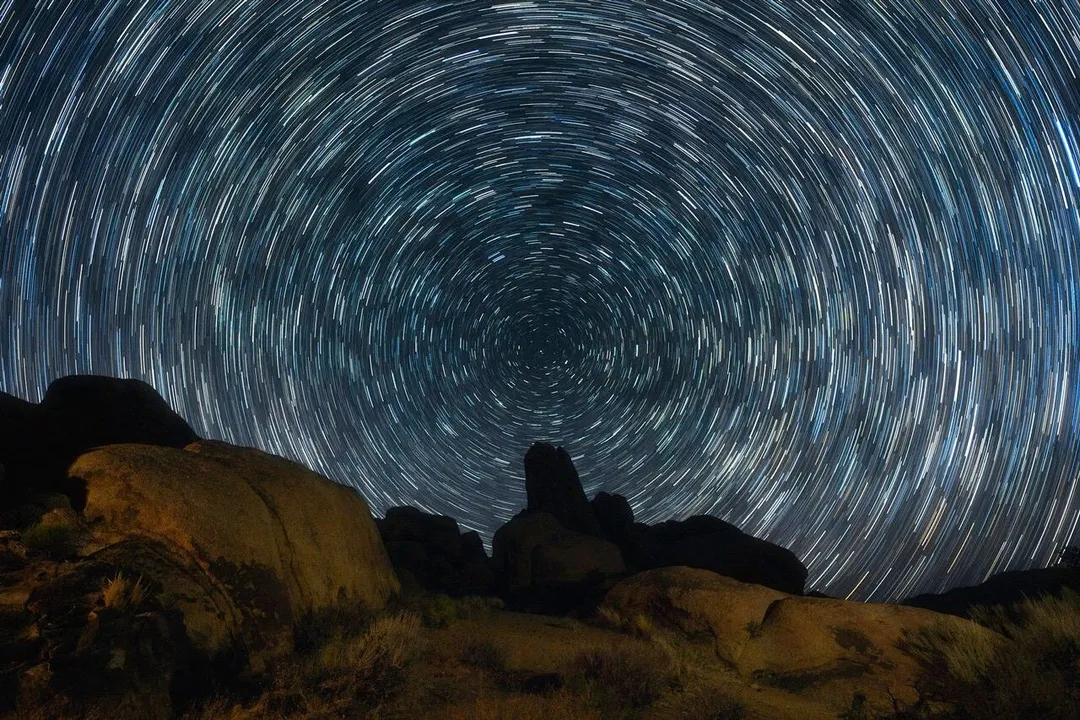
Why is the North Star Always in the Same Place? - YouTube
Related Questions
How far from the true North Celestial Pole is Polaris located?What mechanical process causes the apparent rotation of the entire celestial sphere?How long does it take for the Earth's axis wobble, known as precession, to complete one full cycle?Which two stars in the Big Dipper serve as the 'Pointers' for locating Polaris?In celestial navigation for the Northern Hemisphere, what is the relationship between Polaris's altitude and the observer's latitude?Which specific star served as the North Star approximately 3000 years ago due to the slow Earth wobble?What key characteristic differentiates the South Celestial Pole from the North Celestial Pole for navigation?How does the distance Polaris moves relative to a bright star like Sirius during an evening observation?What is the actual composition of the star known as Polaris?What distance extension factor should one follow when tracing an imaginary line from the Big Dipper's 'Pointers' to find Polaris?