How long does it take for the Earth's axis wobble, known as precession, to complete one full cycle?
Answer
Roughly 26,000 years
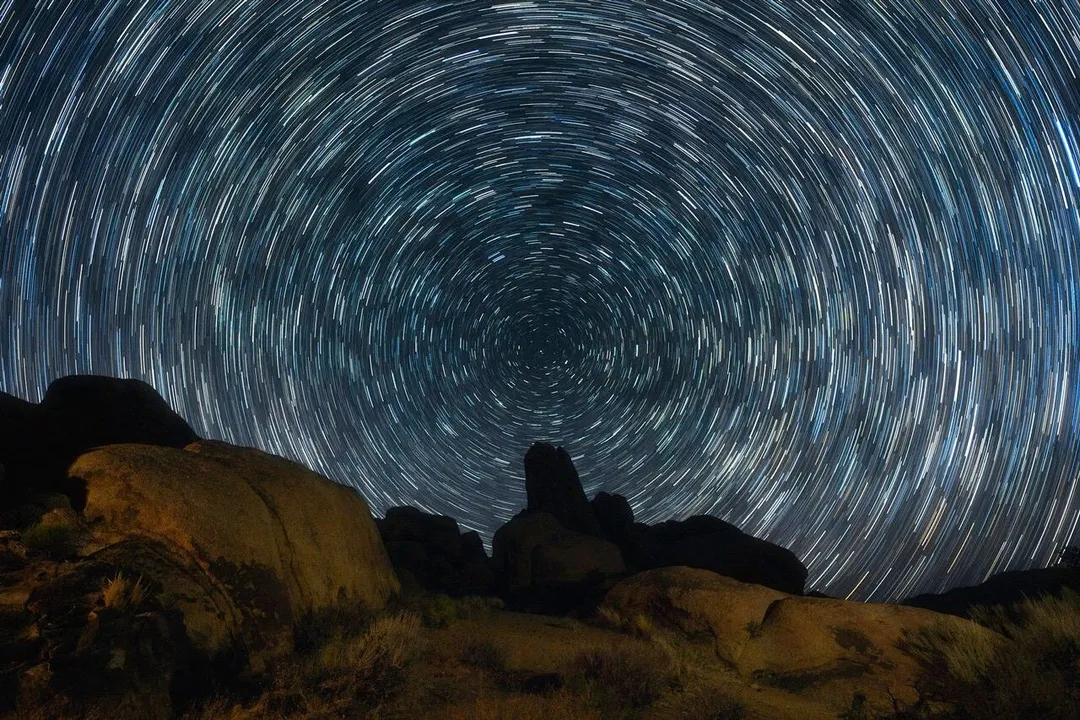
The Earth's orientation in space is not eternally fixed relative to the distant stars; it undergoes a slow, majestic wobble known as the precession of the equinoxes. This phenomenon is caused by external gravitational forces, specifically the tugging by the Sun and Moon on the Earth’s equatorial bulge, which acts like a slowly wobbling, slightly unbalanced spinning top. This entire cycle of sweeping the celestial pole across a gigantic circle in the sky is extremely long, requiring approximately 26,000 years to complete one full revolution. This slow shift means that the star holding the title of North Star changes over vast stretches of time.
#Videos
Why is the North Star Always in the Same Place? - YouTube
Related Questions
How far from the true North Celestial Pole is Polaris located?What mechanical process causes the apparent rotation of the entire celestial sphere?How long does it take for the Earth's axis wobble, known as precession, to complete one full cycle?Which two stars in the Big Dipper serve as the 'Pointers' for locating Polaris?In celestial navigation for the Northern Hemisphere, what is the relationship between Polaris's altitude and the observer's latitude?Which specific star served as the North Star approximately 3000 years ago due to the slow Earth wobble?What key characteristic differentiates the South Celestial Pole from the North Celestial Pole for navigation?How does the distance Polaris moves relative to a bright star like Sirius during an evening observation?What is the actual composition of the star known as Polaris?What distance extension factor should one follow when tracing an imaginary line from the Big Dipper's 'Pointers' to find Polaris?