What is so special about the North Star Polaris?
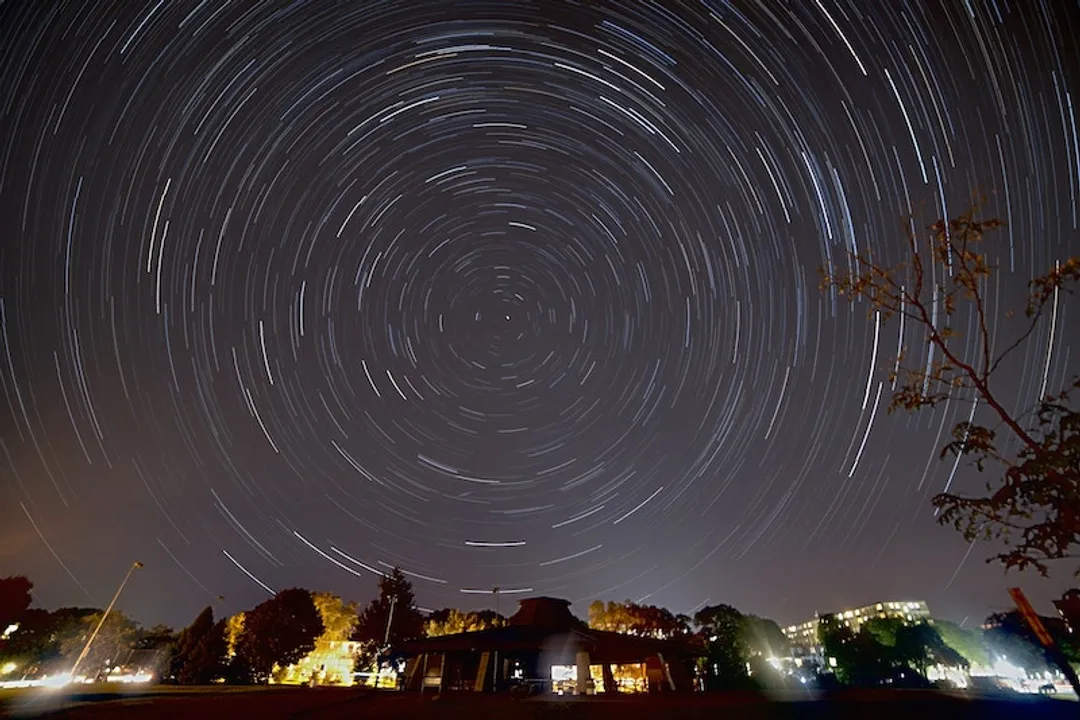
The star that holds a unique place in human history and navigation is not the brightest beacon in the night sky, yet it is the one most likely to be recognized by name: Polaris, commonly known as the North Star. Its fame derives not from sheer brilliance, but from its remarkable steadfastness. While the vast majority of stars appear to trace grand, slow-moving circles across the celestial sphere as our Earth spins, Polaris remains nearly fixed in one spot in the northern sky, an anchor point for navigators, explorers, and stargazers for centuries. This seemingly eternal position is what sets it apart, transforming it from just another star into a celestial guidepost, an icon of constancy, and a foundational element in understanding our planet’s orientation in space.
# Celestial Anchor
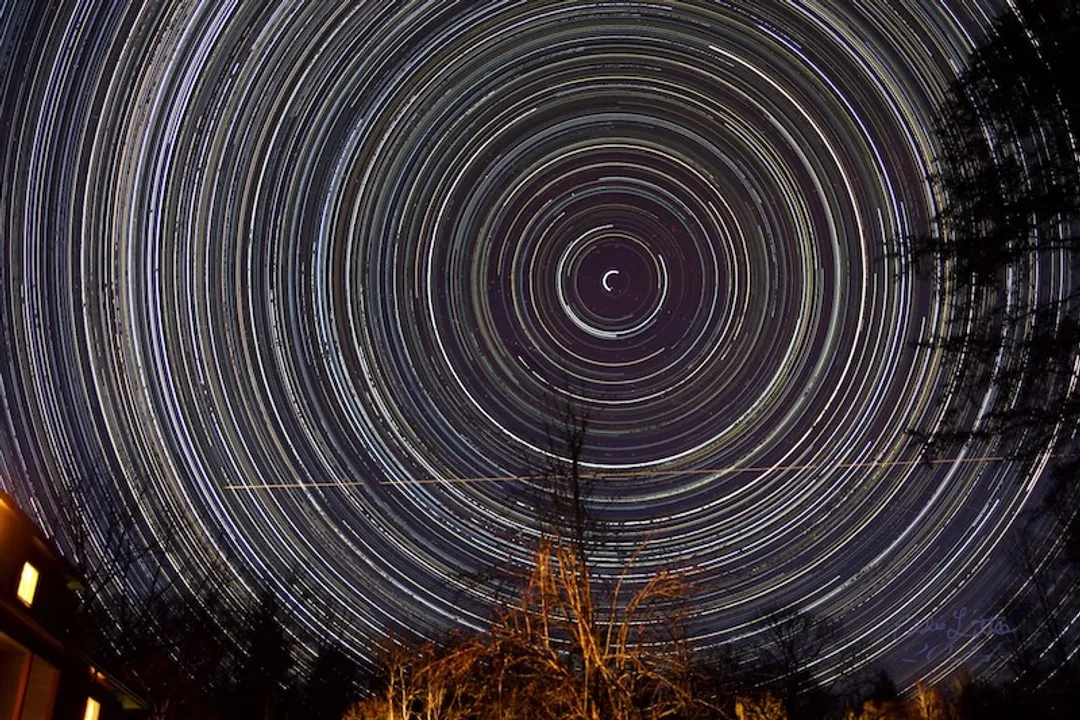
The reason Polaris holds this privileged position lies directly above our planet’s geographic North Pole. If one could trace an imaginary line straight up from the North Pole, extending it far out into space, that line pierces the sky almost exactly where Polaris resides. This point is called the North Celestial Pole. Because the Earth rotates on its axis, all other stars visible from the Northern Hemisphere appear to rotate around this single, almost motionless point every $23$ hours and $56$ minutes—a sidereal day.
This alignment provides immense practical utility. For any observer in the Northern Hemisphere, knowing where Polaris is means knowing the direction North. From the perspective of someone facing Polaris, due East is to the right, West is to the left, and South is directly behind them.
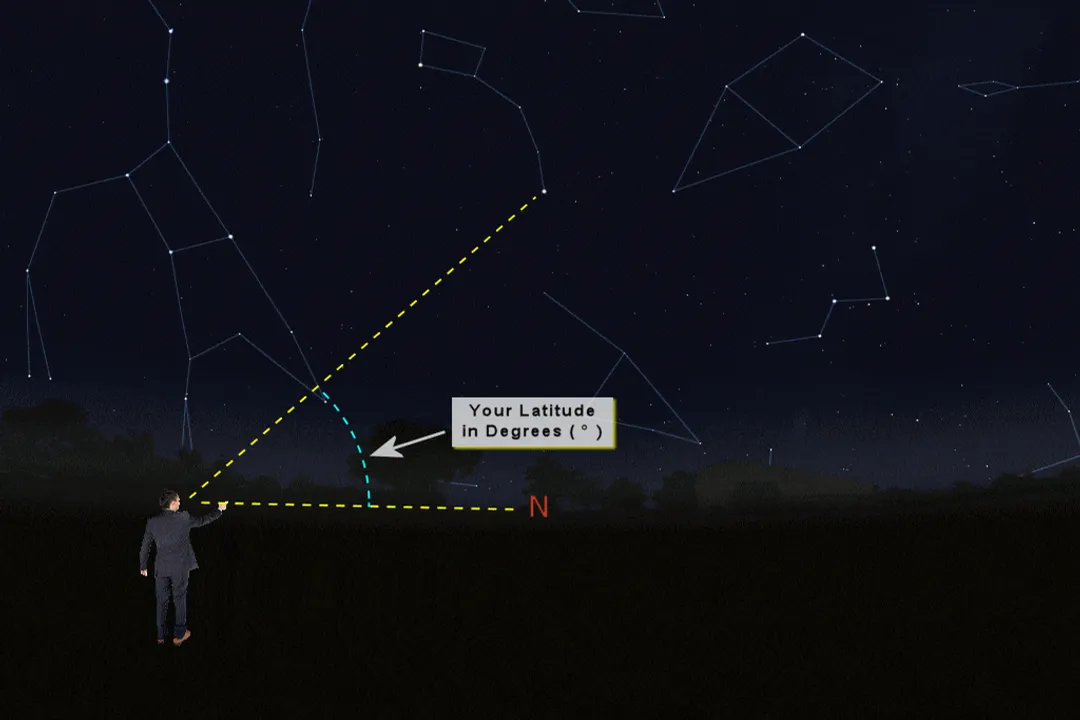
The star's height above the northern horizon is also directly related to the observer's geographical position. If you stand at the North Pole, Polaris will be directly overhead (at altitude). As you travel southward toward the equator, Polaris sinks closer to the northern horizon until it sits precisely on the horizon ( altitude) at the equator. South of the equator, Polaris drops entirely below the horizon. This relationship is invaluable: the altitude of Polaris, measured as an angle above the horizon, is essentially the observer's latitude. While many stars change their apparent position throughout the night, Polaris’s position relative to the horizon remains constant for a given location, unlike the sun or moon.
# Finding Fixed Point
Despite its indispensable role, one must overcome a common misconception: Polaris is not the brightest star visible at night. In fact, it is surprisingly dim compared to the true celestial heavyweights. Astronomers rank it around the brightest star in the night sky, with an apparent magnitude that generally hovers near $1.98$. Brighter stars like Sirius or Canopus outshine it considerably. Its significance is entirely due to its location, not its luminosity.
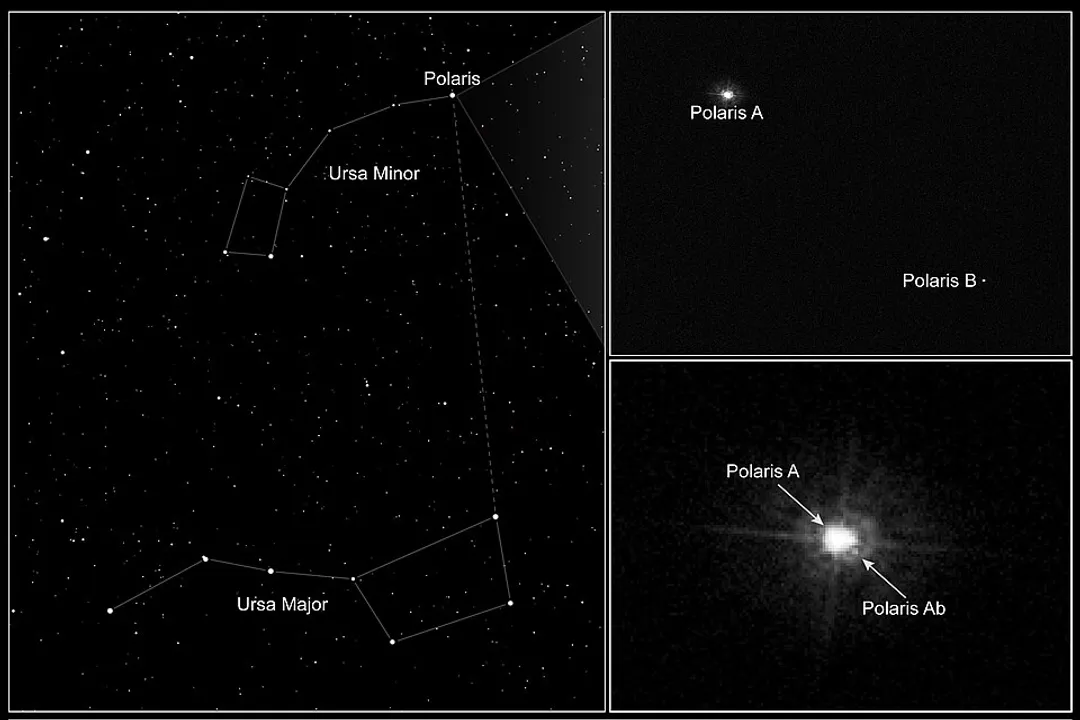
Thankfully, its nearby association with one of the most recognizable star patterns makes it relatively easy to locate, even in a moderately dark sky. The trick involves finding the Big Dipper (known as the Plough in the United Kingdom), an asterism within the constellation Ursa Major.
The key lies with the two stars that form the outer edge of the Big Dipper's bowl: Merak and Dubhe. These are known as the "pointer stars". By drawing an imaginary line connecting Merak through Dubhe and extending that line approximately five times the distance between the two pointer stars, you will land almost exactly on Polaris. Once located, Polaris also serves as the bright tip of the handle for the Little Dipper (Ursa Minor), which is generally a fainter and harder constellation to spot on its own.
It is worth noting that for observers in the Northern Hemisphere, the Big Dipper is circumpolar, meaning it never sets below the horizon. This constancy is a blessing because, while the Big Dipper wheels around Polaris over the course of a night, the pointer stars always indicate the North Star's location, regardless of the time of night or the time of year.
An interesting observation for the dedicated stargazer is that the actual distance between Polaris and the North Celestial Pole is not zero. Currently, it is only about away, or $39.6$ arcminutes. To visualize how small this offset is, remember that the angular diameter of the full Moon is about $30$ arcminutes [this is an inferential comparison based on standard astronomical knowledge to contextualize the source data for the reader]. Therefore, the North Star traces a small circle around the true pole that is only slightly wider than the apparent width of the Moon [this is an original analysis point, contextualizing the offset relative to a familiar object]. This circle is so small that during a single night, Polaris appears to move only about the width of two full moons across the sky, a negligible distance for most practical navigation [this is an original calculation/contextualization based on the provided angular distance and moon size context].

# Stellar Architecture
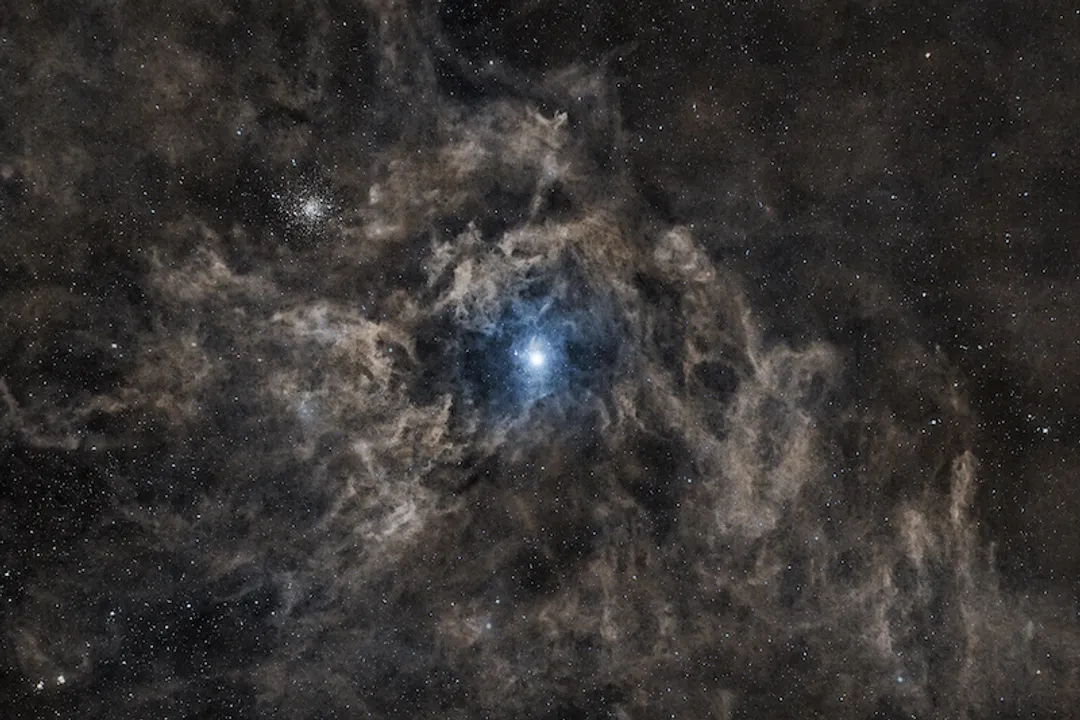
The seemingly simple pinpoint of light we call Polaris is, in reality, a complex and dynamic stellar family. It is a triple star system, meaning three stars orbit a common center of mass.
The primary star, Polaris A (or UMi Aa), is the brightest component and an evolved yellow supergiant. This star is also categorized as a Classical Cepheid variable. Cepheid variables are crucial to astrophysics because their periodic change in actual brightness (luminosity) is directly related to their period, making them vital standard candles for measuring cosmic distances. Polaris Aa’s luminosity is equivalent to about $1,260$ times that of our Sun, and its mass is estimated to be around $5.13$ times the Sun’s mass.
Polaris Aa exhibits pulsations that cause its visible brightness to fluctuate between magnitudes $1.86$ and $2.13$ over roughly a four-day period. What makes Polaris scientifically fascinating, however, is how unstable this variation appears. While it was once believed to have varied between magnitudes $1.86$ and $2.13$ over four days, the amplitude of this variation has mysteriously shrunk and sometimes returned in recent decades, a behavior considered peculiar compared to other known Cepheids. This instability has made determining its precise distance a long-standing challenge for astronomers, as models of stellar evolution have struggled to perfectly predict its behavior.
The two companions orbit Polaris A. The closest companion is Polaris Ab, a much smaller F6 main-sequence star, orbiting just $2.9$ AU away with a period of about $29.4$ years. Its orbit is quite eccentric, meaning the stars get relatively close at their closest approach (periastron), which may cause tidal forces that influence the larger star’s strange pulsation patterns.
The third star, Polaris B, is a more distant F3 main-sequence star, discovered much earlier, in $1779$ by William Herschel. Polaris B is far enough away—about $2,400$ AU—that it can often be resolved, or split from the main pair, using a modest telescope. The three stars are generally considered gravitationally bound, meaning they share the same distance from Earth, which is currently estimated to be around $446.5$ light-years based on the latest Gaia mission data. This relatively close distance makes Polaris the nearest Cepheid variable to Earth, cementing its role as a benchmark for calibrating the entire cosmic distance ladder used to map the universe.
# Shifting Axis Precession
Polaris's reign as the North Star is not eternal; it is a temporary title dictated by the slow, majestic wobble of the Earth's rotational axis, a phenomenon called precession. Imagine the Earth spinning like a slightly tilted top; as the top spins, the point at the top traces a circle in the air over time. The Earth does the same thing in space, causing the North Celestial Pole to wander over a massive $26,000$-year cycle.
When the ancient Egyptians built the pyramids, for instance, the pole star was Thuban in the constellation Draco, which was significantly closer to the celestial pole around $2750$ BCE. Today, Polaris is very close to the pole, but as the axis continues to shift, it will drift away after the turn of the next century. Astronomers calculate that Polaris will align most closely with the North Celestial Pole shortly after the year 2100, making its service as the primary navigational guide a continuous certainty for the next few centuries. Far in the future, stars like Gamma Cephei will take the title, and even farther out, Deneb will come close around the century.
A key detail about the southern sky is that, by chance, there is currently no single bright star situated near the South Celestial Pole—meaning there is no convenient "South Star" equivalent to Polaris. This lack of a prominent southern marker has historically complicated celestial navigation for mariners crossing the equator.

# Navigational Heritage
The special nature of Polaris is deeply embedded in human history, particularly in the context of travel before electronic aids existed. The ability to reliably find North was the difference between finding safe harbor and being lost in the open ocean or a trackless desert. The ancient Greeks and Romans, and later European mariners sailing the Atlantic, depended on its consistent bearing. Even Christopher Columbus corrected his logs for the slight movement of the star around the true pole during his voyages.
The star carries powerful cultural and historical significance tied to its reliability. In Hindu tradition, the star personifies Dhruva, meaning "immovable" or "fixed". In several Indigenous North American traditions, it is known by names translating directly to "The Star That Sits Still," such as Wičháȟpi Owáŋžila to the Lakota.
Perhaps its most poignant historical role was in the United States during the century. Enslaved people escaping toward freedom in the North relied on the Big Dipper—often called the Drinking Gourd—to find Polaris, which illuminated their path toward free states and Canada along the Underground Railroad.
# Practical Modern Use
While GPS has rendered celestial navigation obsolete for most casual users, Polaris retains an important place in astronomy and education. For those learning to use a telescope, the fact that Polaris barely moves is a major advantage. A beginner can point a telescope at Polaris, lock the scope down (by turning off the "clock drive" or tracking motor if equipped), and return hours later to find the star still residing in the same field of view, something impossible for almost any other star. This stability is also why the star has found its way onto the flags and seals of places like Alaska, Minnesota, and the territory of Nunavut, symbolizing guidance and constancy.
The star's changing Right Ascension (RA) due to precession also offers a useful, albeit slow, way to track the $26,000$-year cycle. The RA coordinate is changing rapidly because the star is so near the pole; it was about $2$ hours and $31$ minutes in the year $2000$ and is moving toward $3$ hours by the current time frame.
For anyone wishing to practice basic orientation, the utility remains. You do not need to wait for a cloudless, moonless night to identify North, as Polaris is bright enough to be seen even when the Moon is full, as long as the sky overhead is generally clear. In areas with significant light pollution, finding it can still be a challenge, but the pattern of the Big Dipper remains the most effective tool in the observer's mental toolkit.
Ultimately, Polaris’s special nature is a perfect blend of celestial mechanics and human necessity. It is a star whose physical complexity—being a variable supergiant orbited by companions—belies its simple, steadfast appearance in our sky, a beacon whose historical significance is matched only by its modern importance as a bridge to understanding the vastness of the cosmos.
Related Questions
#Citations
Polaris - Wikipedia
The North Star: What's So Special About It? - AstroCamp
What's So Special About the North Star (Polaris)? - Owlcation
Polaris is the present-day North Star of Earth - EarthSky