Which element is the most abundant by mass in the gaseous component of most nebulae?
Answer
Hydrogen
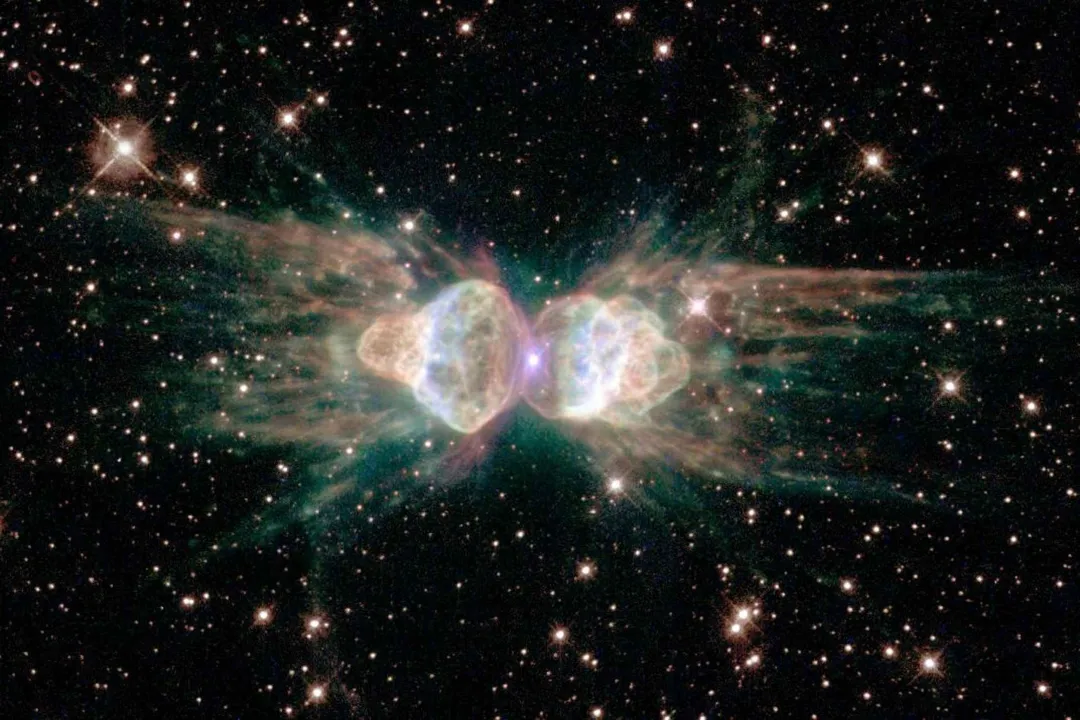
The gaseous component of most nebulae mirrors the overall elemental composition of the universe, meaning it is dominated by the lightest elements created during the Big Bang. Hydrogen is confirmed to be the most abundant element by a significant margin, accounting for approximately 75% of the total mass in a typical star-forming region. Following hydrogen, helium is the second most abundant, making up about 24% of the mass. The remaining approximately 1% consists of heavier elements, referred to by astronomers as 'metals,' which includes essential elements like oxygen, nitrogen, and carbon, originating from previous stellar generations.
Related Questions
What are the two primary ingredients constituting a vast nebula?Which element is the most abundant by mass in the gaseous component of most nebulae?What physical state of gas produces the bright glow observed in an emission nebula?Why does a reflection nebula primarily display a blue appearance due to light interaction?Which key constituents form the solid cosmic dust grains within nebulae?What is included in the definition of "metals" according to astronomers when analyzing nebula metallicity?In cold, dense molecular clouds, what state does the gas predominantly exist as?What chemical signature characterizes the material ejected in a Planetary Nebula?How does the density of a typical nebula compare to the best laboratory vacuum achievable on Earth?What specific elemental content distinguishes the highly energetic plasma of a Supernova Remnant?