How does the density of a typical nebula compare to the best laboratory vacuum achievable on Earth?
Answer
It is far less dense than the best laboratory vacuum.
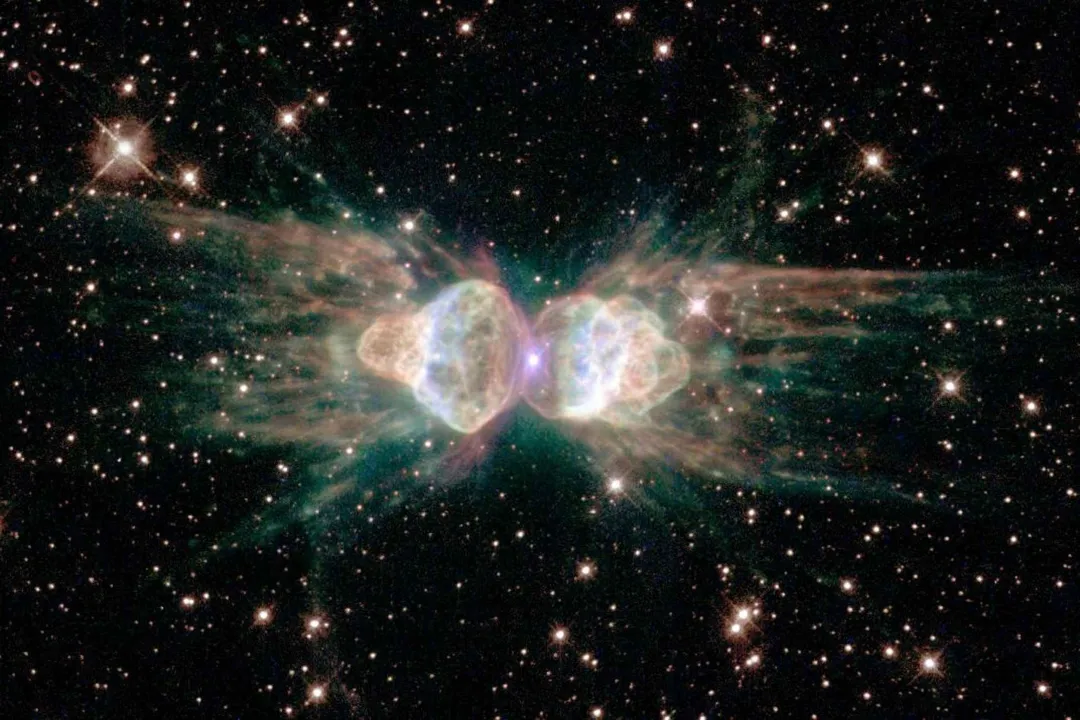
Although nebulae are described as vast interstellar clouds where matter is highly concentrated relative to the near-vacuum between galaxies, this concentration is still incredibly diffuse when compared to terrestrial standards. A typical nebula might only contain a few hundred atoms per cubic centimeter. This concentration is significantly lower than what can be achieved in the best laboratory vacuums created on Earth. While this relative concentration within the nebula allows astronomers to observe structure and processes, the overall environment is almost a perfect vacuum by everyday standards, being many orders of magnitude less dense than the best man-made vacuums.
Related Questions
What are the two primary ingredients constituting a vast nebula?Which element is the most abundant by mass in the gaseous component of most nebulae?What physical state of gas produces the bright glow observed in an emission nebula?Why does a reflection nebula primarily display a blue appearance due to light interaction?Which key constituents form the solid cosmic dust grains within nebulae?What is included in the definition of "metals" according to astronomers when analyzing nebula metallicity?In cold, dense molecular clouds, what state does the gas predominantly exist as?What chemical signature characterizes the material ejected in a Planetary Nebula?How does the density of a typical nebula compare to the best laboratory vacuum achievable on Earth?What specific elemental content distinguishes the highly energetic plasma of a Supernova Remnant?