What physical state of gas produces the bright glow observed in an emission nebula?
Answer
Plasma resulting from electron recombination after excitation.
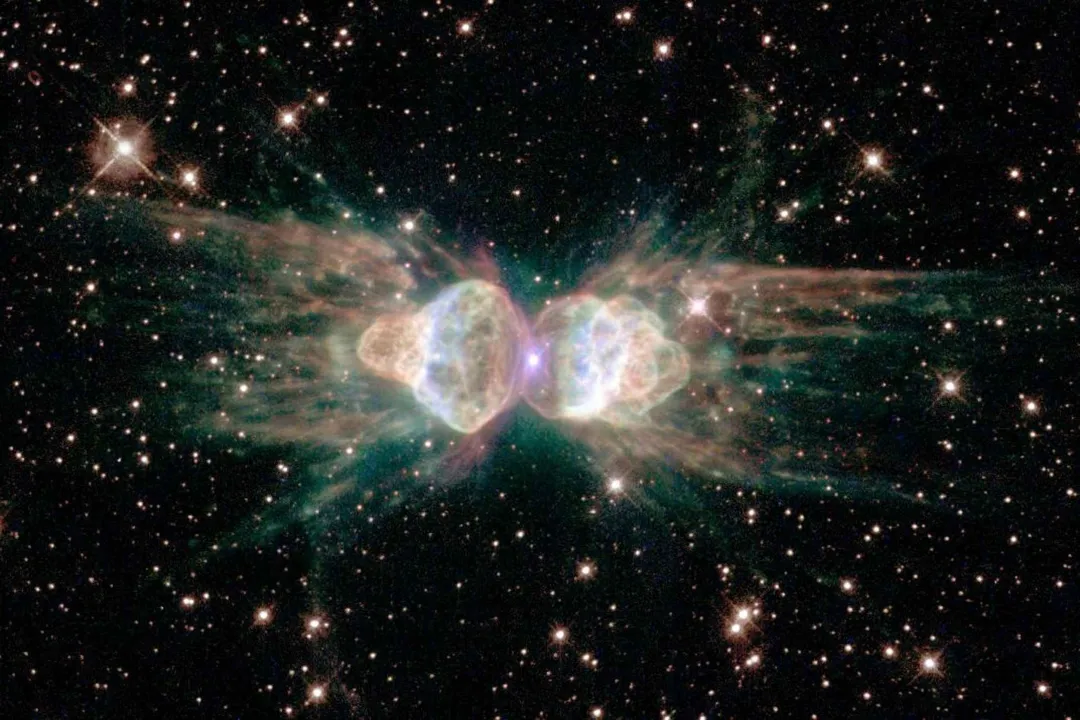
An emission nebula is characterized by its bright, intrinsic glow, which results from intense local energy input, typically ultraviolet radiation from nearby hot, young stars. This radiation excites the gas, stripping electrons from the atoms, which forces the gas into a plasma state—a superheated, ionized gas. As the excited electrons recombine with the atoms, they release energy in the form of photons across the electromagnetic spectrum. For instance, the recombination of ionized hydrogen often results in the characteristic reddish glow seen in these types of nebulae. This process is distinct from scattering light or having gas simply exist in a cold, molecular state.
Related Questions
What are the two primary ingredients constituting a vast nebula?Which element is the most abundant by mass in the gaseous component of most nebulae?What physical state of gas produces the bright glow observed in an emission nebula?Why does a reflection nebula primarily display a blue appearance due to light interaction?Which key constituents form the solid cosmic dust grains within nebulae?What is included in the definition of "metals" according to astronomers when analyzing nebula metallicity?In cold, dense molecular clouds, what state does the gas predominantly exist as?What chemical signature characterizes the material ejected in a Planetary Nebula?How does the density of a typical nebula compare to the best laboratory vacuum achievable on Earth?What specific elemental content distinguishes the highly energetic plasma of a Supernova Remnant?