What is a nebula and what does it contain?
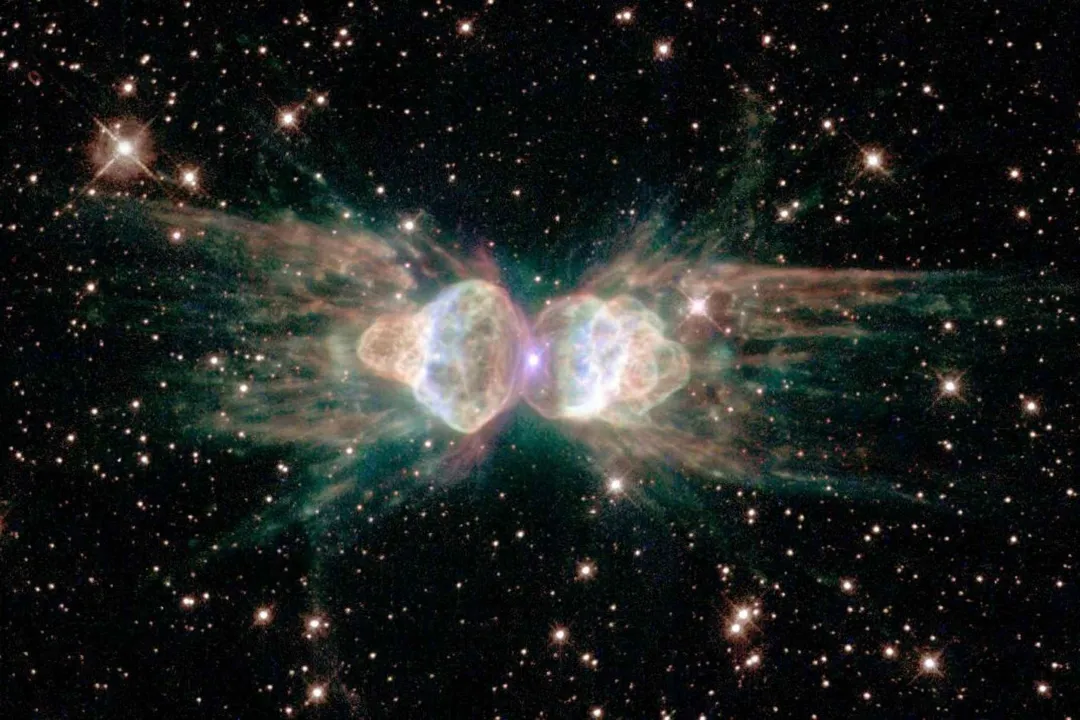
The term nebula immediately conjures images of immense, colorful cosmic clouds floating in the blackness of space, but what these structures actually are extends far beyond simple appearance. At its most fundamental, a nebula is an interstellar cloud of dust, hydrogen, helium, and other ionized gases. [1][2][10] These cosmic structures are significant because they represent the building blocks of the universe: they are either the material from which new stars are being forged, or they are the scattered remnants of stars that have already lived out their lives. [1][5][2] They are not empty voids but active regions, spanning vast stretches of the cosmos, sometimes hundreds of light-years across. [1]
# Cloud Origin
The word itself offers a clue to its ancient interpretation. Nebula is the Latin word for cloud. [10] Ancient observers, looking up with the naked eye or early telescopes, saw fuzzy patches in the sky that did not look like stars or planets, resembling terrestrial clouds or smudges. [5] While we now understand their composition is entirely different from Earth's weather systems, the descriptive name stuck. [10] These are not single, uniform objects; rather, they are vast, diffuse collections of matter spread across distances that defy easy comprehension. [1]
# Gas Dust
The material making up a nebula is fundamentally simple yet incredibly complex in its interaction. The primary components are gases, overwhelmingly hydrogen and helium—the universe's most abundant elements. [2][1] Hydrogen alone often accounts for the majority of the mass. [1] Interspersed within this gas are microscopic particles known as cosmic dust. [1][2] This dust is not like household lint; it is composed of heavier elements synthesized inside older stars, including silicates, iron, and complex carbon compounds. [2]
One interesting observation when studying these compositions is the sheer emptiness that still characterizes them. Even the densest parts of a nebula are far less dense than the best vacuum we can achieve in a laboratory on Earth. [1] Consider this: if you took a cubic meter of air on our planet and compressed it to match the density of a dark nebula, it would still contain trillions of times more particles than the nebula itself. The density difference is massive, meaning gravity needs immense volumes of space and time to overcome the internal pressure and allow structures to condense. [1] This low density is why nebulae appear vast and transparent rather than opaque, allowing background light to pass through unless the concentration of dust is extreme. [2][5]
# Stellar Nurseries
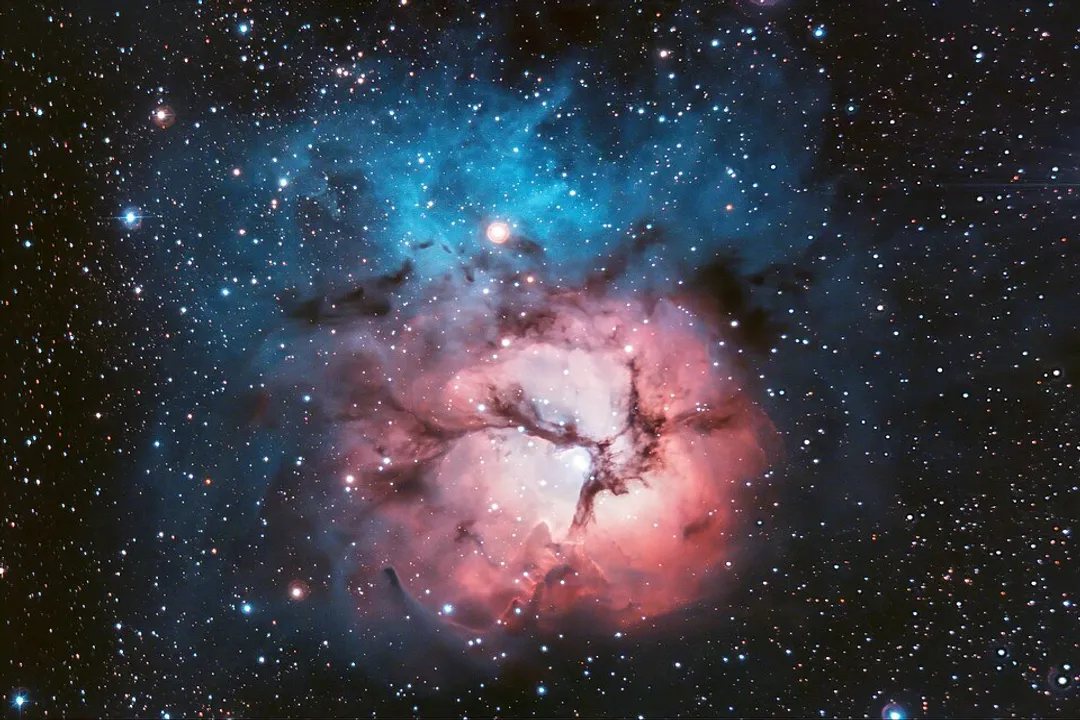
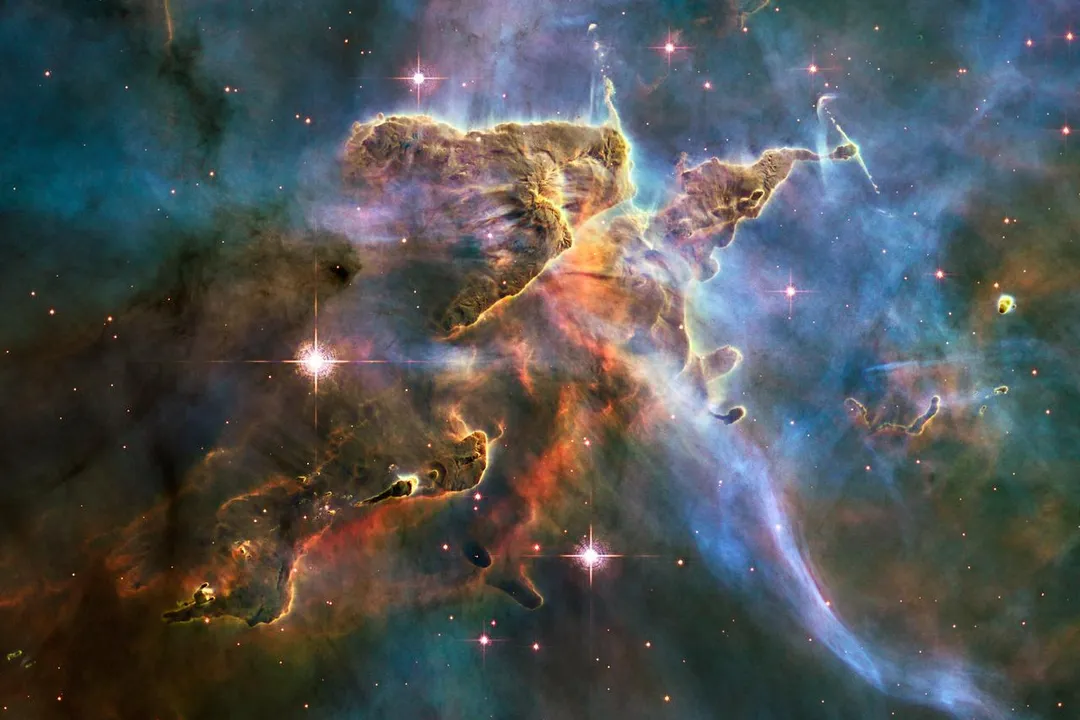
The most dynamic and perhaps most famous role of nebulae is acting as stellar nurseries. [1] Within these massive clouds, gravity begins to assert itself over the enormous stretches of space and time. [1] As regions within the cloud accumulate more mass, their gravitational pull increases, drawing in surrounding gas and dust until the material collapses inward. [1] This collapse heats the central region, eventually forming a protostar. [1] The energy released by the forming star system then begins to carve out cavities in the surrounding cloud, marking the end of the process for that specific stellar birth region. [1] The Orion Nebula is a prime, well-observed example of this active process in action. [5]
# Nebula Varieties
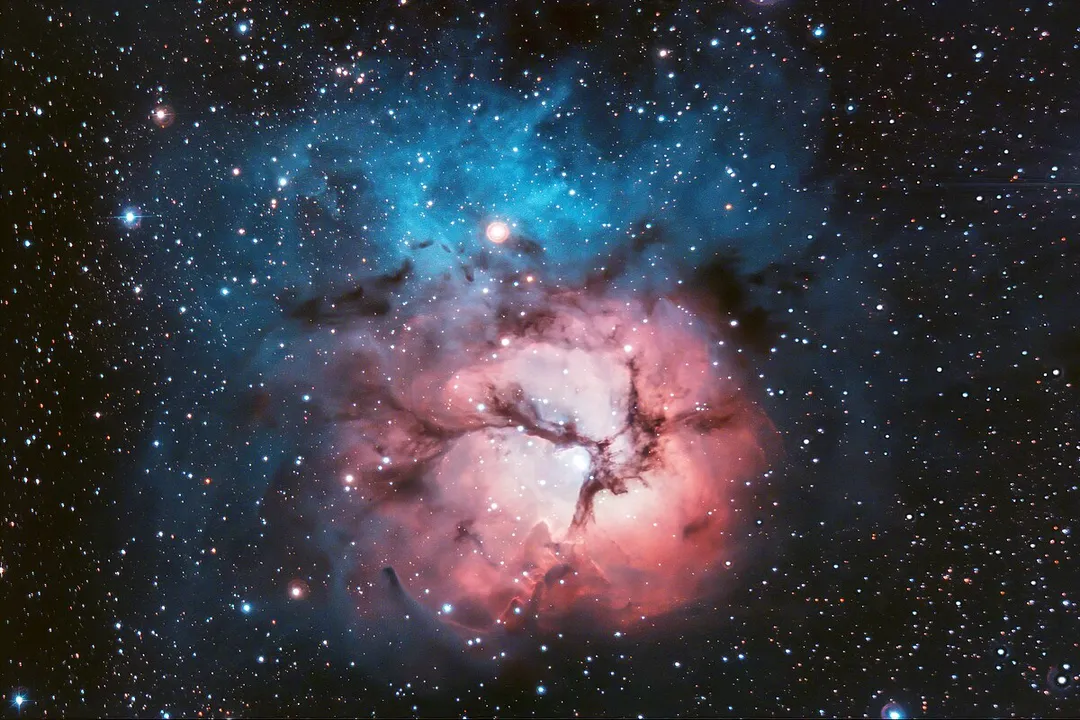
Nebulae are generally classified based on how they interact with light, which dictates their appearance through a telescope. [5] Understanding these categories helps astronomers pinpoint whether they are observing a formation site or the aftermath of a stellar death. [2][10]
Here is a breakdown of the main types:
| Type | Primary Cause | Appearance/Color |
|---|---|---|
| Emission Nebula | Hot, newly formed stars emit ultraviolet radiation that ionizes nearby gas. [2] | Glows brightly, often appearing red due to excited hydrogen atoms. [2][5] |
| Reflection Nebula | Light from nearby stars is simply scattered or reflected by the dust grains. [5] | Typically appears blue because shorter blue wavelengths of light are scattered more effectively than red. [1][5] |
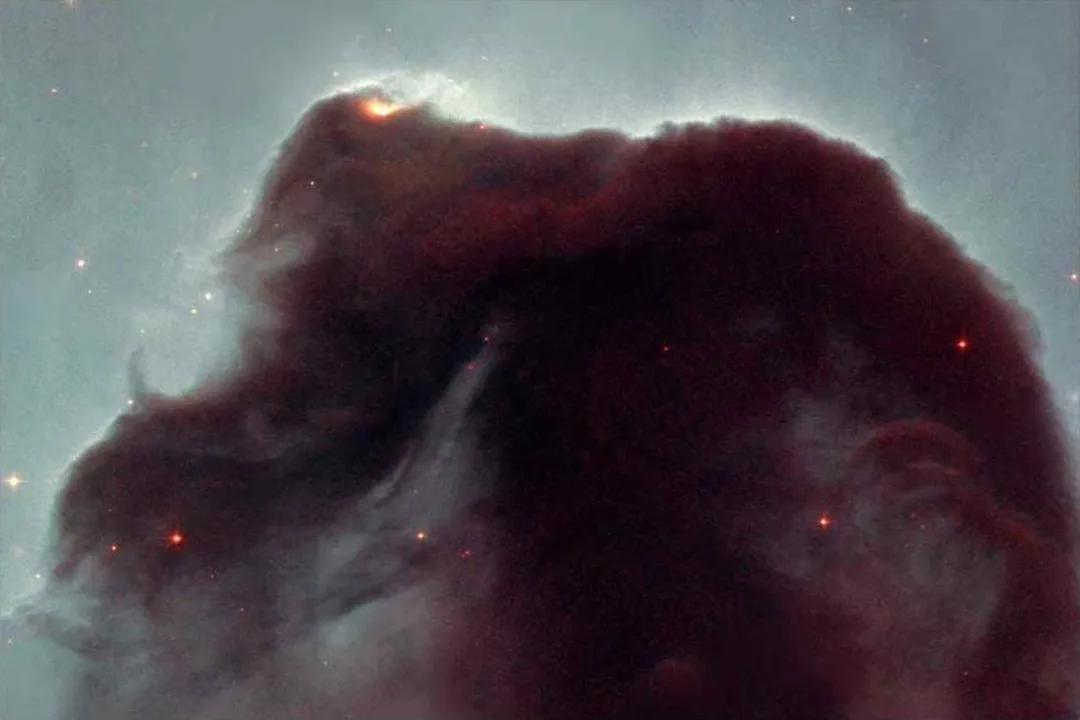
| Dark Nebula | Dense clouds of dust that obscure or block light from objects behind them. [2][5] | Appears as a dark patch or silhouette against a brighter background star field or emission nebula. [2] |
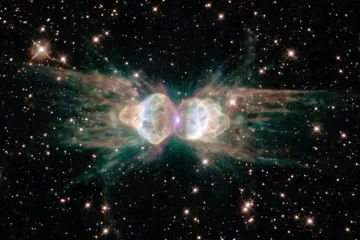
| Planetary Nebula | Outer layers of a medium-sized star (like our Sun) expelled at the end of its life. [2][10] | Often beautiful, colorful shells or rings centered on a small white dwarf star. [2] |
| Supernova Remnant | The expanding debris cloud resulting from a massive star's catastrophic explosion. [2] | Irregularly shaped, glowing shell composed of high-energy particles. [2] |
# Emission Reflection
The visual difference between an emission nebula and a reflection nebula is a direct result of the physical process occurring, not just the color of the dust present. [5]
In an emission nebula, the gas itself is energized. A nearby young, hot star emits intense ultraviolet radiation. [2] This radiation strips electrons from the gas atoms—a process called ionization. [2] When those electrons recombine with the atoms, they release energy as visible light, causing the nebula to glow from within. [2][5] Because hydrogen is so abundant, this recombination frequently results in the characteristic deep red hue we associate with many famous nebulae. [5]
Conversely, a reflection nebula doesn't emit its own light in this way; it acts more like a cosmic dust cloud illuminated by a nearby, but not hot enough, star. [1] The light we see is reflected starlight. The preferential scattering of blue light is due to the same principle that makes our sky blue on Earth: smaller particles scatter shorter (blue) wavelengths of light more efficiently than longer (red) wavelengths. [1][5] Therefore, if a nebula appears predominantly blue, it is likely reflecting the light of nearby stars rather than glowing from its own internal energy. [1]
# Stellar Corpses
Not all nebulae are places of creation; many are monuments to stellar demise. When a star like our Sun exhausts its fuel, it swells into a red giant and gently puffs away its outer layers of gas. [10] This ejected material forms a planetary nebula. [2] Despite the name, these formations have absolutely no connection to planets; the term is purely historical, derived from their initial telescopic appearance. [2][10] The central core of the former star remains as a hot, exposed white dwarf, whose intense radiation lights up the expanding shell of gas. [2]
For much more massive stars, the end is far more dramatic—a supernova. [2] The subsequent explosion blasts the star's material outward at incredible speeds, creating a supernova remnant. [2][10] These remnants, such as the famous Crab Nebula, are regions of high-energy particles and shockwaves that persist for tens of thousands of years, seeding the interstellar medium with the heavier elements forged during the star's life and the explosion itself. [2]
It is worth noting the lifespan disparity between these two death events. A planetary nebula expels its material relatively gently over tens of thousands of years, maintaining a somewhat ordered structure before diffusing into the general interstellar medium. [10] A supernova remnant, however, is an energetic event that scatters material incredibly fast and violently, creating complex structures that interact strongly with existing magnetic fields for far longer durations, acting as powerful accelerators for cosmic rays before finally dissipating. [2]
# Vast Scale
When we speak of the size of nebulae, we are dealing with scales that defy everyday intuition. [1] A relatively small emission nebula, like the Orion Nebula, is still about 24 light-years across. [5] Larger complexes can measure hundreds of light-years in diameter. [1] Light travels at approximately $300,000$ kilometers per second, meaning that light from a nebula even 100 light-years away left that structure a century ago. [1] This scale means that what we observe is essentially a snapshot of the nebula's condition in the past, making real-time changes nearly impossible to detect without extremely long-term, precise monitoring. [1]
These clouds are the repositories for the elements necessary for life. Nearly all elements heavier than hydrogen and helium—the carbon in our bodies, the iron in our blood, the silicon in the rocks beneath our feet—were created inside stars and subsequently scattered into space by stellar winds or supernovae, eventually gathering into these new nebulae. [2] In essence, every atom in our bodies, save for the primordial hydrogen, has passed through a nebula and been recycled by a star before arriving here. [2]
#Videos
What Is A Nebula? - YouTube
Related Questions
#Citations
What Is a Nebula? | NASA Space Place – NASA Science for Kids
Nebula - Wikipedia
What is a nebula? - Space Center Houston
What Is A Nebula? - YouTube
ELI5: What is a Nebula, and why is it not absorbed into some ...
What are key facts about nebulae in space? - Facebook
Nebula - ESA/Hubble
Nebula
Nebula: Definition, location and variants - Space
Nebula | Definition, Types, Size, & Facts - Britannica