What does a nebula contain?
A nebula, often appearing as an ethereal cloud, smudge, or glowing structure in the night sky, is fundamentally a vast interstellar cloud of dust and gas. [1][2][5] These regions represent the raw building blocks of the cosmos, the material from which stars and planets are ultimately formed. [1][5][6] Far from being empty space, a nebula is a place where matter is highly concentrated relative to the near-vacuum between galaxies, yet still incredibly diffuse by Earth standards. [3] Understanding what these celestial clouds contain is key to grasping stellar life cycles and galactic evolution. [2][5]
# Basic Makeup
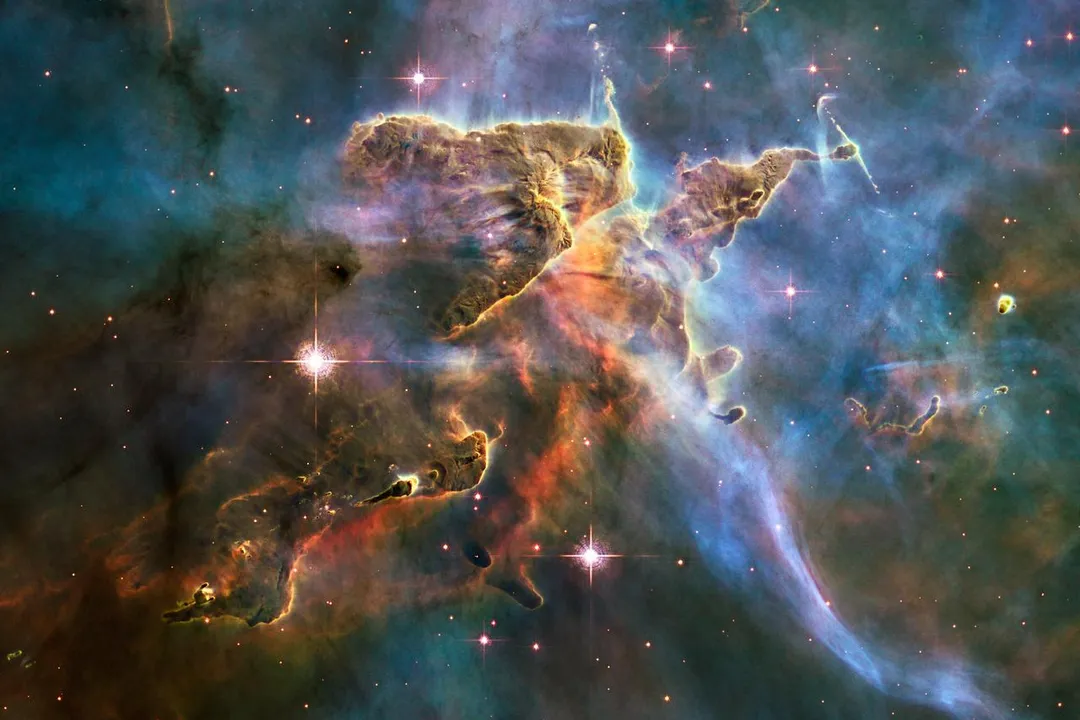
At the most basic level, the contents of any nebula can be sorted into two primary ingredients: gas and microscopic solid particles, commonly called dust. [1][3] The sheer scale of these objects is staggering; some nebulae span hundreds of light-years across. [8] Despite their visible brightness or dark appearance, the material inside is spread incredibly thin. [6] For instance, a typical nebula might contain only a few hundred atoms per cubic centimeter, making it far less dense than the best laboratory vacuum achievable on Earth. [6]
The dominant component by mass, as is true for the universe overall, is gas. [3] However, the specific makeup can vary depending on the nebula's origin and environment, such as whether it is a stellar nursery, the remnant of a dead star, or just a diffuse cloud in space. [1][6]
# Gas Chemistry
The gaseous component of most nebulae is overwhelmingly simple, consisting primarily of the lightest elements created during the Big Bang. [3] Hydrogen is the most abundant element, followed by helium. [3][5] In many nebulae, these elements exist as individual atoms or molecules, or in an ionized state, creating plasma. [3]
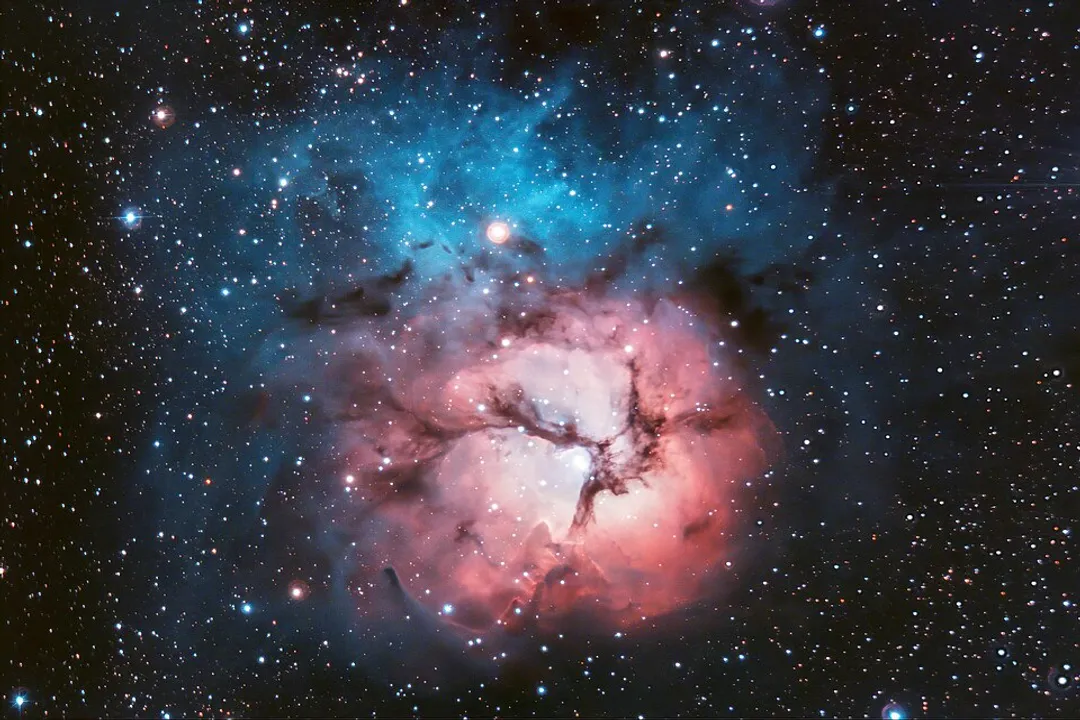
When a nebula is energized by nearby hot, young stars, the gas gets excited, leading to the phenomenon known as an emission nebula. [6] In this state, the gas glows brightly as electrons recombine with atoms, releasing photons of specific colors. [6] The composition dictates the color; for example, ionized hydrogen often produces the characteristic reddish glow. [5][6]
While hydrogen and helium form the bulk, heavier elements—often called "metals" by astronomers, which includes everything heavier than helium—are also present. [4][5] These heavier elements, such as oxygen, nitrogen, and carbon, are the products of previous generations of massive stars that lived and died. [5] An expert examining the spectral signature of a nebula can deduce its elemental profile, often finding traces of elements like neon, sulfur, and argon mixed in. [4] Considering that our Sun is a second or third-generation star, the presence of these heavier elements within a nebula suggests it is a region destined to form stars with rocky planets, as opposed to nebulae dominated purely by primordial hydrogen and helium, which would only form gas giants. [3] This distribution of heavier elements, sometimes referred to as metallicity, provides a direct chemical fingerprint linking the current cloud material to the supernovae that seeded it long ago. [5]
# Dust Grains
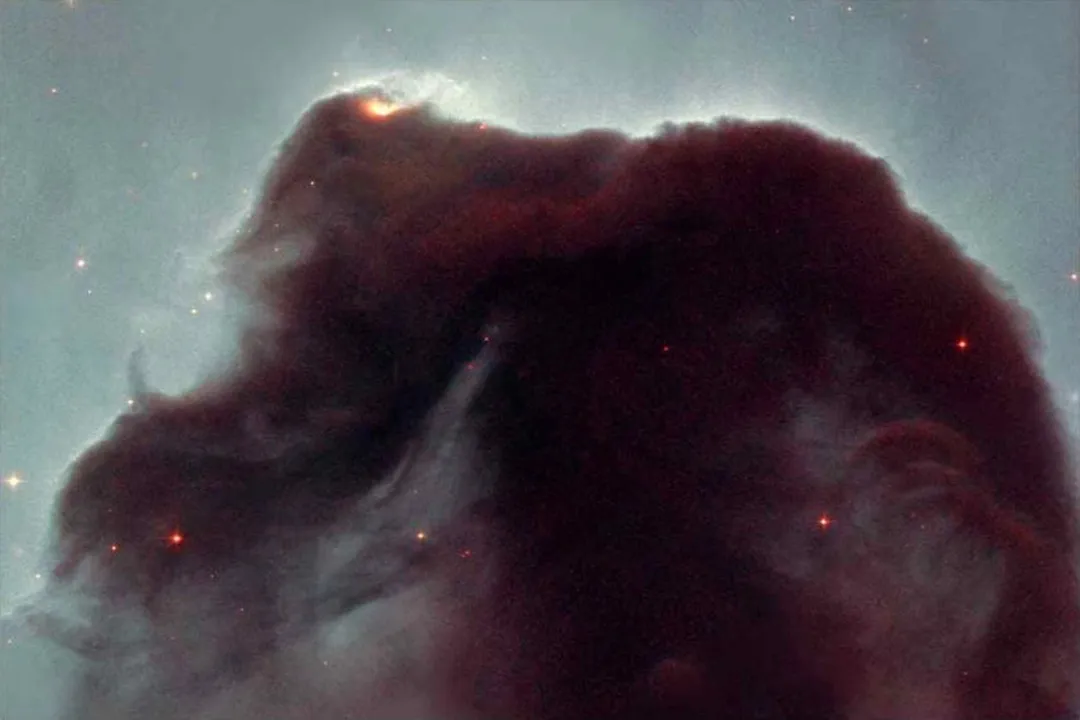
Interspersed within the gas are the solid components, the cosmic dust. [1][6] These particles are far smaller than what we typically associate with dust on Earth, usually ranging from a few molecules up to about a micrometer in size. [3][5] While dust makes up a much smaller fraction of the total mass—often less than one percent—it plays an outsized role in the nebula's appearance and evolution. [3][6]
The composition of this dust is surprisingly complex, often mimicking rocky or icy terrestrial materials. [5] Key constituents include:
- Silicates: Compounds of silicon and oxygen, similar to rock-forming minerals. [5]
- Carbonaceous Materials: Including soot-like particles or more complex organic molecules. [5]
- Ices: In very cold, dense regions, volatile compounds like water (), methane (), and ammonia () can freeze onto the solid grains. [5]
The way light interacts with these tiny grains determines what kind of nebula we see. If the dust primarily scatters the light from nearby stars, we observe a reflection nebula, which often appears blue because smaller particles scatter blue light more efficiently than red light (the same physics that makes our daytime sky blue). [5][6] Conversely, if the dust cloud is dense enough to block all light coming from behind it, it appears as a dark nebula—a silhouette against a brighter background. [2][6]
# Nebulae Types Vary Contents
The general contents of gas and dust are present in nearly all nebulae, but the state and proportions shift dramatically depending on the nebula's classification and life stage. [1][7]
| Nebula Type | Primary Origin/State | Key Content Feature |
|---|---|---|
| Emission Nebula | Hot, ionized gas near young stars | High percentage of excited, ionized Hydrogen plasma [6] |
| Reflection Nebula | Dust scattering light from nearby stars | Visible presence of fine, scattering dust particles [5] |
| Dark Nebula | Cold, dense molecular clouds | High concentration of molecules and ice mantles on dust [5] |
| Planetary Nebula | Outer layers of dying low-to-intermediate mass stars | Rich in heavier elements (Carbon, Oxygen, Nitrogen) expelled by the star [7] |
| Supernova Remnant | Explosion of a massive star | Highly energetic plasma containing elements heavier than iron forged in the explosion [1] |
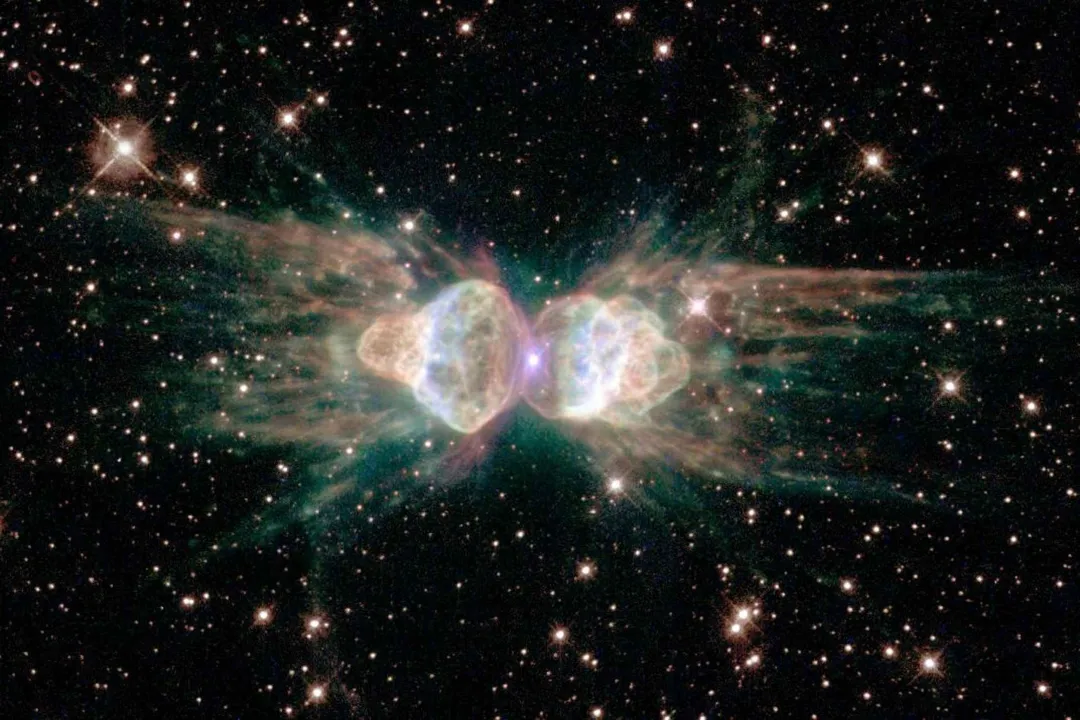
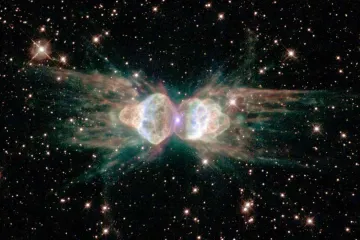
Planetary nebulae, for example, are shells of gas ejected by aging stars like the Sun will eventually do. [7] These are rich in elements like carbon and oxygen that were synthesized during the star's life, making them chemically distinct from the pristine hydrogen/helium of a typical star-forming region. [7]
# States of Matter
The internal conditions dictate the state of the primary constituents. A nebula is not a uniform environment; it contains matter in various states simultaneously. [3]
In cold, dark molecular clouds—the densest nebulae where stars are currently forming—the gas exists primarily as molecules (like and CO), a major difference from the atomic gas in hotter regions. [5] The temperatures here can be extremely low, sometimes just 10 Kelvin above absolute zero. [5]
Conversely, in the bright emission nebulae, the gas is not merely atomic; it is often plasma—a superheated gas where electrons have been stripped from atoms due to intense ultraviolet radiation from nearby massive stars. [6] This plasma state is what allows the nebula to emit light across the spectrum as the charged particles interact. [6]
When considering observational astronomy, remember that the apparent composition you observe is highly dependent on the illumination source. If you look at a reflection nebula, you are seeing the scattered light off the dust, making the dust seem like the main ingredient, even if the mass ratio still heavily favors gas. [6] For an amateur astronomer using a modest telescope, identifying a region as primarily an emission nebula (glowing red/pink) versus a reflection nebula (appearing blue) is an immediate clue as to whether you are primarily viewing excited hydrogen or illuminated silicate grains, respectively. [6] This visual distinction tells you about the local energy environment, not just the bulk chemistry. [5]
# Origin of Contents
The materials found within nebulae are recycled, representing an essential component of cosmic ecology. [5] Nebulae are generally classified based on how they were formed or what process is energizing them. [1][2]
Stellar Nurseries (Emission/Dark Nebulae): These clouds are the birthplaces of stars. They start as vast, cold molecular clouds, enriched over eons by heavier elements ejected from previous stellar explosions. [5][6] Gravity causes denser knots within these clouds to collapse, heating up and eventually igniting new stars, which in turn ionize the surrounding cloud material. [1]
Stellar Death Clouds (Planetary/Supernova Remnants): These nebulae are composed of material that has already been processed through a star. [7] Planetary nebulae eject the outer layers of medium-sized stars, enriching the interstellar medium with carbon and oxygen. [7] Supernova remnants spray out the very heaviest elements—everything created during the star's massive life and the explosion itself—into the galaxy at tremendous speeds. [1]
The fact that elements like iron, gold, or silicon exist in these clouds at all is testament to the violent, high-energy environments inside massive stars that preceded the current nebula. [5] These events act as massive cosmic recycling plants, distributing the necessary components for future rocky bodies and life itself. [5]
# Summary of Bulk Matter
To summarize the typical content, especially in a large, active star-forming region:
- Hydrogen (H): ~75% by mass. [3][5]
- Helium (He): ~24% by mass. [3][5]
- "Metals" (All others): ~1% by mass. [4][5]
- Dust: A small fraction of the 1% metals, but crucial for opacity and light interaction. [3]
Even that small percentage of "metals" contains the ingredients for everything else we see in the universe, from rocky planets to biological life. [5] The nebula, therefore, contains not just gas, but the entire chemical history of the galaxy, stored in both atomic form and frozen/solid dust grains, awaiting the next cycle of stellar creation. [1][7]
Related Questions
#Citations
What Is a Nebula? | NASA Space Place – NASA Science for Kids
What is a nebula? - Space Center Houston
Nebula - Wikipedia
What gas does a nebula contain of? : r/askastronomy - Reddit
Nebula - ESA/Hubble
Nebula
Planetary Nebulas - Center for Astrophysics | Harvard & Smithsonian
What is a Nebula? - National Space Centre
Space Place in a Snap: What Is a Nebula? - NASA+
Nebulae - RASC, Toronto Centre