What happens to the hot gas within the supernova remnant when it slams into dense ISM clouds?
The gas heats to millions of degrees, causing it to glow brightly in X-rays
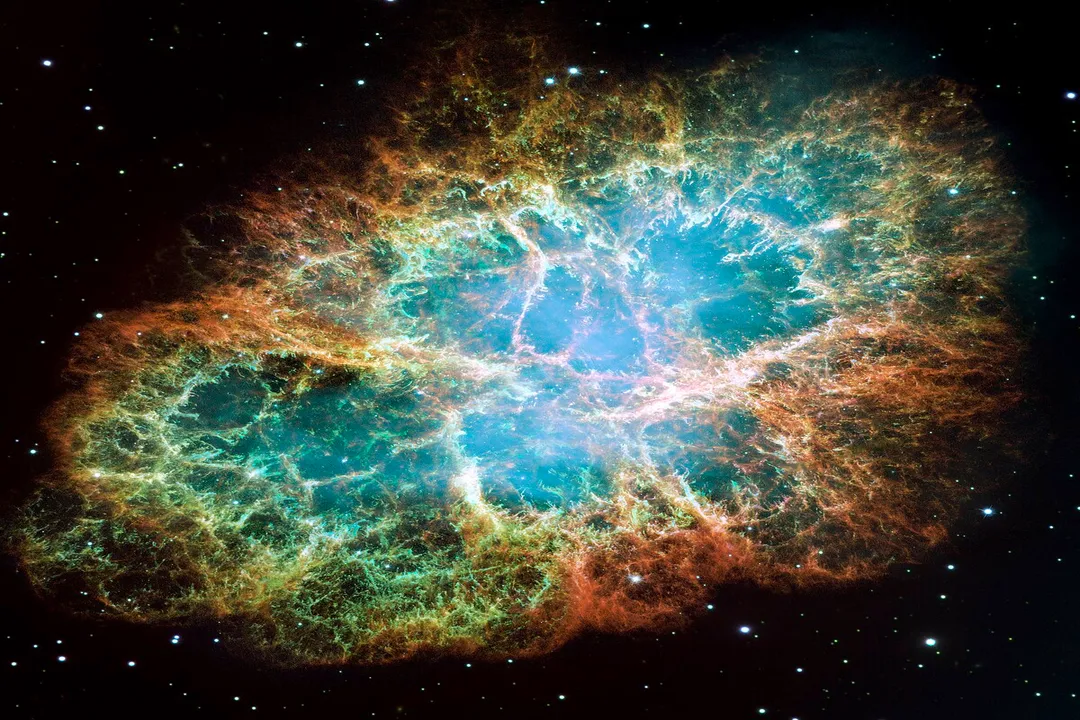
The structure of the expanding supernova remnant (SNR) is highly dependent on the density of the surrounding interstellar medium (ISM). When the fast-moving, hot gas ejected by the explosion encounters denser patches of pre-existing ISM, the interaction generates immense shock waves. These powerful shock waves dramatically compress and heat the gas trapped within them to incredibly high temperatures, reaching millions of degrees Celsius. This extreme thermal energy causes the gas to radiate intensely across the electromagnetic spectrum, specifically resulting in bright emission observed in the X-ray region. Conversely, if the gas encounters very low-density regions, the shock wave is less impeded, and the shell cools more slowly, sometimes persisting longer in the radio spectrum.
#Videos
After A Supernova Event, What Is Left Behind? - Physics Frontier