What core mass range results in the formation of a neutron star after stellar collapse?
Greater than 1.4 M_sun to approximately 3 M_sun
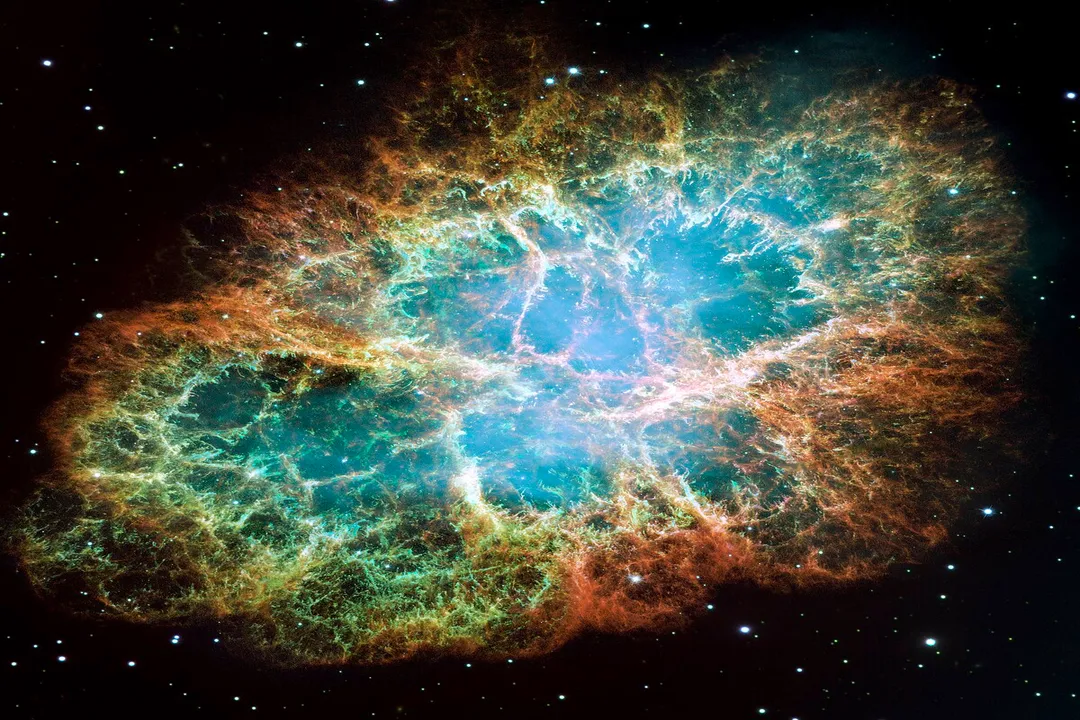
The determination of whether a dying star leaves behind a neutron star or a black hole is strictly mass-dependent, relying on the mass remaining in the core post-ejection of outer layers. A neutron star forms when the remnant core mass is substantial enough to overcome the initial Chandrasekhar limit (approximately 1.4 solar masses, which is the limit for white dwarfs) but remains below the critical upper limit for stability. Specifically, this range is described as exceeding 1.4 solar masses but remaining below roughly 3 solar masses. In this mass range, the incredible density forces protons and electrons to merge into neutrons, and it is the resulting neutron degeneracy pressure that successfully resists the final stages of gravitational infall, yielding an ultra-compact object composed almost entirely of neutrons.
#Videos
After A Supernova Event, What Is Left Behind? - Physics Frontier