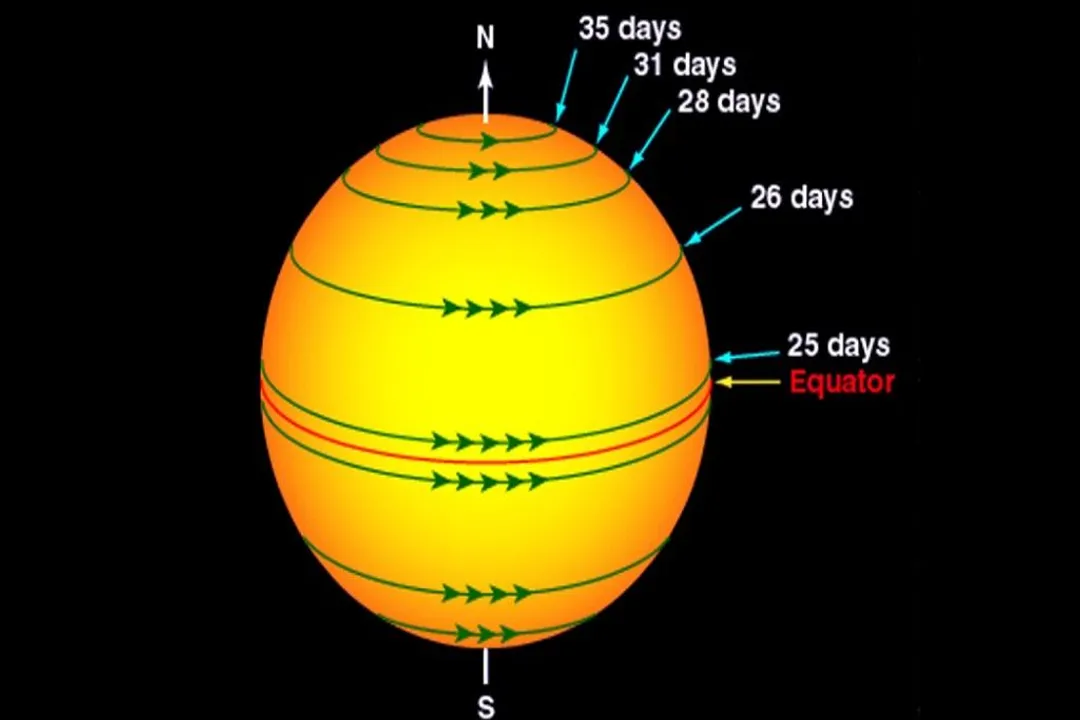
What does the synodic period specifically measure when observing solar rotation from Earth?
The time it takes for a feature to return to the same position as viewed from Earth.
The synodic period is defined specifically from the perspective of an observer on Earth. It quantifies the time interval required for a specific solar feature, like a sunspot, to complete a full cycle and return to the identical angular position relative to the Earth's line of sight. This measurement incorporates the confounding factor of Earth's simultaneous orbital motion around the Sun in the same direction as the Sun's rotation. Consequently, the synodic period will always be longer than the true rotation period because, by the time the feature returns to the same spot in our sky, the Sun itself has moved slightly along its orbit, necessitating an extra rotation for the feature to align with Earth again.