What defines the true rotation period of the Sun relative to the distant background stars?
Answer
The sidereal period
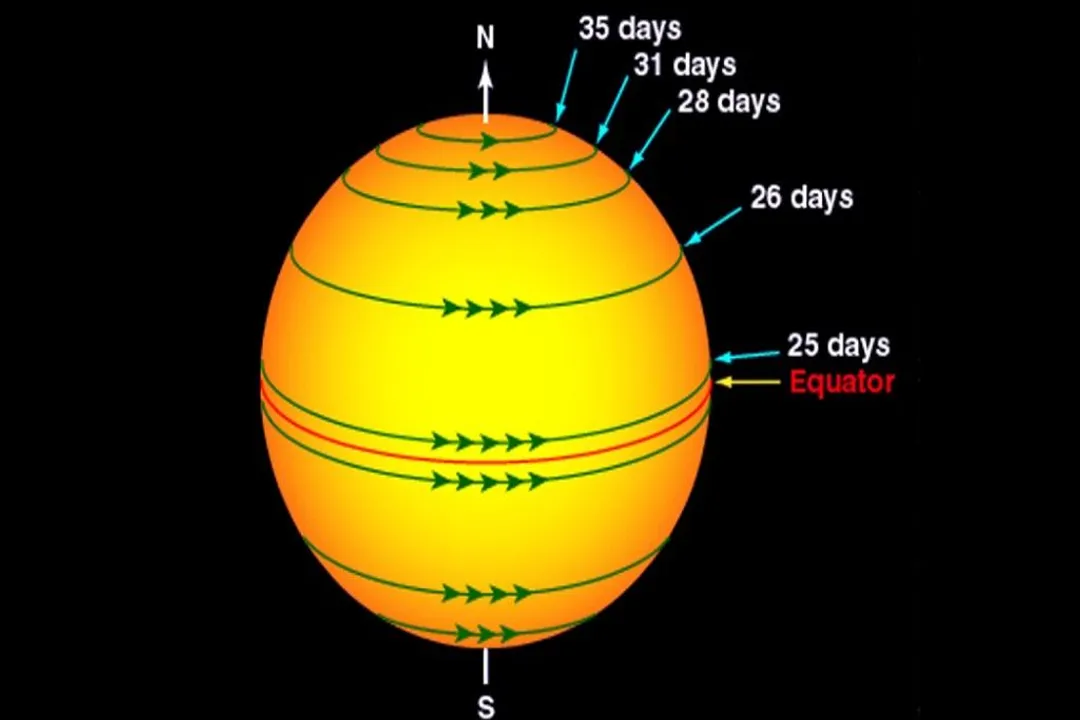
The sidereal period represents the intrinsic, absolute measure of how long it takes the Sun to complete one full 360-degree rotation on its axis, independent of any observer's orbital motion. This measurement is calculated by relating the feature's position to distant, effectively stationary background stars, rather than the shifting viewpoint from Earth. For the solar equator, this true sidereal period is calculated to be about 24.47 days. Distinguishing this value from the synodic period (which includes Earth's orbital contribution) is crucial for accurate calculations in solar mechanics, much like timing a merry-go-round relative to a distant lamppost versus timing it relative to someone walking around its base.
Related Questions
What temporary feature did astronomers track to determine the Sun's rotation speed?Why was figuring out the Sun's rotation initially a scientific puzzle compared to Earth's rotation?What is the concept describing different parts of the Sun rotating at different rates based on latitude?What is the approximate synodic period measured for a feature near the Sun's equator (0° latitude)?If tracking a feature near the Sun's poles, such as at 60 degrees latitude, what is the approximate rotation period in days?What does the synodic period specifically measure when observing solar rotation from Earth?What defines the true rotation period of the Sun relative to the distant background stars?How does the Doppler shift technique calculate rotational velocity without visible sunspots?Which early 17th-century astronomer was key in systematically tracking sunspots to document solar rotation?What atmospheric phenomenon causes constant shimmering and blurring that hinders precise visual tracking of solar features?