What distinguishes the 1908 Tunguska Event in Siberia from typical impact events?
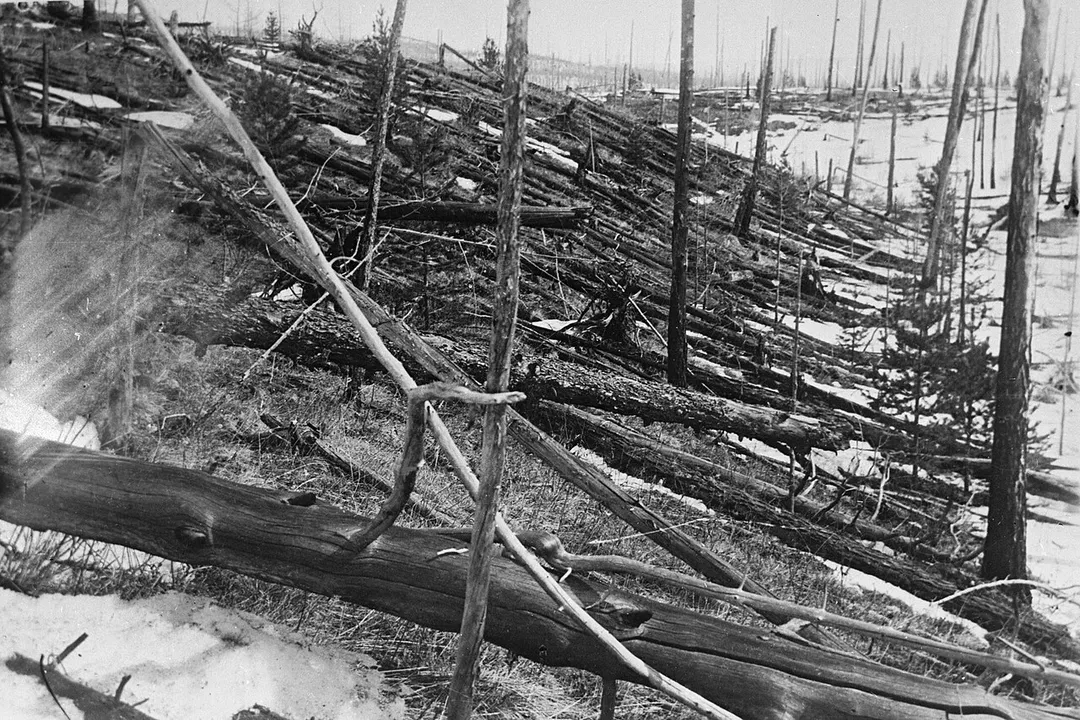
It involved an airburst that flattened trees without leaving a ground crater
The Tunguska Event is notable because the object, estimated to be 50 to 60 meters in diameter, did not reach the Earth's surface in a single solid piece. Instead, the intense pressure and heat generated by its high-velocity entry into the atmosphere caused it to explode several kilometers above the ground. This airburst released enough energy to flatten approximately 2,000 square kilometers of forest, destroying 80 million trees. Because the kinetic energy was dissipated in the air, no crater was formed, and there were no verified human fatalities, making it a distinct example of the destructive potential of aerial explosions.
#Videos
Meteors and Asteroids That Hit Earth - YouTube