Has a meteoroid ever hit Earth?
Earth sits in a cosmic shooting gallery, constantly sweeping up debris left over from the formation of the solar system. Every single day, our planet is bombarded by tons of material, ranging from microscopic dust to house-sized rocks. While most of this material burns up harmlessly in the atmosphere, turning into "shooting stars," occasionally, something substantial makes it all the way to the surface. Earth has not only been hit—it has been shaped by these impacts throughout its entire existence. [1][7]
# Defining Terms
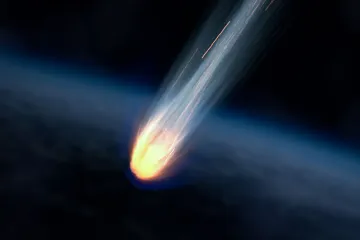
To understand these events, it helps to clear up the terminology, which often gets muddled. A meteoroid is a small rock or piece of debris in space, usually ranging from the size of a dust grain to a small asteroid. When this object enters Earth's atmosphere, the friction heats it up, causing it to glow; at this stage, it is a meteor. If the object is large enough to survive that fiery transit and actually strikes the ground, it becomes a meteorite. [7]
The distinction is purely location and state. The process is continuous, making Earth a constant participant in a dynamic gravitational dance with its neighbors. While we often think of space as empty, it is actually filled with remnants of past collisions and planetary formation. [7]
# Impact History
The history of our planet is written in its scars. If you look at the Moon, its surface is pockmarked with craters because it lacks an atmosphere to burn up incoming rocks and no weather to erode the evidence. Earth has experienced just as many impacts, but plate tectonics, wind, water, and vegetation act as a giant eraser, hiding or destroying the evidence of ancient collisions. [2]
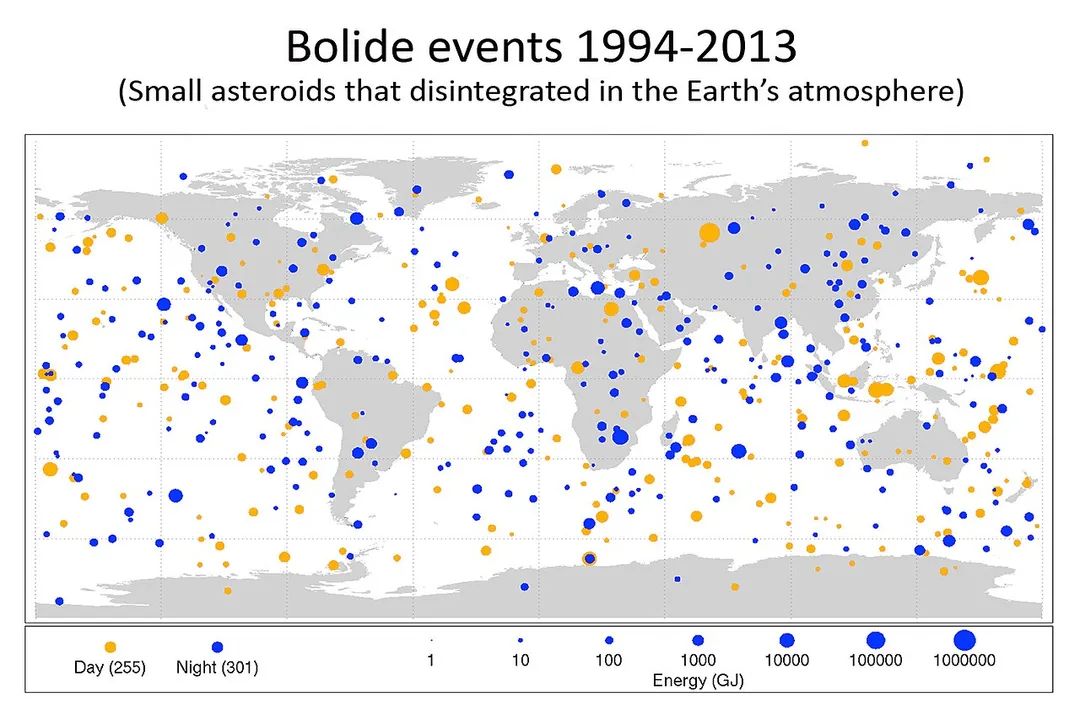
Despite this erasure, geologists have identified over 190 confirmed impact craters on Earth. [2] These range from massive, landscape-altering basins to smaller, localized pits. The frequency of these events varies wildly based on the size of the impactor. Small objects hit us daily, while planet-killing asteroids are exceedingly rare, happening on timescales of millions of years. [2][8]
# Impact Mechanics
What happens during a strike is a violent transformation of energy. When an object hits the atmosphere at tens of thousands of miles per hour, it possesses immense kinetic energy. Because the atmosphere is relatively thin compared to the speed of the rock, the air cannot move out of the way fast enough, creating a massive shockwave. [6]
This shockwave is what causes most of the damage in smaller impacts, even if the rock never touches the ground. The object compresses the air in front of it, creating extreme heat and pressure that can shatter the rock mid-air—a process known as an airburst. If the object is solid and large enough to reach the surface, it transfers its remaining kinetic energy into the ground instantly. This creates a shockwave that travels through the crust, vaporizing rock, ejecting debris into the atmosphere, and creating a crater many times the size of the original object. [6]
# Notable Events
History provides several examples that show how these events vary in scale and consequence.
The Chicxulub Impact: Perhaps the most famous, this impact occurred about 66 million years ago. A massive asteroid roughly 10 kilometers across slammed into what is now the Yucatán Peninsula in Mexico. The resulting energy was equivalent to billions of Hiroshima-sized atomic bombs. The impact triggered global wildfires, tsunamis, and a "nuclear winter" caused by dust and soot blocking the sun, ultimately leading to the extinction of the dinosaurs. [4]
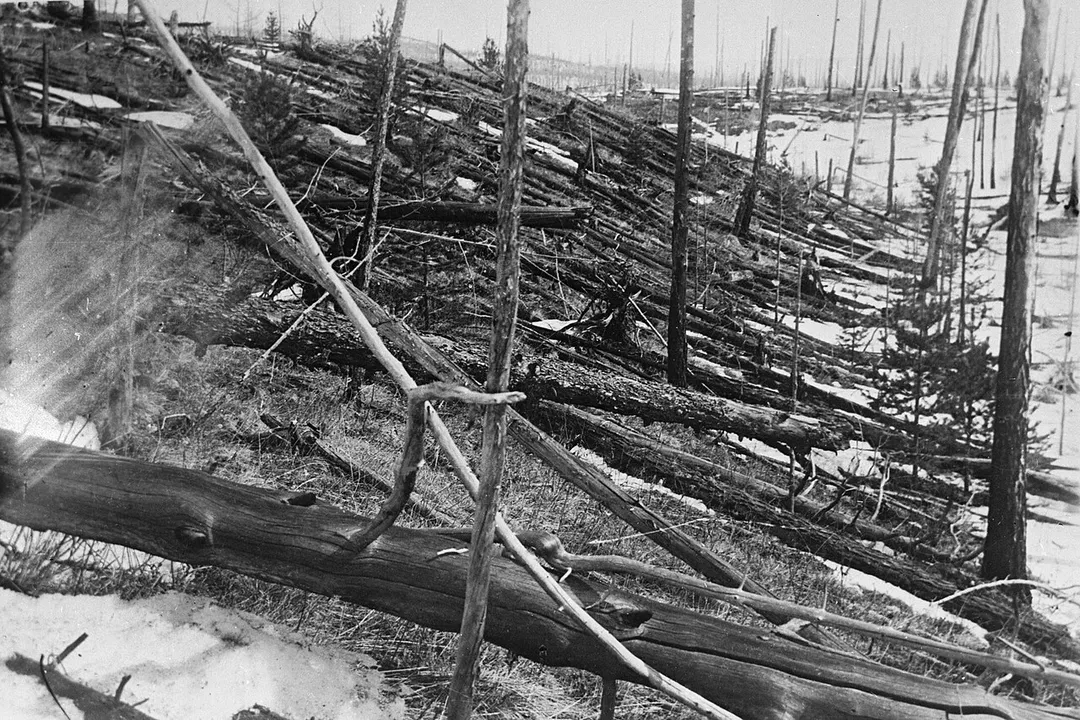
The Tunguska Event: On June 30, 1908, a mysterious explosion flattened 2,000 square kilometers of forest in Siberia. No crater was ever found, leading scientists to conclude it was a large meteoroid, likely 50 to 60 meters in diameter, that exploded several kilometers above the ground. The blast leveled 80 million trees, yet miraculously, there are no verified reports of human fatalities. [4]
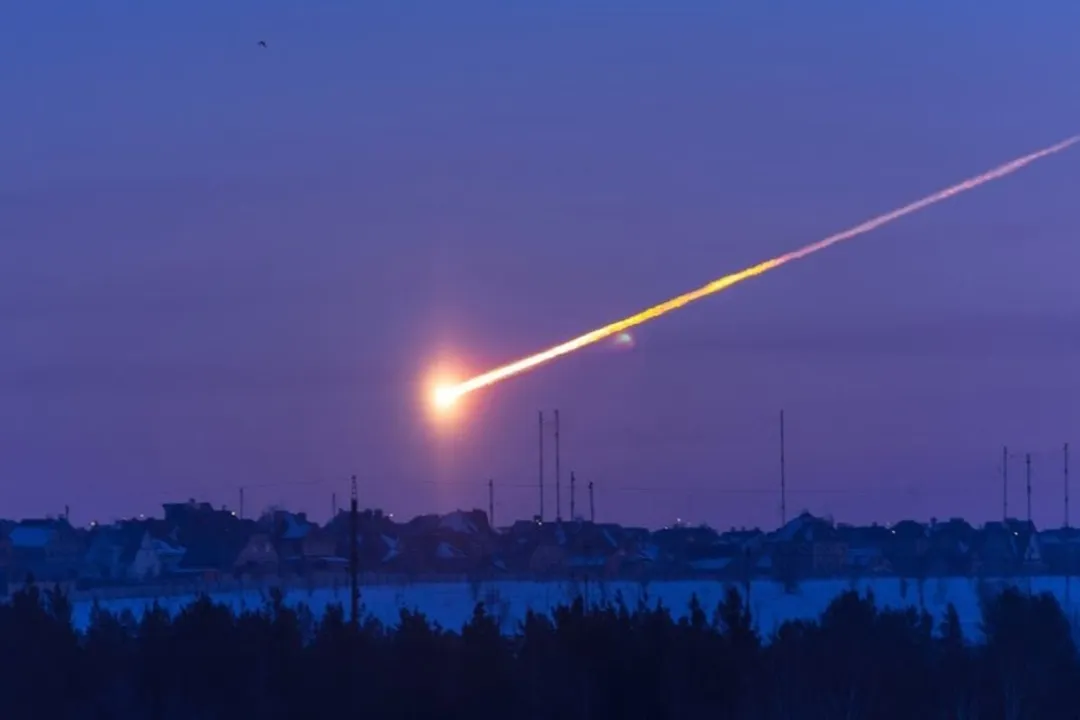
The Chelyabinsk Meteor: A vivid modern reminder of our vulnerability occurred on February 15, 2013, over Chelyabinsk, Russia. A meteoroid about 20 meters wide entered the atmosphere. The resulting airburst shattered windows and damaged buildings across the city, injuring over 1,500 people. The event was captured by hundreds of dashcams, providing unprecedented footage of a cosmic impact. [4][9]
# Frequency Analysis
The danger of an impact is directly correlated to its size and frequency. We can categorize these events to better understand the risk profile of our planet.
| Impactor Size | Frequency | Expected Result |
|---|---|---|
| Dust/Sand (<1m) | Daily | Visible as "shooting stars" or fireballs. |
| House-sized (~10-20m) | Every 50–100 years | Atmospheric airburst, local window damage. |
| Football field (~100m) | Every 10,000 years | Severe regional destruction, tsunami risk. |
| Mountain-sized (>1km) | Millions of years | Global climate crisis, mass extinction. |
This table illustrates a critical reality: small, non-threatening impacts are routine, while catastrophic ones are rare. However, the unpredictability of these events is what drives current planetary defense programs.
# Why Some Craters Vanish
One common point of confusion is why we do not see massive craters everywhere. If Earth has been hit so often, where are they? The answer lies in Earth's active geology.
- Subduction: Earth's crust is constantly recycled. Tectonic plates push against each other, with one sliding beneath another into the mantle. Any crustal evidence of an impact older than a few hundred million years is likely recycled back into the Earth. [2]
- Weathering: Rain, wind, and ice are relentless. Over millions of years, they wear down the raised rims of impact craters and fill the basins with sediment.
- Water Coverage: Earth's surface is 71% water. Most impacts happen in the oceans, where the crater is either immediately filled with water or erased by the constant shifting of the seafloor. [2]
This dynamic nature of our planet masks our true history, making the Earth appear much more peaceful than it actually is.
# Detection and Defense
We are currently in a unique position in human history. For the first time, we have the technology to detect incoming threats before they arrive. NASA and other space agencies maintain programs like the Planetary Defense Coordination Office, which monitors Near-Earth Objects (NEOs).
The strategy for defense is simple in theory: detection and deflection. By finding an asteroid years or decades in advance, we only need to slightly nudge its trajectory—either by impacting it with a spacecraft or using the gravitational pull of a "gravity tractor"—to ensure it misses Earth entirely. [8]
# Understanding Perspective
It is worth noting that while meteoroids hit Earth constantly, the likelihood of a person being struck by one is infinitesimally small. The statistics are vastly skewed by the fact that most of the Earth is unpopulated or covered by water. However, the Chelyabinsk event served as a wake-up call, proving that even a relatively small object can cause widespread, localized damage in a populated area. [4][9]
When analyzing the risk, it is better to think of meteoroid impacts not as a constant active threat, but as a long-term environmental hazard. Just as we prepare for hurricanes or earthquakes, we are beginning to formalize our preparedness for space rocks.
There is a natural tendency to ignore slow-moving, long-interval risks, but the evidence of our past and the surveillance of our present suggest that we are no longer passive observers of the solar system. We are an active participant, and by studying the impacts that have occurred, we are better equipped to ensure the next one does not define our future.
#Videos
Meteors and Asteroids That Hit Earth - YouTube
Related Questions
#Citations
Notable Asteroid Impacts in Earth's History | The Planetary Society
Impact event - Wikipedia
Meteors and Asteroids That Hit Earth - YouTube
7 Major Asteroids Strikes in Earth's History
What Happens When Large Meteorites Impact the Earth? | AMNH
Meteors and Meteorites: Facts - NASA Science
How many times has the Earth been hit by asteroids? When ... - Quora
Many meteors that hurdle toward Earth burn up in our atmosphere ...