Is any asteroid coming to hit Earth?
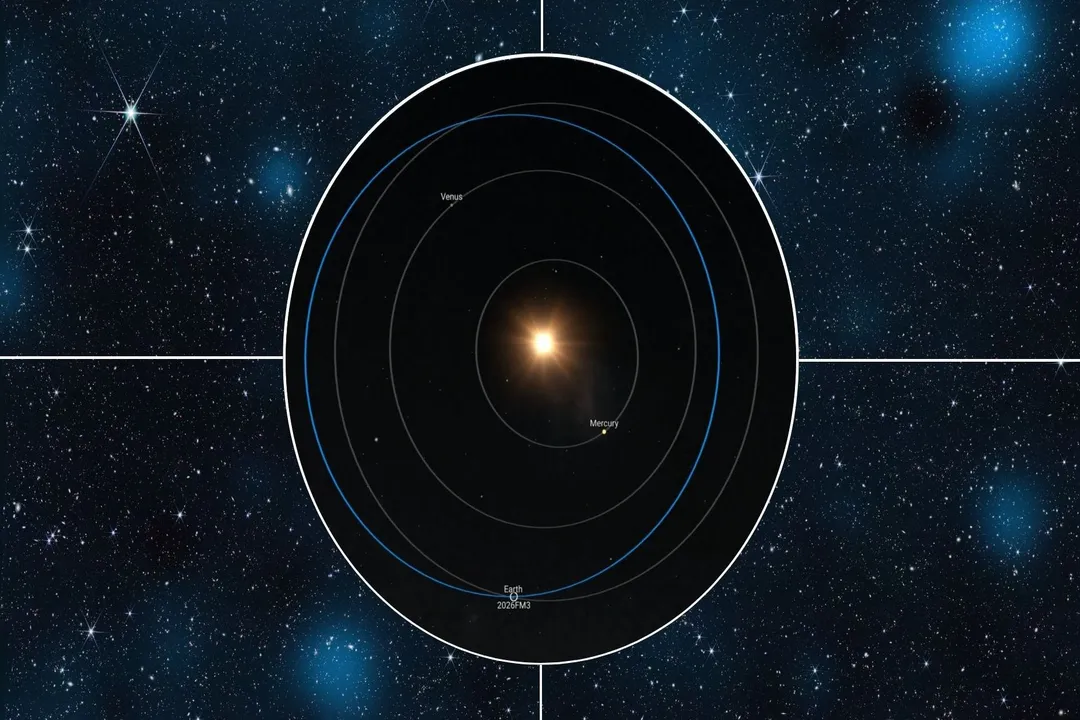
Every few weeks, a news headline surfaces claiming that a massive asteroid is hurtling toward Earth, often accompanied by alarming graphics of celestial collisions. These stories frequently generate unnecessary anxiety, yet the scientific reality is far more mundane than science fiction movies would lead us to believe. [2][5] Objects pass near our planet on a regular basis, and while they are closely monitored, the vast majority pose zero threat. Distinguishing between a routine "close approach" and an actual collision event is the primary focus of planetary scientists today. [1][7]
# Close Approaches
A "close approach" is a standard term used by organizations like NASA to describe an asteroid that passes within a certain distance of Earth. In astronomical terms, this distance can still be millions of miles away—a vast, safe gap. It is common to see media outlets report on asteroids the size of a car or a house passing by, but these events are largely non-events. [2][9] Most small asteroids disintegrate upon entering Earth's atmosphere, turning into harmless meteors, or "shooting stars," long before they reach the surface. [1][7]
To understand why these objects are detected so frequently, one must recognize that space is not empty. It is filled with debris left over from the formation of the solar system. We have become significantly better at spotting these rocks in the last two decades. As telescope technology improves, we catalog more objects, which makes it seem like there is an increase in activity. In reality, the number of asteroids remains constant; our ability to see them is simply getting better. [7]
# Planetary Defense
The responsibility of monitoring these objects falls to the Planetary Defense Coordination Office (PDCO) and similar international bodies. Their goal is not just observation but characterization. [7] When a new Near-Earth Object (NEO) is discovered, the first priority is to calculate its orbit with precision. This involves tracking how it moves relative to the sun and Earth. Scientists use a scale to determine the likelihood of an impact, typically spanning years or even decades into the future. [4][7]
If an object is flagged, the scientific community collaborates to refine the orbital data. Often, early predictions of an impact carry a high degree of uncertainty. As more data is gathered, that uncertainty shrinks, and in almost every historical case, the risk factor drops to zero. [4] This process is critical because it prevents alarmism based on incomplete data. The rigorous verification process is what distinguishes astronomical science from speculation. [7]

# Impact Reality
It is helpful to visualize the scale of these objects to understand why most are harmless. The following table provides a general breakdown of how different sizes of space objects behave when interacting with Earth's environment.
| Asteroid Size | Frequency | Potential Impact |
|---|---|---|
| Pebble-sized | Daily | Burns up completely (Meteor) |
| Car-sized | Frequent | Usually harmless; atmospheric break-up |
| House-sized | Decades | Likely airburst, minor local damage |
| City-sized | Millennia | Significant regional damage |
| Continent-sized | Millions of years | Global catastrophe |
While the risk from large objects is real, it is also exceedingly rare. The geological history of Earth confirms that mass-extinction-level events happen on timescales of millions of years, not human lifetimes. [7]
# Future Risks
Recent discussions have highlighted specific dates, such as the year 2032, often cited in news cycles regarding potential asteroid risks. When researchers look at these long-range predictions, they are looking at mathematical probabilities based on current data. [4] It is common for an object to appear on a "risk list" early in its discovery phase because the initial orbital calculations are wide. As tracking data accumulates, the orbital path becomes clear, and the object is typically removed from the hazard list as the probability of impact is ruled out. [4][9]
A useful way to think about this is like tracking a car driving through fog. At first, you only see a blur of movement, and you might worry it is heading toward you. As the car enters clearer light, you can clearly see it is actually driving in a different lane entirely. This is exactly how asteroid monitoring works. We are constantly waiting for the "fog" to clear around newly discovered objects to see their true path. [4][7]
# Mitigation Strategies
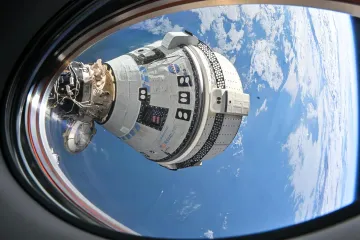
Should a legitimate threat be identified, the world is not defenseless. The success of missions like NASA's Double Asteroid Redirection Test (DART) demonstrated that humanity possesses the technology to alter the trajectory of a celestial body. [7] By crashing a spacecraft into an asteroid, scientists can change its speed and orbit just enough to turn a potential collision into a safe miss. This type of intervention is the cornerstone of modern planetary defense. [7]
The current approach to asteroid safety is a combination of constant observation and mathematical validation. We track the sky, we run the numbers, and we update the public when there is something worth noting. If a news report says an asteroid is "heading toward Earth," it is almost always referring to a close flyby that poses no physical danger to anyone on the ground. [2][5] The best approach for the general public is to view these headlines with a measured, calm perspective, trusting that global space agencies are actively monitoring the situation with high-precision instruments and established protocols. [7]
#Videos
This Asteroid Might Make Impact With Earth in 2032 | NOVA | PBS
NASA Warns: A Deadly Asteroid Is Headed Toward Earth - YouTube
Related Questions
#Citations
Next Five Asteroid Approaches
A car-sized asteroid is heading toward Earth for a flyby later tonight
This Asteroid Might Make Impact With Earth in 2032 | NOVA | PBS
Are we safe from the 'city-killer' asteroid headed toward Earth in 2032?
5 asteroids are set to come near Earth soon. Should you be worried?
Near-Earth Asteroids as of December 2025 - NASA Science
What's up with this asteroid that might hit the earth? NASA just ...
List of asteroid close approaches to Earth - Wikipedia
Asteroid Headed for Earth | Science | AAAS