In terms of visible matter mass (ignoring dark matter), what does the disk contribute significantly compared to the bulge?
Answer
The majority of the current star formation and gas
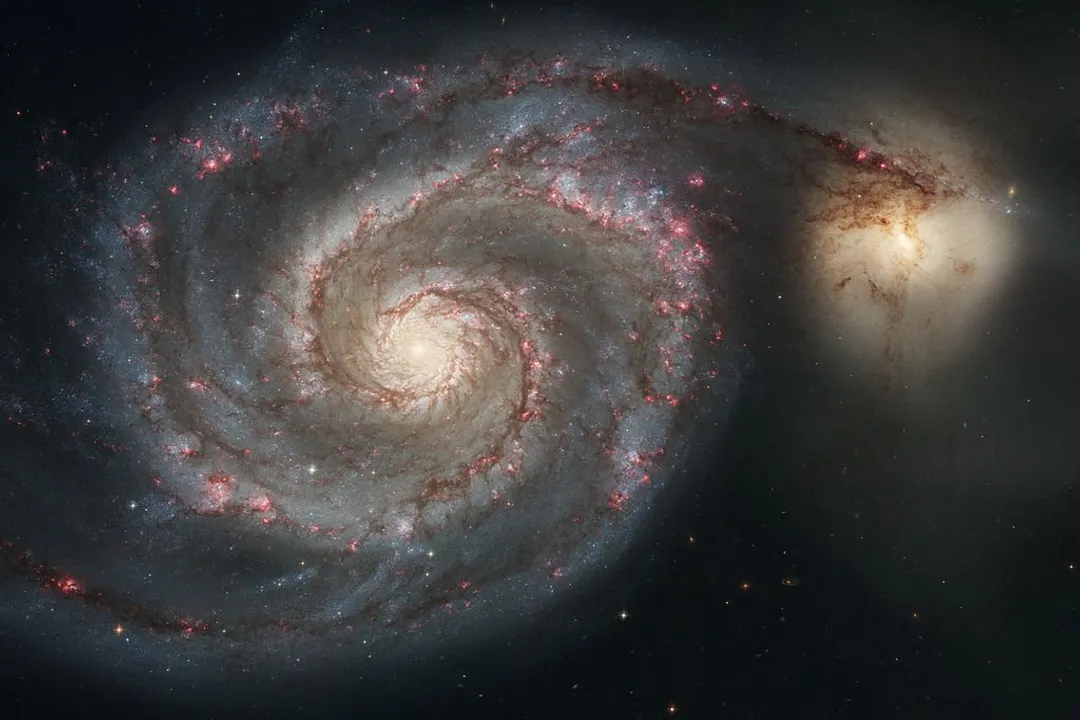
While the bulge represents a huge concentration of older stars, the disk holds the majority of the raw materials—gas and dust—and thus the majority of the *current* star formation activity.
Related Questions
What are the three primary architectural zones shared by most organized galaxies?What characteristic defines the stellar population inhabiting the core bulge?What is the structural nature of spiral arms within the galactic disk?Which stellar population dominates the galactic disk due to its continuous recycling of matter?How do the orbits of stars in the stellar halo generally differ from those in the galactic disk?What invisible component is estimated to form the largest structural part of a galaxy, residing primarily in the halo?In terms of visible matter mass (ignoring dark matter), what does the disk contribute significantly compared to the bulge?What structural feature defines an elliptical galaxy when compared to a spiral galaxy?What tends to obscure the direct view of the supermassive black hole at the Milky Way's center?What common feature found in the halo orbits spherical groupings of stars?How does the orbital motion within the galactic bulge contrast with that in the disk?