What are the three major galaxies that make up the Local Group?
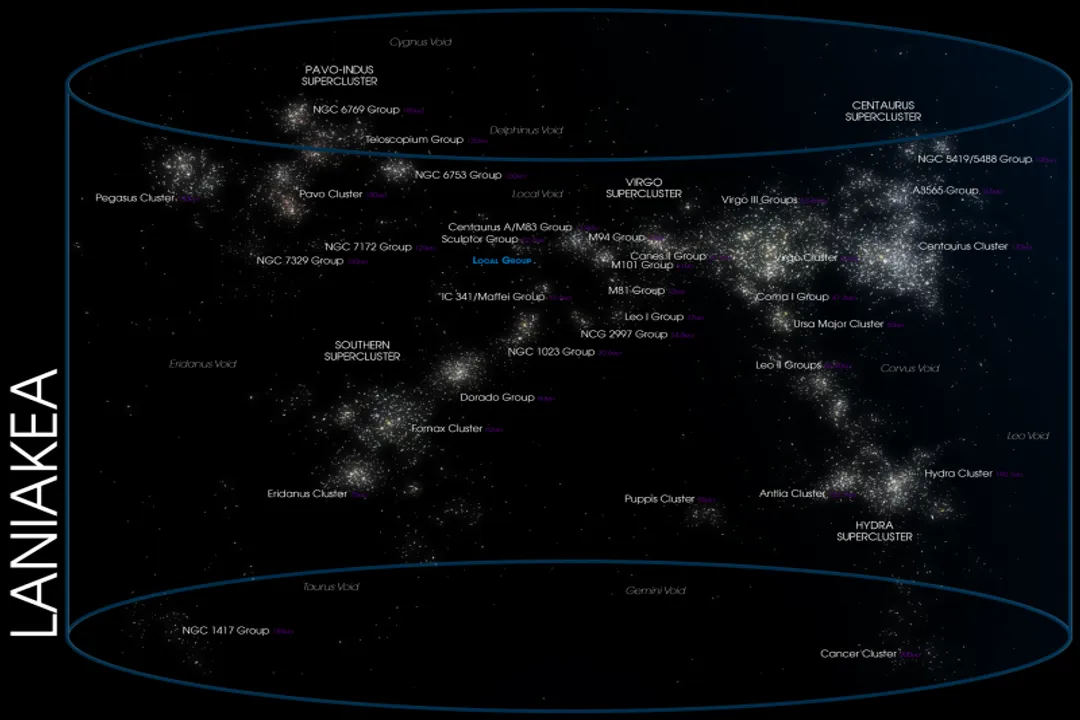
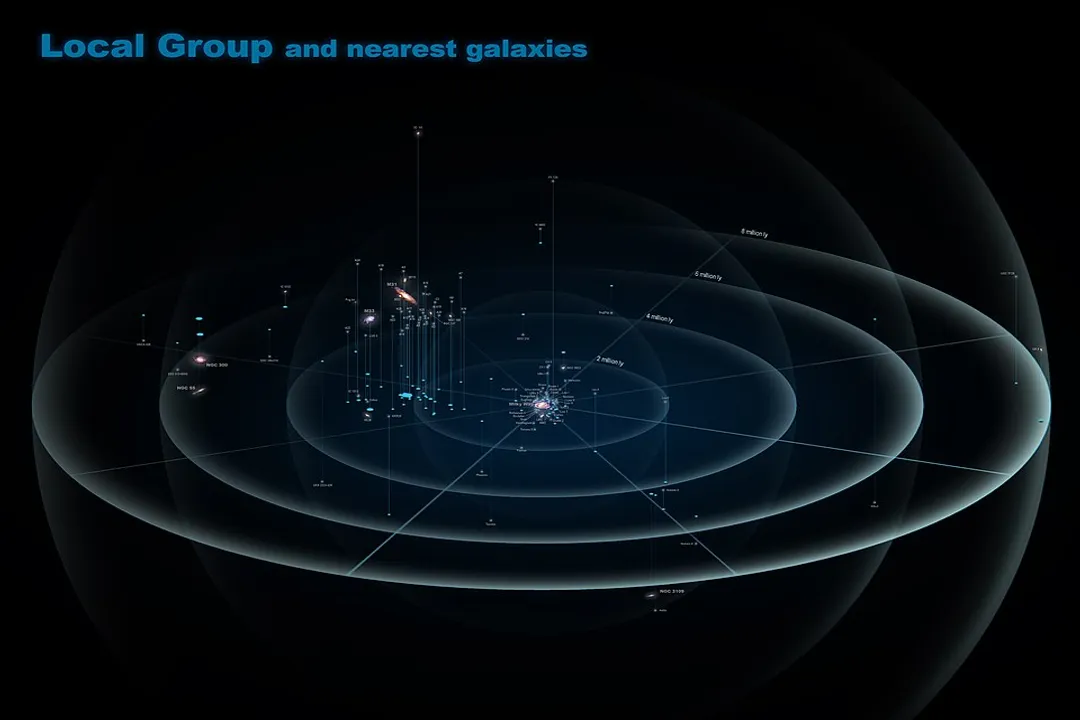
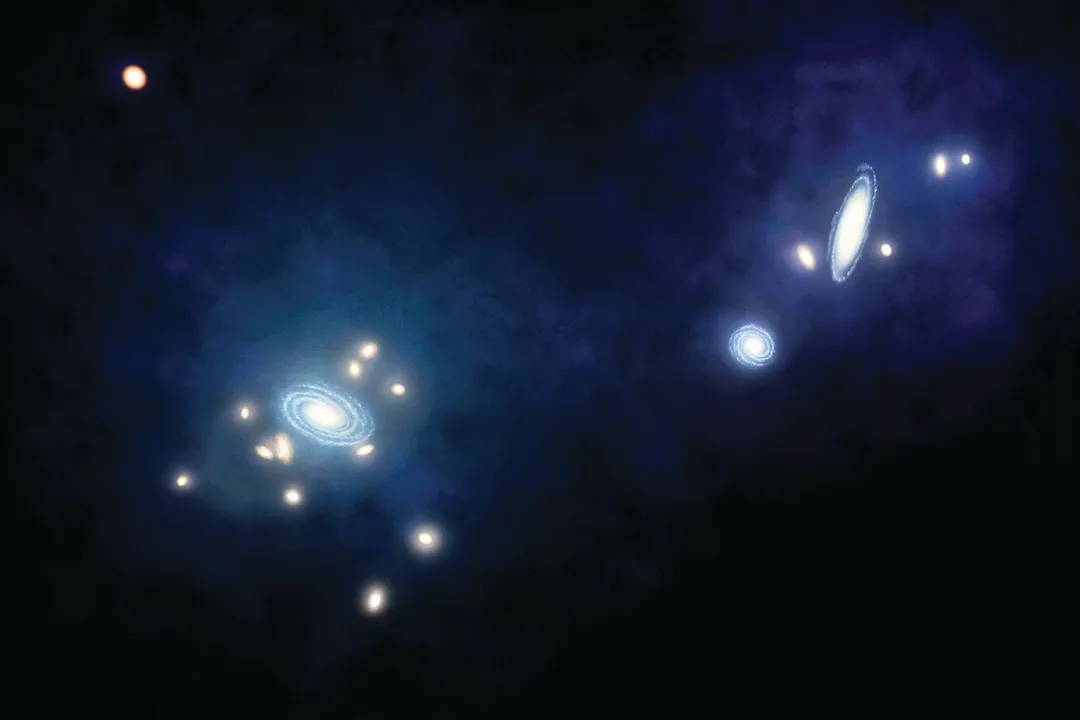
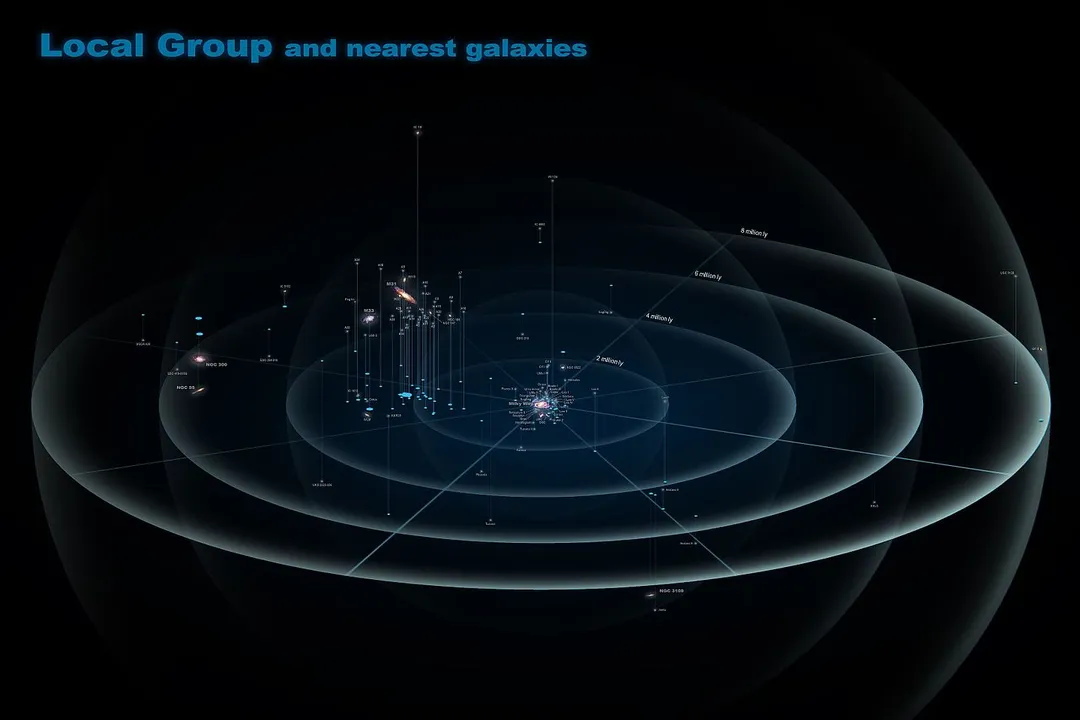
When looking up at the night sky, it is natural to view the stars and the Milky Way as isolated points of light. However, our galaxy is not an island. It exists within a gravitationally bound collection of galaxies known as the Local Group. [1][2] Spanning approximately 10 million light-years in diameter, this cluster acts as our immediate cosmic neighborhood. [4][9] While the group contains dozens of dwarf galaxies and satellite systems, the hierarchy is dominated by three massive spiral galaxies that dictate the gravitational dynamics of the region. [1][10]
# The Milky Way
The Milky Way serves as the anchor for our understanding of the universe, as it is the galaxy we inhabit. [1][6] It is classified as a barred spiral galaxy, characterized by a central bar-shaped structure composed of stars, surrounded by a disk of gas, dust, and stars. [5][9] Estimates regarding its size vary, but it is generally thought to contain between 100 and 400 billion stars. [4]
Positioned within the Orion Arm, our solar system orbits the galactic center at a distance of about 26,000 light-years. [1] Because we are located inside the disk, we see the galaxy as a band of light across the sky rather than seeing its full structure from the outside. [10] The Milky Way is not static; it is actively interacting with its smaller neighbors, such as the Magellanic Clouds, which act as satellite galaxies orbiting our own. [3] These interactions provide scientists with data on how galaxies grow and consume smaller systems over time. [5]
# Andromeda Galaxy
Often referred to by its catalog name, M31, the Andromeda Galaxy is the largest member of the Local Group. [3][10] Visible to the naked eye from Earth under dark sky conditions, it is a massive spiral galaxy, significantly larger and more luminous than the Milky Way. [1][5] Andromeda is estimated to contain roughly one trillion stars, dwarfng our own galaxy in sheer stellar count. [2]
The relationship between the Milky Way and Andromeda is the defining feature of the Local Group's future. [9] The two galaxies are moving toward each other at a high velocity, driven by their mutual gravitational pull. [10] Astronomical models predict that in about four to five billion years, they will undergo a significant interaction, likely merging into a single, larger elliptical galaxy. [3][5] This coming event is a natural byproduct of gravity acting on such massive scales, illustrating that the structure of our group is not permanent but constantly changing. [2][4]

# Triangulum Galaxy
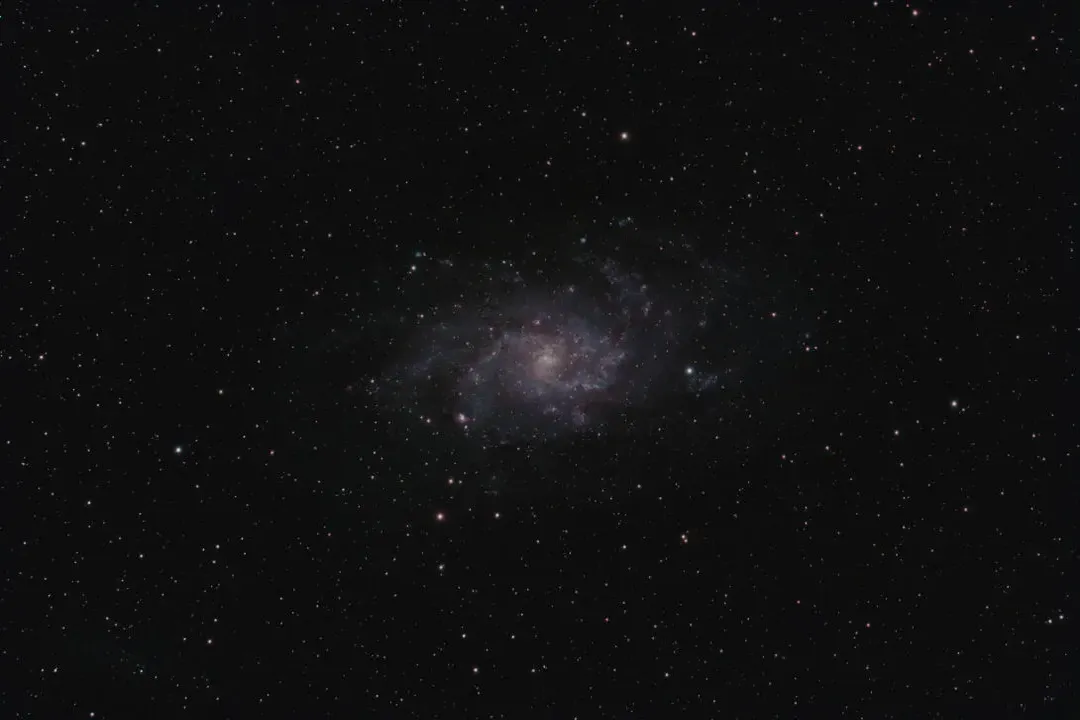
The third major player in our neighborhood is the Triangulum Galaxy, or M33. [1][9] It is considerably smaller than the Milky Way and Andromeda, classifying it as a secondary spiral galaxy. [5] Despite its smaller stature, it remains one of the largest members of the Local Group, housing approximately 40 billion stars. [10]
There has been ongoing scientific debate regarding the exact relationship between M33 and Andromeda. [5] Some observations suggest that Triangulum may be a satellite galaxy orbiting Andromeda, while other data indicates it might be on its first pass, falling into the Local Group for the first time. [2] This uncertainty highlights the difficulty of mapping galactic trajectories over vast distances and timescales. [4] Triangulum is also notable for its active star-forming regions, particularly the emission nebula known as NGC 604, which is one of the largest such regions in the Local Group. [3]
# Galactic Comparison
To understand the scale of these three titans, it helps to look at the differences in their mass, composition, and star-forming activity. While they share a common classification as spiral galaxies, their physical characteristics vary significantly.
| Feature | Milky Way | Andromeda (M31) | Triangulum (M33) |
|---|---|---|---|
| Classification | Barred Spiral | Spiral | Spiral |
| Relative Size | Large | Largest | Medium/Small |
| Star Count | ~100-400 Billion | ~1 Trillion | ~40 Billion |
| Role in Group | Primary Anchor | Primary Anchor | Satellite Candidate |
This data illustrates that while all three dominate the local census, the group is top-heavy. The massive gravity of the Milky Way and Andromeda creates a "binary" system effect, where these two giants effectively orbit a common center of mass, while Triangulum and the myriad of smaller dwarf galaxies move around them in complex, long-term orbits. [1][5]

# Dark Matter
A critical aspect of these three galaxies is that what we see—the stars, gas, and dust—represents only a fraction of their total mass. [3] Galaxies are held together by dark matter, a mysterious substance that does not emit or reflect light but exerts a strong gravitational pull. [4][10] Without the influence of dark matter, the rotational speeds of the outer edges of the Milky Way, Andromeda, and Triangulum would be impossible; the galaxies would effectively fly apart. [2][5]
When researchers analyze the motion of these three galaxies, the observed velocities are only explainable if each galaxy is encased in a massive halo of dark matter. [9] This invisible scaffold dictates the structure of the Local Group, pulling galaxies toward one another and dictating the overall architecture of our cosmic neighborhood. [10] Understanding this dark matter halo is how astronomers determine the mass of the group and predict the eventual merger of the giants. [1][3]
# Cosmic Scale Analysis
The term "Local Group" carries a sense of intimacy, implying proximity, but this is a relative scale that can be deceptive. A useful way to conceptualize the distance between these giants is to look at light travel time. Light travels at approximately 300,000 kilometers per second. [9] Even at this speed, it takes roughly 2.5 million years for light to travel from the Andromeda Galaxy to the Milky Way. [3][10]
If we were to map the Local Group into a human-scale model—for example, if the distance from the Sun to the Earth were reduced to one millimeter—the Andromeda Galaxy would still be several kilometers away. This distance helps visualize why "collisions" between galaxies take billions of years. Even though they are rushing toward each other, the space between stars is so vast that when galaxies collide, the individual stars are unlikely to crash into one another. [4] Instead, the galaxies will pass through, distort, and eventually reform, a process that is essentially slow-motion fluid dynamics on a massive scale. [2][5]

# Dwarf Galaxy Influence
While the Milky Way, Andromeda, and Triangulum capture most of the attention, the Local Group is not empty space beyond these three. [1] It is populated by over 50 other smaller, low-luminosity galaxies, most of which are dwarf galaxies. [9] These smaller bodies are usually found in orbit around the three larger spirals, similar to how planets orbit a star. [5]
These dwarf galaxies provide clues about the history of the group. [10] As they orbit the larger galaxies, they are often stripped of their gas through tidal forces, essentially "feeding" the larger galaxies with new material. [3] This process of galactic cannibalism is how the major spirals maintain their size and continue to form new stars. [5] By studying the paths of these smaller companions, astronomers can reconstruct the past interactions of the Milky Way, helping us understand the evolution of our own galactic home over the last several billion years. [2]
Related Questions
#Citations
Local Group - Wikipedia
The Local Group is our galactic neighborhood - EarthSky
Local Group galaxies - Imagine the Universe!
Local Group — OpenSpace documentation (latest)
local_group.html - UNLV Physics
Our Local Group - Sun.org
The Local Group of Galaxies - YouTube
The Local Group is our cosmic neighborhood, home to over 80 ...
Local Group | COSMOS - Centre for Astrophysics and Supercomputing
The Local Group: a guide to our galaxy's neighbourhood