What is the name of the most prominent galaxy in our Local Group?
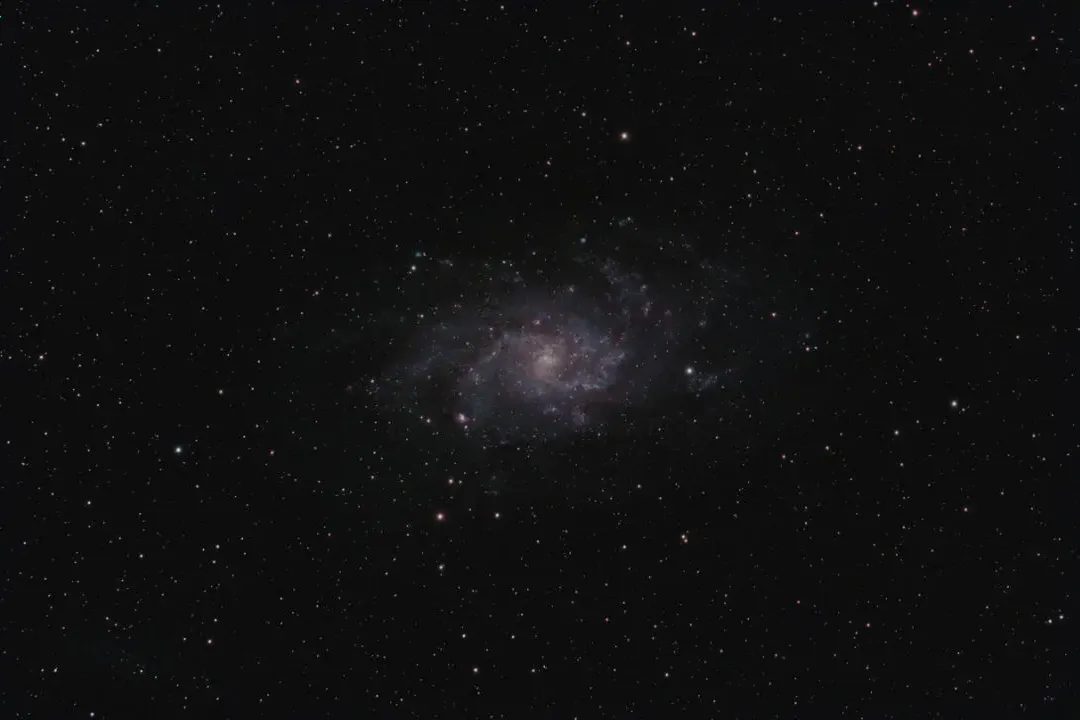
When looking up at the night sky, we often focus on individual stars or planets within our own solar system. However, on a much larger scale, our home is part of a gravitationally bound collection of galaxies known as the Local Group [1][7]. Within this cosmic neighborhood, one object stands out as the most prominent member in terms of sheer size and mass: the Andromeda Galaxy, also cataloged as M31 [1][4][5]. While the Milky Way is our home, Andromeda represents the largest and most influential entity in our immediate vicinity, serving as a focal point for understanding galactic evolution and the structure of our corner of the universe [5][8].
# The Local Group
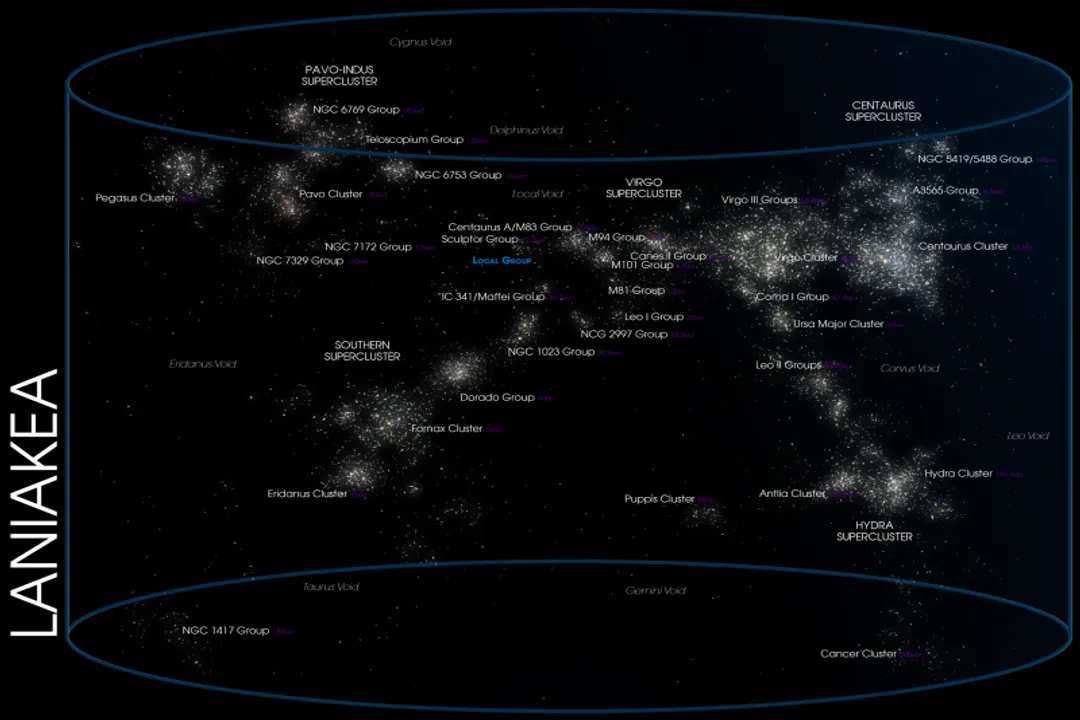
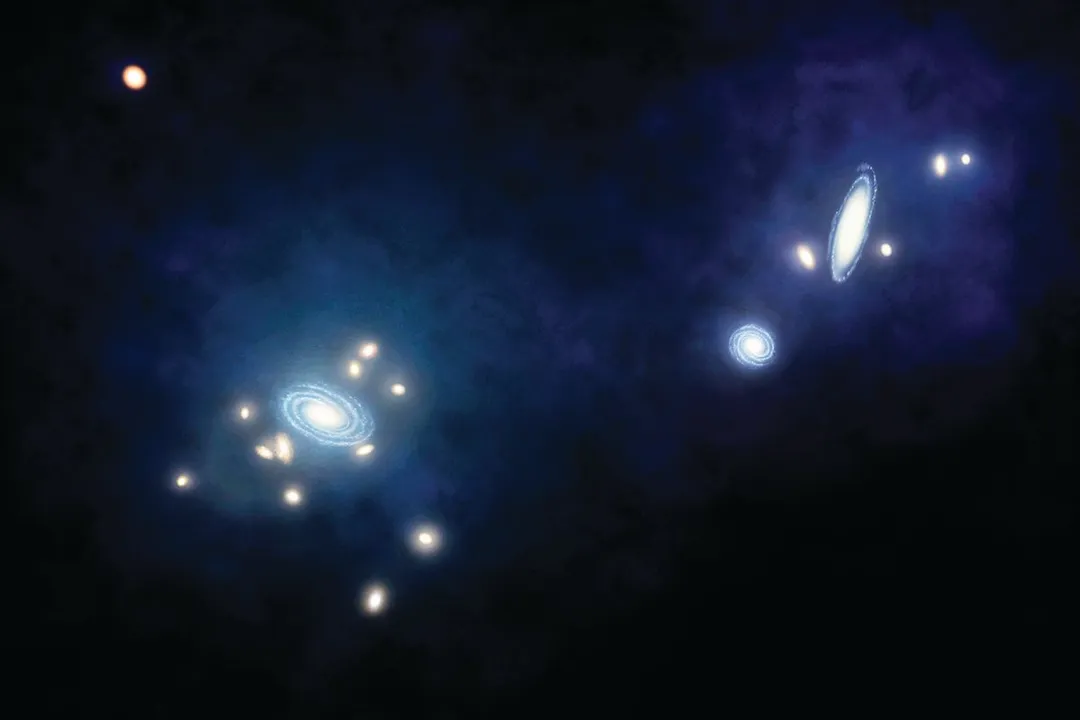
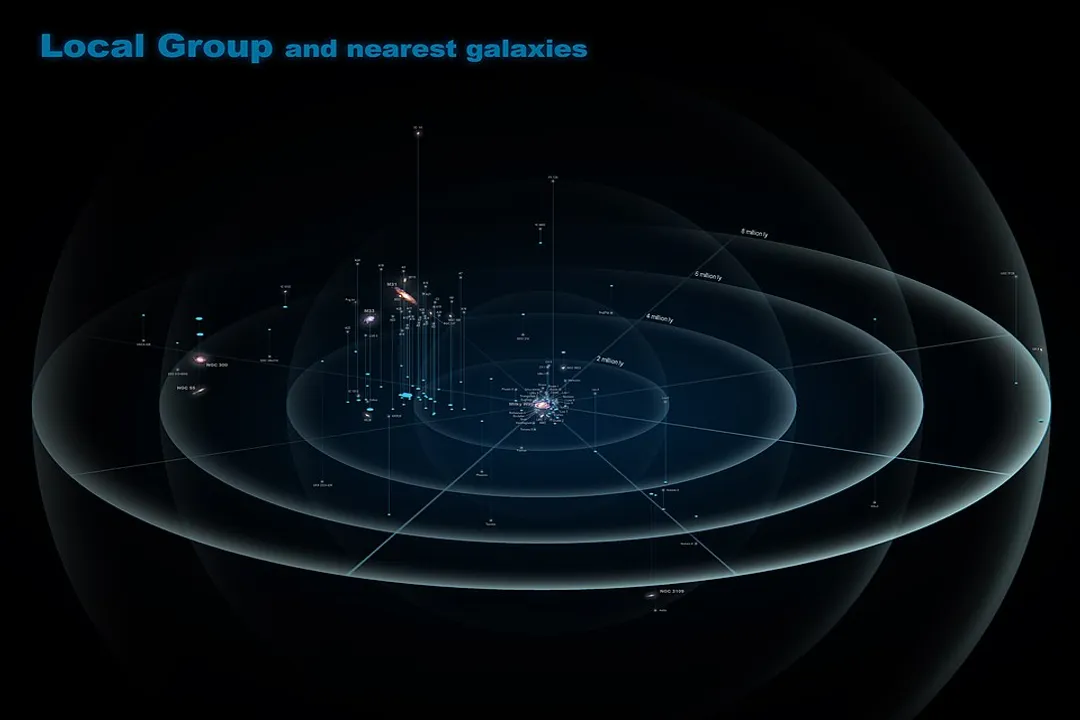
The Local Group is a modest galaxy cluster containing more than 50 known galaxies, though this number often fluctuates as new, faint dwarf galaxies are discovered [1][4]. Spanning a diameter of roughly 10 million light-years, this collection is dominated by three main spiral galaxies [7]. These are the Andromeda Galaxy, the Milky Way, and the Triangulum Galaxy (M33) [1][4]. The rest of the group is composed primarily of dwarf galaxies, which are much smaller and often orbit the larger spirals [1][8].
Gravity is the force that defines the Local Group [9]. Unlike the expanding universe that pushes galaxies apart over vast distances, the members of the Local Group are close enough that their mutual gravitational attraction overcomes the expansion of space [7]. This creates a stable system where galaxies interact, exchange matter, and eventually merge over eons [8]. Understanding this group provides a microcosm for how larger clusters of galaxies function across the universe [4].
# Andromeda Galaxy
The Andromeda Galaxy is the largest member of our Local Group, containing approximately one trillion stars—significantly more than the Milky Way’s estimated 200 to 400 billion stars [5][7]. Located about 2.5 million light-years away, it appears as a faint, smudge-like object to the naked eye under dark skies, but through a telescope, its true scale becomes apparent [4][8].
Structurally, Andromeda is a barred spiral galaxy, though its spiral arms are complex and distorted due to interactions with its own smaller satellite galaxies [1]. Observations have revealed that it possesses a massive halo of stars and dark matter that extends much further than its visible disk [4]. This dark matter halo is essential, as it provides the gravitational glue that holds the galaxy together and influences the motion of smaller companion galaxies like M32 and M110 [1].
For observers on Earth, Andromeda is the most distant object visible to the naked eye. When you gaze at it, you are seeing light that left the galaxy 2.5 million years ago. This provides a natural "time machine" effect, allowing us to see the galaxy as it existed long before modern humans evolved [8].

# Milky Way
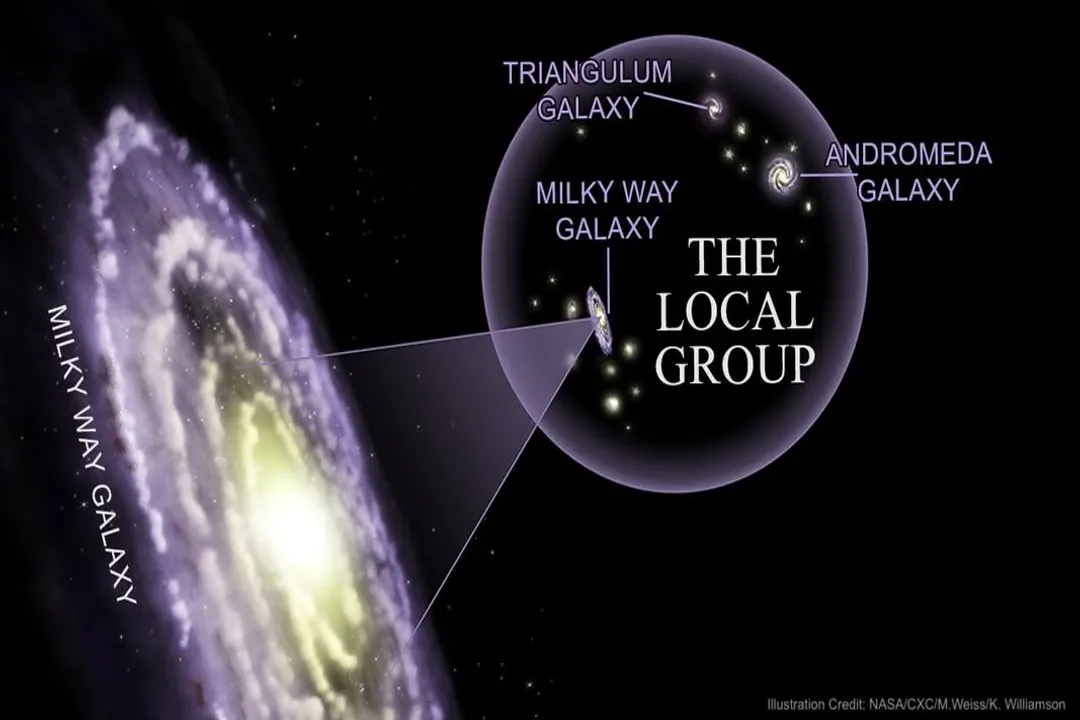
While Andromeda is the largest, the Milky Way is the galaxy we know best. It is a large barred spiral galaxy where our solar system resides [9]. Like Andromeda, it is surrounded by a system of smaller satellite galaxies, including the Magellanic Clouds [1]. The Milky Way and Andromeda are the two giants of the Local Group, and they account for the vast majority of the group's total mass [1][7].
For a long time, astronomers believed the Milky Way was larger than Andromeda. It was only after more precise measurements of stellar populations and rotation speeds that researchers realized Andromeda possesses more stars and potentially a larger dark matter halo [5]. Despite this, the Milky Way remains the primary laboratory for galactic study because we reside inside it, allowing for detailed mapping of star clusters, nebulae, and interstellar dust that is impossible to replicate for distant galaxies [6].
A helpful way to visualize the relationship between these two is to think of them as gravitational anchors. Most of the smaller dwarf galaxies in the Local Group are clustered around either the Milky Way or Andromeda, forming two distinct subgroups within the larger collection [1].
# Triangulum Galaxy
The third member of the Local Group's "Big Three" is the Triangulum Galaxy, or M33 [1]. While smaller than both Andromeda and the Milky Way, it is a significant spiral galaxy in its own right [4]. Triangulum is often considered a satellite of the Andromeda Galaxy, as it appears to be gravitationally tethered to the larger system [1].
Triangulum is notable for its active star-forming regions, particularly the nebula NGC 604, which is one of the largest star-forming nebulae in the Local Group [7]. Unlike the crowded, chaotic environments of some larger spirals, Triangulum offers a clearer look at the structure of spiral arms and the distribution of gas clouds [8]. It serves as a vital point of comparison for astronomers studying how star formation rates differ between large, mature spirals and smaller, more active ones [6].

# Galactic Dynamics
The most dramatic aspect of the Local Group is that it is not a static environment. Gravity is drawing the Milky Way and the Andromeda Galaxy toward each other at a rate of approximately 110 kilometers per second [8][9]. This implies that in about 4 to 5 billion years, these two galaxies will collide and merge, eventually forming a single, massive elliptical galaxy [8].
This impending merger is a standard process in the universe. Galaxies frequently interact and grow by absorbing smaller neighbors or merging with equals [7]. The dynamics of the Local Group are a reminder that galaxies are dynamic, changing systems. The "collision" will likely be a slow, gradual event, where the stars themselves are unlikely to collide due to the vast distances between them, but the gas and dust will be compressed, triggering massive waves of new star formation [8].
# Group Members
The Local Group is not just three galaxies; it is a complex, hierarchical system. The following table summarizes the primary classifications of members within our neighborhood.
| Galaxy Type | Characteristics | Examples |
|---|---|---|
| Spiral | Large, rotating disks with spiral arms; massive star populations. | Andromeda (M31), Milky Way, Triangulum (M33) |
| Dwarf Elliptical | Small, rounded, older star populations; very little gas. | M32, M110 |
| Dwarf Irregular | Chaotic shapes; high gas content; active star formation. | Magellanic Clouds, NGC 6822 |
| Dwarf Spheroidal | Faint, spherical or oval; low star density; difficult to detect. | Sculptor Dwarf, Fornax Dwarf |
This diversity in structure helps astronomers determine how galaxies evolve [1]. Elliptical galaxies often form from the remains of collisions, while irregulars may be the "building blocks" that have not yet been assimilated by larger neighbors [6].

# Observing Tips
Observing the Local Group from your own backyard can be a rewarding experience, even with limited equipment. While the Milky Way is seen from the inside, the Andromeda Galaxy is the best target for those wanting to see a galaxy from the outside.
- Use Averted Vision: If you are trying to spot M31 with the naked eye or binoculars, do not look directly at the center. Instead, look slightly to the side. The human eye has more light-sensitive rod cells in the periphery, which helps pick up the faint, diffuse light of the galaxy [8].
- Dark Skies are Vital: Light pollution is the enemy of galactic observation. Even a small amount of skyglow can wash out the subtle details of Andromeda or Triangulum. Traveling to a location with a low Bortle scale rating significantly increases the chances of seeing structure within these galaxies.
- Binoculars First: Beginners often try to jump straight to high-powered telescopes. However, a pair of 10x50 binoculars offers a wide field of view that is often better for framing the entire Andromeda galaxy than a narrow telescope view.
- Timing Matters: Seasons change which part of the sky is visible. Andromeda is best observed in autumn and winter evenings in the Northern Hemisphere, where it rises high overhead, minimizing the amount of atmosphere you are looking through.
Understanding our place in the Local Group puts our existence into a unique perspective. We are located in one of two major gravity wells in a small, isolated collection of galaxies. As we look at Andromeda, we are observing a future partner in a galactic merger, a reminder that the universe is constantly moving, shifting, and reorganizing itself on a timeline far longer than human history [9].
#Videos
Andromeda and the Local Group (go to 2020 4K edition) - YouTube
Related Questions
#Citations
Local Group - Wikipedia
Andromeda and the Local Group (go to 2020 4K edition) - YouTube
Local Group | SGCommand - Stargate Wiki - Fandom
The Local Group is our galactic neighborhood - EarthSky
Andromeda Galaxy, the largest galaxy in our local group. It is on a ...
The Local Group of Galaxies
Local Group | COSMOS - Centre for Astrophysics and Supercomputing
The Local Group: a guide to our galaxy's neighbourhood
Our Milky Way is part of the Local Group of galaxies. Gravity binds ...