How does the process of galactic recycling through supernovae support the continued existence of spiral galaxies?
Answer
It ejects heavy elements and gas back into the interstellar medium to sustain star formation
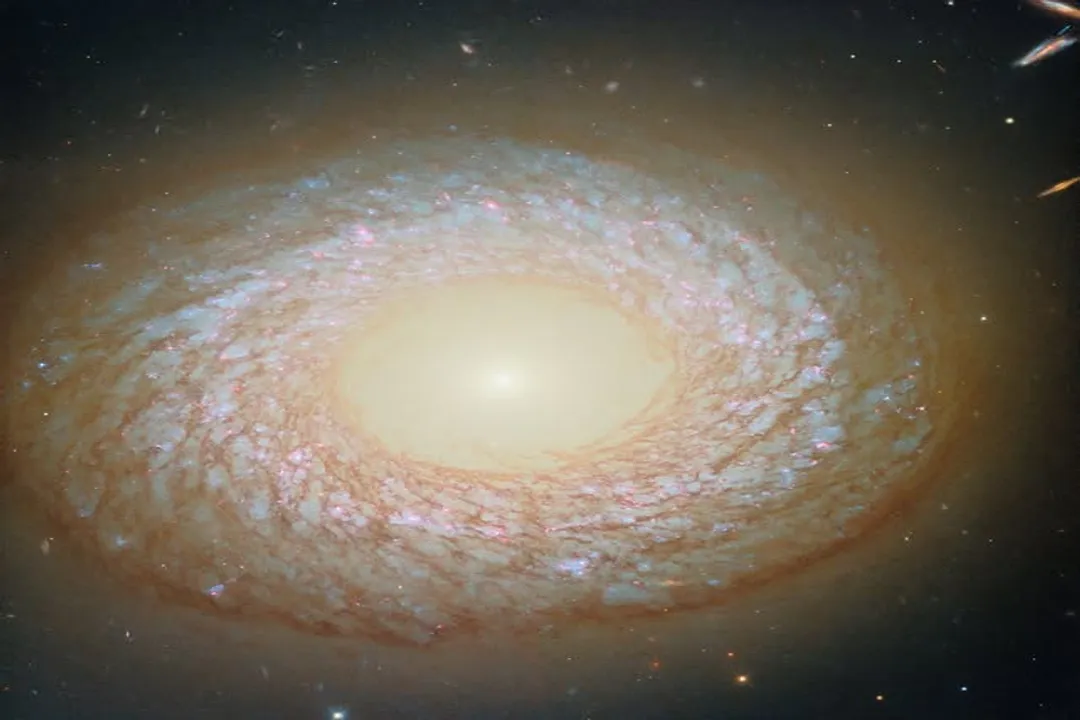
When massive stars in a spiral galaxy reach the end of their lifecycle, they end in violent supernovae explosions. This event is critical for the galaxy's health because it returns processed materials, including gas and heavy elements, back into the interstellar medium. This enrichment keeps the gas reservoir active, ensuring there is a steady supply of material available for the gravitational collapse required to birth new generations of stars.
Related Questions
Who popularized the classification system that categorizes galaxies into spirals, ellipticals, and irregulars?Why do spiral galaxies maintain a significantly higher gas and dust content compared to elliptical galaxies?Why do elliptical galaxies appear predominantly red or yellow in astronomical observations?What makes irregular galaxies notable regarding their gas-to-star ratios?How does the process of galactic recycling through supernovae support the continued existence of spiral galaxies?What happens to the gas content of galaxies during the intense environment of a galaxy merger?What is the physical significance of observing dark dust lanes within a galactic structure?Why are elliptical galaxies frequently characterized as having declared star-formation bankruptcy?What physical characteristic of young stars causes spiral galaxies to exhibit a blue tint?What materials primarily compose the interstellar medium that acts as fuel for star creation?