How does a supernova differ fundamentally from the typical nova event observed in T CrB?
Answer
A supernova marks the true death of a massive star or runaway detonation past a mass limit.
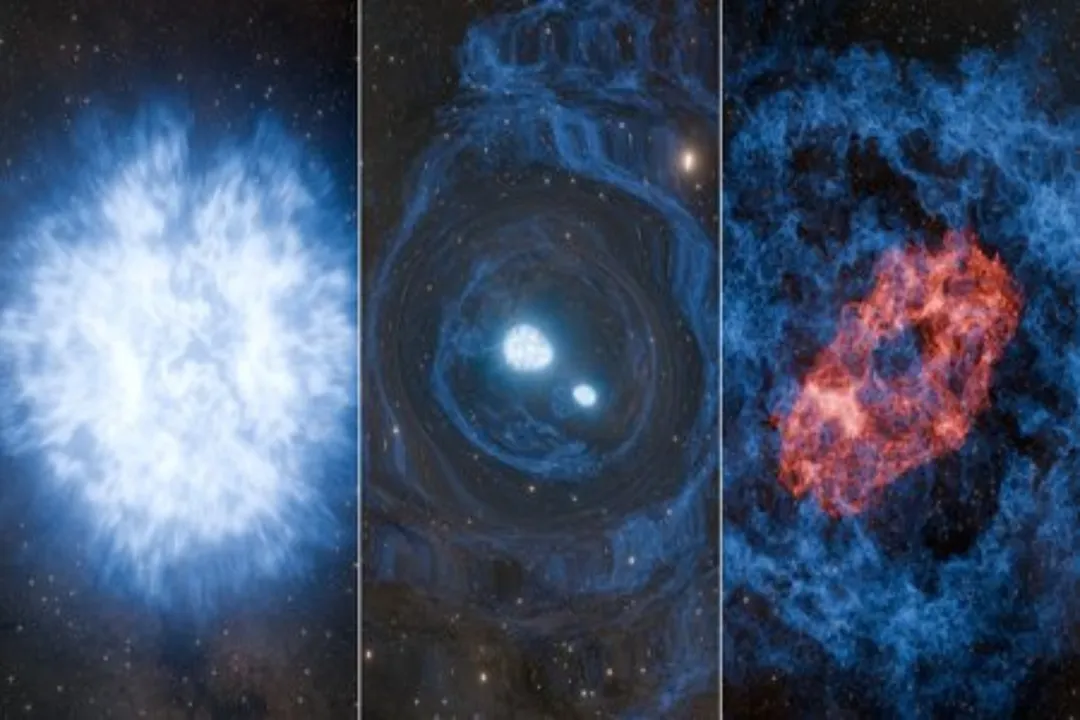
The difference between a standard nova and a supernova is rooted in the scale of the event and the ultimate fate of the star involved. A standard nova is a surface event on a white dwarf that survives, caused by a thermonuclear flash of accreted hydrogen. In contrast, a supernova signifies a far more catastrophic event, either resulting from the complete collapse and death of a truly massive star or involving a white dwarf that has accumulated so much mass that it exceeds its stability limit, leading to a runaway thermonuclear detonation that destroys the star entirely. Kepler's Supernova comparison explicitly illustrates this vast energetic gap.
Related Questions
What triggers the sudden brightening in a typical nova involving a white dwarf?What happens to the white dwarf star after causing a typical recurrent nova outburst?What apparent magnitude is T Coronae Borealis (T CrB) expected to reach during an eruption?How does a supernova differ fundamentally from the typical nova event observed in T CrB?For how long was Kepler's Supernova (SN 1604) visible during the daytime?What rare opportunity does monitoring T CrB provide regarding stellar evolution?What extremely rare event involving two exploding stars was reported in 2024?How quickly are modern transient events like T CrB monitored events confirmed compared to historical supernovae?What causes a white dwarf to undergo a supernova detonation instead of a standard nova?What characteristic makes the expected T CrB eruption easily visible to the public?