What is a nova outburst?
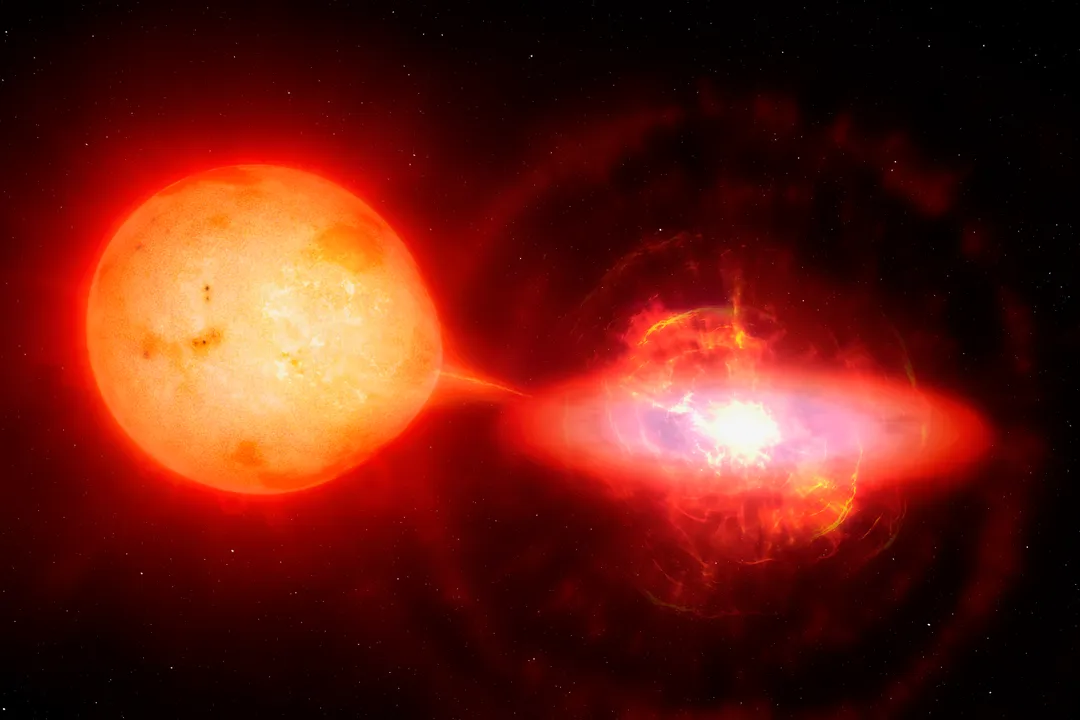
The sudden appearance of a new, bright star in the night sky is a genuinely breathtaking event, one that ancient observers might have attributed to divine intervention or cosmic upheaval. Today, we understand these transient stellar phenomena as nova outbursts, a dramatic yet recurring event involving a close binary star system. [1][2] The word nova itself is Latin for "new," perfectly capturing the visual impact when a previously faint or invisible star suddenly blazes into view, sometimes becoming bright enough to be seen with the naked eye. [4][9]
# Binary Setup
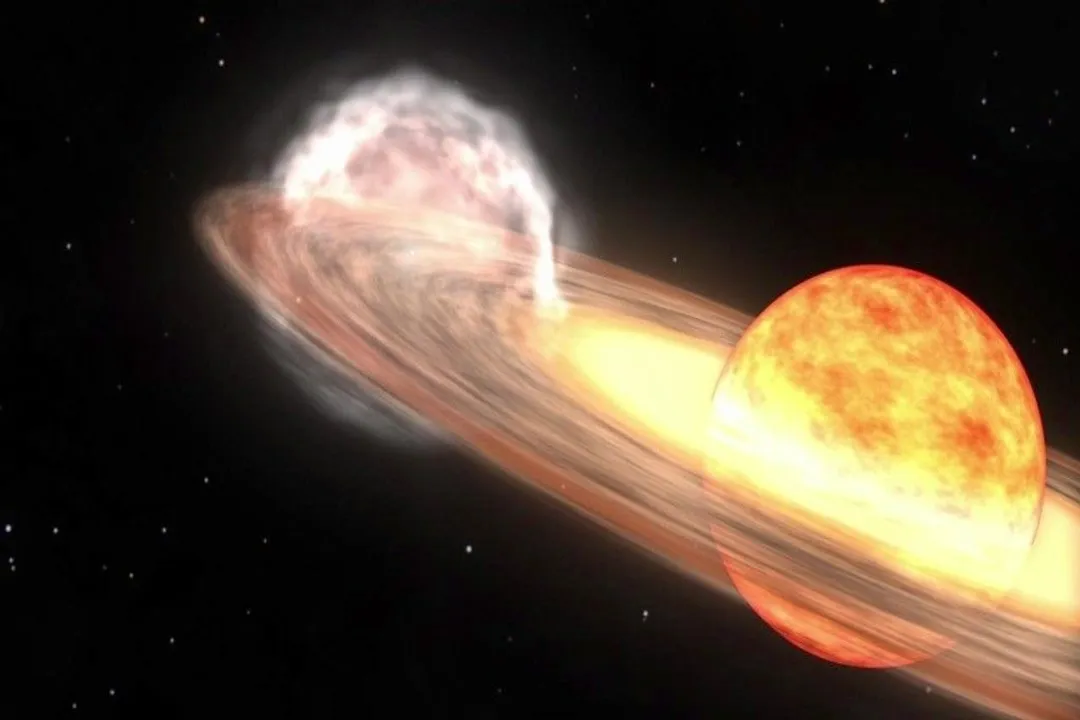
A nova is not a single star exploding entirely; rather, it is a thermonuclear runaway reaction occurring on the surface of one component in a tightly bound pair of stars. [1][10] This pairing invariably involves a white dwarf and a more conventional companion star, such as a main-sequence star or a red giant. [2][3]
The white dwarf is the collapsed remnant of a Sun-like star that has exhausted its nuclear fuel and shed its outer layers. [1] It is incredibly dense—a teaspoon of its material would weigh several tons—and its gravity is immense. [1] This gravity is the driving force behind the nova cycle. [10]
The companion star orbits the white dwarf closely, often with periods of mere hours or days. [2] Because the white dwarf's gravity is so strong, it begins to siphon or accrete material—primarily hydrogen and helium—from its larger neighbor. [1][3] This material forms a swirling disc around the white dwarf before settling onto its surface, building up a layer of fresh fuel. [10]
# Accretion Dynamics
The material captured from the companion star accumulates on the white dwarf's surface over long timescales, sometimes thousands of years, building a dense layer of hydrogen gas. [2] As this layer piles up, the pressure and temperature at its base increase dramatically due to the crushing weight of the overlying material and the intense gravitational field of the compact star. [1][10]
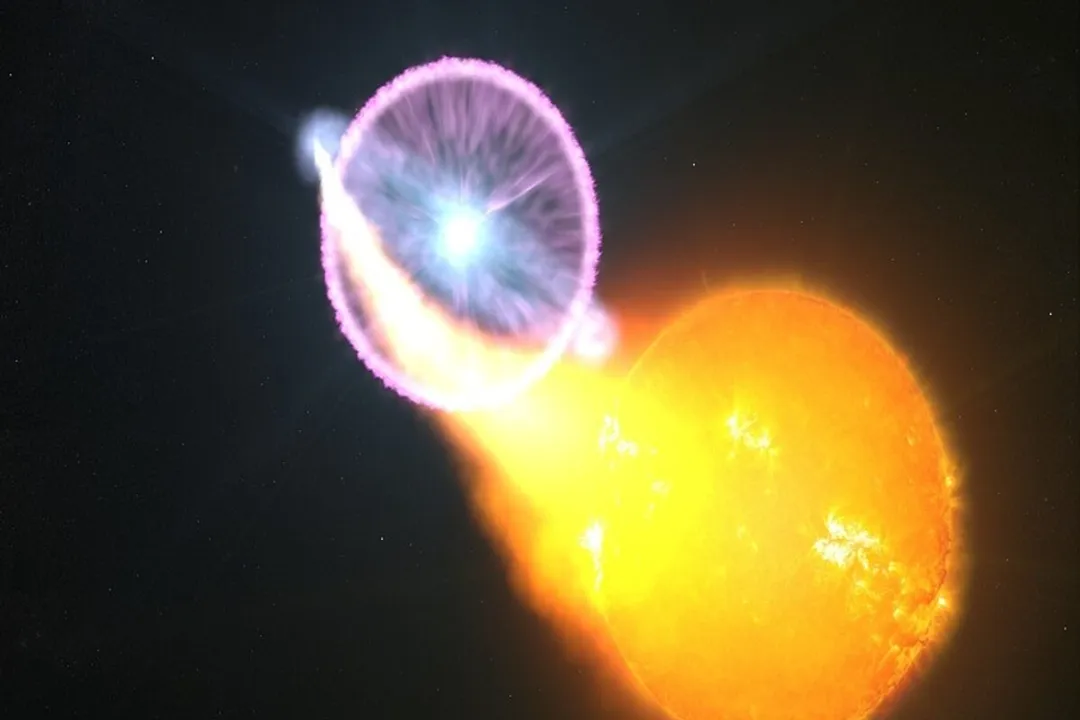
When the accumulated layer reaches a critical threshold—roughly one hundred-thousandth of the Sun's mass—the core of this surface layer becomes hot and dense enough to ignite nuclear fusion of hydrogen into helium. [1][2][3] This ignition is not gradual; it is a thermonuclear runaway event. [1] The fusion proceeds violently and unstably because the material is degenerate—its pressure is not primarily dependent on temperature, meaning standard stellar temperature regulation mechanisms fail. [2][10]
This uncontrolled reaction causes the surface layer to violently expel into space, creating the visible light show we call a nova outburst. [1][3] The process essentially acts like a massive stellar hydrogen bomb detonating on the surface of the white dwarf. [9]
# Nova Versus Supernova
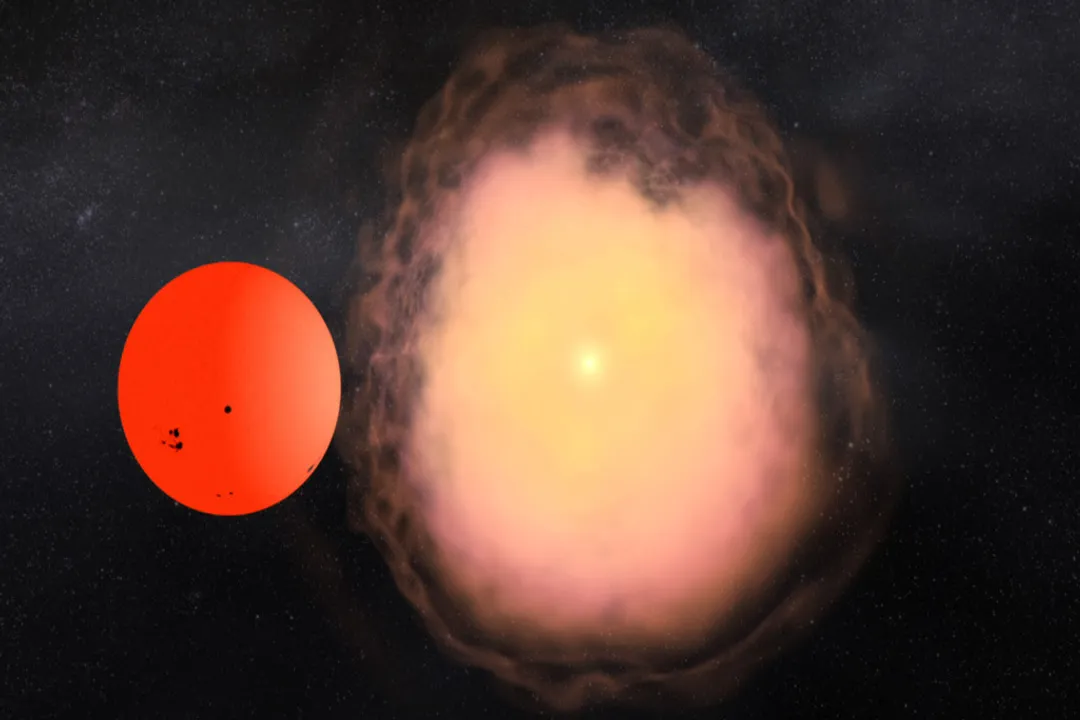
It is crucial to distinguish a nova from a more catastrophic event, the supernova. [1][9] While both involve sudden, massive increases in brightness, the underlying physics and consequences are fundamentally different. [3]
In a nova, the white dwarf survives the explosion. [1][3] The expelled material is only the surface layer, leaving the white dwarf intact and ready to begin the accretion process anew, leading to future outbursts. [2][10] For example, systems like RS Ophiuchi are known recurrent novae, indicating a potential for repeated eruptions over decades or centuries. [2]
In contrast, a Type Ia supernova occurs when a white dwarf accretes so much material that it crosses the Chandrasekhar Limit (about $1.4$ times the mass of the Sun). [3] At this point, the entire star collapses and detonates in a thermonuclear explosion that completely destroys the white dwarf. [1][9] Novae, while incredibly bright, do not reach the luminosity or destructive potential of a supernova. [3] If we imagine the Sun's total energy output over its entire lifetime, a nova can briefly outshine the Sun by tens of thousands of times, but a supernova can briefly outshine an entire galaxy. [1]
The energy released by a typical nova is often cited in the range of to ergs. [6] The key differentiator, which astronomers can confirm through spectroscopic analysis, is the presence of the surviving white dwarf after a nova, versus its complete obliteration following a Type Ia supernova. [3][9]
# Observing the Eruption
When a nova erupts, its brightness can increase by anywhere from $7$ to $16$ magnitudes, sometimes reaching first or second magnitude visibility. [2][4] The speed and duration of this brightening and fading depend on the specific system, but the event is generally rapid in astronomical terms. [1]
Some novae, known as classical novae, take a long time to build up to an eruption, sometimes showing only one outburst in recorded history. [2] Others are classified as recurrent novae, which erupt much more frequently, perhaps every few decades to a few centuries. [2] A fascinating aspect of this research is the effort to identify systems that might eventually lead to a supernova, though the mass transfer rate in most known nova systems suggests they are far below the critical mass limit for self-destruction. [3]
Observational programs track these events closely. For instance, a recent outburst observed in Centaurus was tracked to study the evolution of the ejected gas shell. [4] Similarly, events like the one observed in T Coronae Borealis (T CrB) provide tangible data points for astrophysicists. [9] T CrB is one of only a handful of known recurrent novae visible in the Northern Hemisphere, making its eruption highly anticipated by the astronomical community. [9]
A comparison of the light curves—graphs plotting brightness over time—reveals distinct patterns. Some novae fade relatively quickly, while others show a slower decline or even slight re-brightenings as shocks travel through the expanding shell of gas. [2] The peak luminosity observed is heavily dependent on the mass of the white dwarf and the efficiency of the thermonuclear burn, meaning not all novae are equally bright. [10]
# Measuring Cosmic Distances
An interesting application of studying novae arises from their relative uniformity in peak brightness compared to supernovae. [1] Because the mechanism that triggers the outburst is tied to the white dwarf reaching a specific critical mass before ignition, the maximum luminosity attained by many classical novae is remarkably similar, though with some scatter. [10]
This consistency offers a potential yardstick for measuring distances across the galaxy, much like Type Ia supernovae are used to measure cosmological distances. [1] If an astronomer can accurately determine the peak absolute brightness of a nova from the light curve analysis, and then measure its apparent brightness from Earth, they can calculate its distance using the inverse-square law for light intensity. While not as precise as other standard candles, tracking the rise and fall of a known nova system provides valuable constraints on distances to faint, distant parts of the Milky Way where other standard candles are too sparse to rely upon. This ability to map our galaxy relies on consistent physical processes happening billions of miles away. [1]
# Understanding the Ejecta
The material thrown off during the outburst is extremely important for understanding the physics involved. This ejected shell moves outward at speeds that can reach thousands of kilometers per second. [2] Observing this expanding shell over months and years allows scientists to study the chemical composition created by the fusion event and map the geometry of the binary system. [2][6]
The ejected material is rich in elements heavier than hydrogen and helium, such as carbon, oxygen, and neon, which were synthesized either in the shell itself or through earlier stages of the companion star's life. [1] Analyzing the spectral lines emitted by this fast-moving gas provides direct evidence of the nuclear reactions that just occurred. [10] Furthermore, high-resolution imaging, sometimes requiring interferometry to resolve the angular size of the expanding cloud, helps map the three-dimensional structure, which can sometimes be complex, showing rings or bipolar outflows rather than simple spheres. [6]
# Recurrence and System Evolution
The fate of the binary system is dictated by the mass transfer rate and the efficiency of ejection. [2] In systems where the white dwarf gains mass after each event, the recurrence time shortens. Conversely, if the companion star eventually evolves away from the white dwarf, or if the transfer becomes inefficient, the novae could cease entirely. [2]
The concept of recurrent novae is key here. Systems like T CrB are thought to be very close to the mass transfer limit necessary for a Type Ia supernova, though they still seem to avoid complete destruction. [9] In contrast, some white dwarfs will only erupt once every several thousand years, making them classical novae in the historical sense. [2] It is useful to think of the binary system as a cosmic hourglass: the size and speed of the grains (the mass transfer rate) determine how quickly the 'sand' (the surface layer) piles up until the next 'clog' (the thermonuclear runaway) occurs. This continuous interaction between two stars, one dying and one feeding it, provides a persistent laboratory for studying extreme physics within our galaxy. [10] The material ejected in one nova event can enrich the interstellar medium with heavy elements, contributing to the next generation of stars and planets. [1]
# Future Study
Modern astronomy continues to refine our understanding of these events using advanced techniques. Projects that monitor the sky continuously are vital for catching novae in their earliest, fastest-rising phases, which are the most scientifically valuable for determining the physics of ignition. [4] Continued observation, especially with telescopes capable of high spectral resolution, will help astronomers determine the exact elemental abundance in the ejected material, providing a final verdict on the precise nuclear pathways taken during the outburst. [10] These seemingly small stellar fireworks are, in reality, critical pieces of the puzzle explaining how matter cycles and how stars evolve within binary systems. [1][2]
#Videos
Once-in-a-Lifetime Nova Outburst 3,000 Light Years Away Will Make ...
Related Questions
#Citations
What's a Nova? Inside the Chaos of Erupting and Exploding Stars
Nova - Wikipedia
What is a Nova Explosion? Astrophysicist Explains
Nova outburst in Centaurus - Astronomy Now
Once-in-a-Lifetime Nova Outburst 3,000 Light Years Away Will Make ...
Cosmic Blast - NASA Scientific Visualization Studio
A nova outburst powered by shocks - NASA/ADS
Nova outburst | The Planetary Society
A spectacular celestial event: Nova explosion in Northern Crown ...
Nova Explosions