How common are Novas?
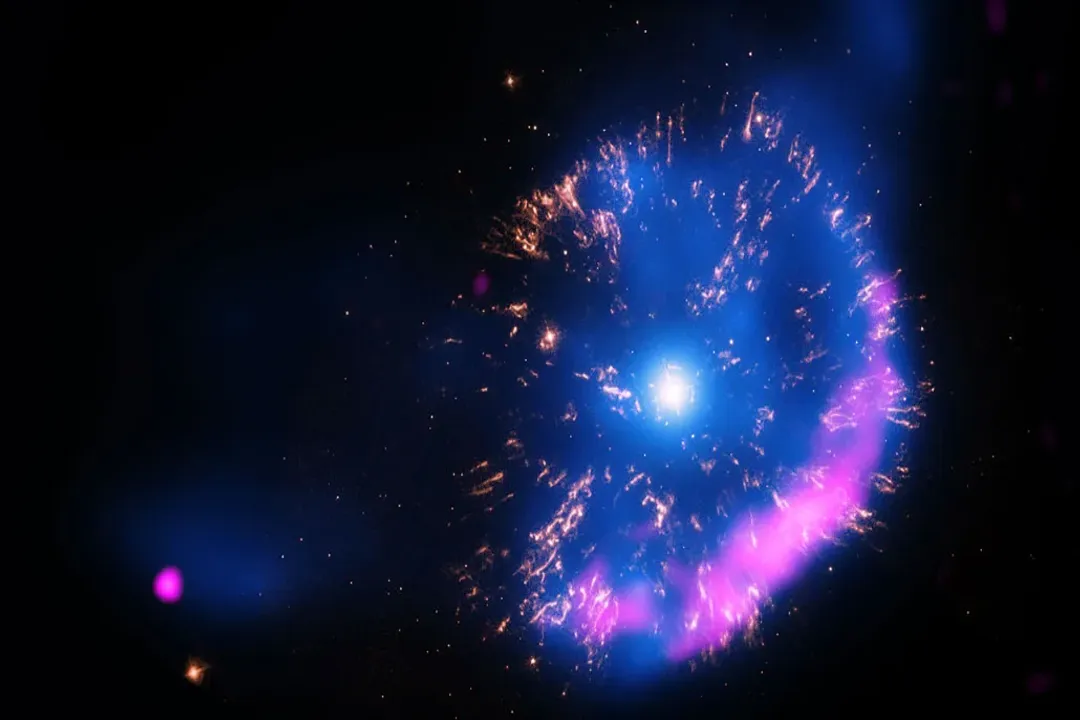
The question of how frequently stellar explosions occur in our galaxy often leads to confusion between two very different astronomical events: the nova and the much more dramatic supernova. Understanding their respective commonality requires first drawing a clear line between them, as one is a relatively frequent, if localized, flare-up, while the other represents the catastrophic death of a massive star. [7][8]
# Event Types
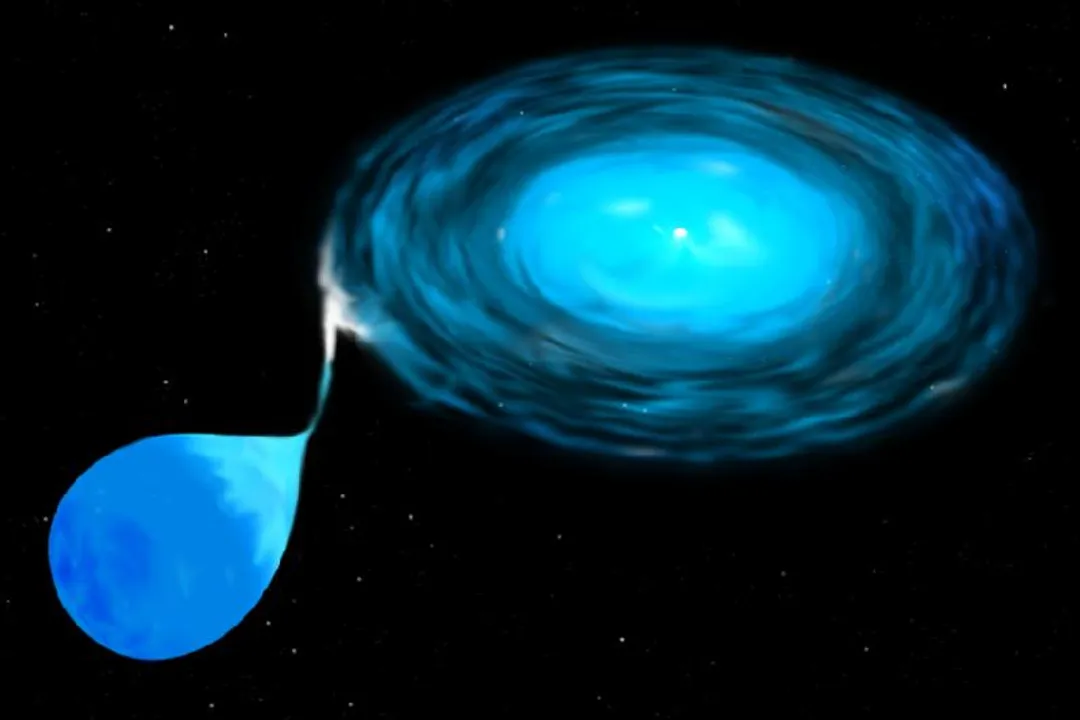
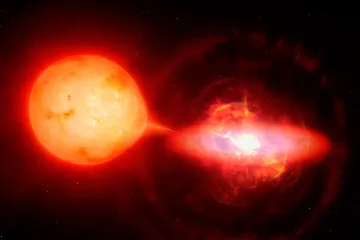
A nova (the Latin word for "new") describes a sudden and temporary brightening of a star. [7] This event typically occurs within a binary star system involving a white dwarf. The white dwarf gravitationally pulls material, mostly hydrogen, from its stellar companion. [7] As this material accumulates on the surface of the white dwarf, it eventually triggers a massive thermonuclear reaction, causing the star to erupt and become momentarily much brighter. [7] This process can repeat over long timescales, meaning the star itself survives the event. [7]
In contrast, a supernova is an explosion of vastly greater magnitude. [8] Supernovae are categorized primarily by their cause. One type involves the core collapse of a massive star when its fuel runs out, while another occurs when a white dwarf accumulates too much mass, exceeding the stability limit known as the Chandrasekhar limit, leading to a runaway nuclear detonation that completely destroys the star. [7][8] Because a supernova involves the destruction or fundamental restructuring of a star, it is inherently a much rarer event than a standard nova eruption. [5]
If you are scanning the night sky hoping to witness one of these events, the differences in frequency are crucial. While we don't have definitive, precisely agreed-upon counts for all the novae happening across the Milky Way, the far rarer supernova rate is where astronomers have spent considerable effort trying to pin down reliable numbers for our galaxy. [3]
# Galactic Counts
Determining the precise number of supernovae happening annually within the Milky Way has proven challenging, leading to a wide range of estimates found in astronomical literature. These estimates span nearly four orders of magnitude, which speaks to the difficulty of counting events that are often obscured from our view. [3]
For instance, some estimates suggest that the rate of supernova explosions in our galaxy hovers around just two per century. [3] Another calculation places the average rate slightly higher, at approximately three per century. [2] These figures imply an event happening perhaps once every 30 to 50 years across the entire galaxy.
However, other estimates suggest a far more dynamic stellar graveyard. One calculation posits that the Milky Way experiences roughly four dozen supernovae per year. [6] If one were to take this upper estimate—48 events per year—that would translate to 4,800 events per century, making supernovae thousands of times more common than the lower estimates suggest. The simple fact that multiple, seemingly authoritative figures can vary so dramatically underscores that pinning down the true current rate remains an active area of research. [3][6]
It is worth noting that the much more frequent nova events, while happening on individual binary systems, are simply not as luminous across interstellar distances as a supernova. A nova might be visible across significant stretches of the galaxy, but a supernova is billions of times brighter, allowing us to detect them from distant galaxies as well. [8]
To put these numbers into a human context, considering the lowest estimate of 2 per century, an individual born today would have a statistical chance of seeing only one supernova in their lifetime if they lived to be 100, assuming it occurred near enough to be visible. If the higher estimate of 48 per year is correct, then several supernovae would occur in the Milky Way every single month, though most would be hidden from our sightline. [3]
# Obscured Views
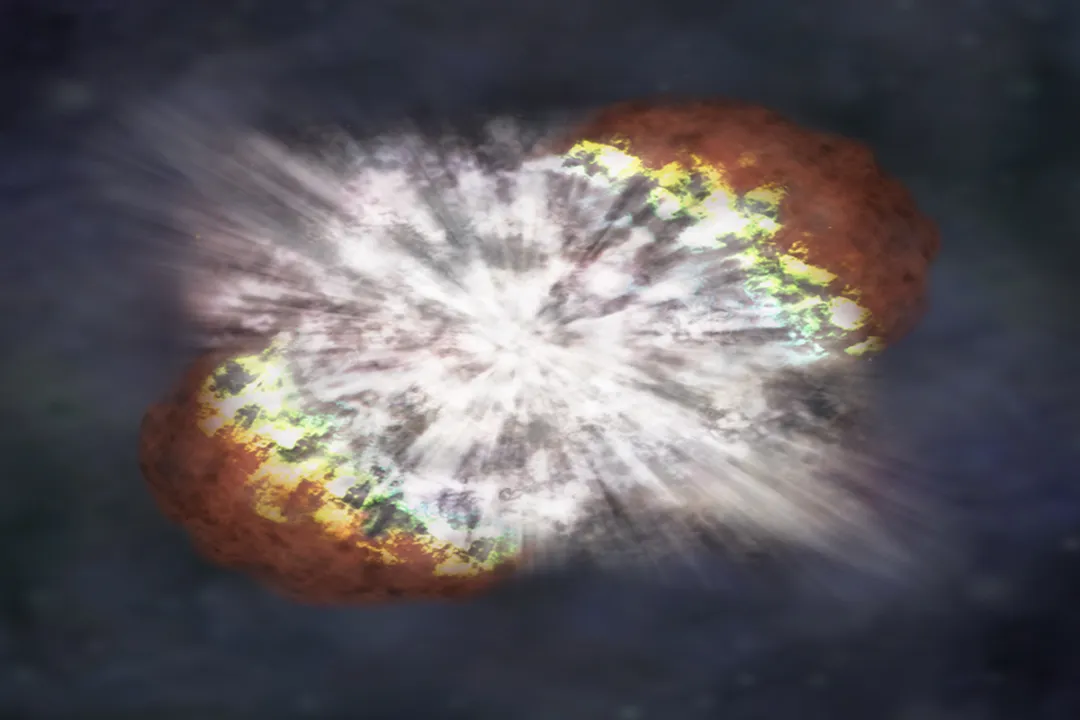
A key reason for the variance in published supernova rates is observational bias. Our solar system resides within the galactic plane, which is densely packed with dust and gas clouds. [3] These interstellar obstructions effectively block our view of many distant stars and stellar explosions occurring deep within the disk or on the far side of the galactic center. [4]
When we observe supernovae, we are often seeing the ones that are relatively nearby or those that occur in directions where the obscuring dust is thinner, such as away from the dense spiral arms. [3] The true number of stellar deaths is likely higher than what current surveys detect, as many events are likely occurring behind thick curtains of cosmic dust, invisible to our telescopes until they interact with surrounding gas, which can sometimes take years. [3]
The visibility is also heavily dependent on proximity. If a supernova were to occur in the nearby vicinity of Earth, say within 50 light-years, it could potentially release enough high-energy radiation to impact life on our planet, though no such immediate threat exists among known stars. [4] On the safer end of the scale, a supernova exploding at the center of our galaxy, roughly 26,000 light-years away, would still be bright enough to be seen in daylight here on Earth, yet it would pose no danger to us. [4] This illustrates that while the rate might be low, the potential spectacle is enormous, provided the event isn't obscured by dust clouds. [4]
# The Hidden Frequency of Novae
Returning to the initial question regarding the commonality of novae, it is generally accepted in astronomy that these surface explosions are significantly more frequent than supernovae. [7][8] While the provided sources focus their numerical analysis on the rarer supernovae, the mechanism of a nova—a hydrogen flash on the surface of a white dwarf—is far less energetic than a full star destruction event.
In systems prone to novae, the recurring nature of the accretion process means that an eruption could happen over decades or centuries, not millennia. Considering the billions of stars in the Milky Way, and the fact that many exist in binary pairs necessary for this process, the sheer number of potential nova systems suggests that the total number of observable novae across the galaxy in any given year must be substantially higher than the few supernovae estimates we discussed. [7] If a supernova might happen once a century, a nova could easily occur dozens of times within that same timeframe in a single, active binary system.
One must also consider that observing a faint nova in a distant part of the galaxy requires dedicated, wide-field sky surveys or specialized equipment, whereas a supernova brightens so intensely it can momentarily outshine entire galaxies, making its detection a matter of chance or dedicated long-term monitoring. [4] The rarity of a supernova is tied to the rarity of complete stellar death, while the commonality of a nova is tied to the stability of a binary transfer system, making the latter a much more frequent, albeit less dramatic, celestial occurrence. [7]
#Videos
How Common Are Novae? - Physics Frontier - YouTube
Related Questions
#Citations
What Is a Supernova? | NASA Space Place – NASA Science for Kids
What are the chances of seeing a supernova In your own Naked eye?
The number of Milky Way nova explosions per year has been ...
How Often Do Supernovas Strike Earth? | Scientific American
If there are so many stars in the Universe, why are Supernovas so ...
Scientists Estimate Four Dozen Novae Per Year in Milky Way
Nova | Supernovae, Stellar Evolution & Neutron Stars | Britannica
How Common Are Novae? - Physics Frontier - YouTube
What does it mean for a star to go nova or supernova? Can I safely ...