If a supernova exploded 26,000 light-years away at the center of our galaxy, how visible would it be on Earth?
Answer
It would still be bright enough to be seen in daylight here on Earth.
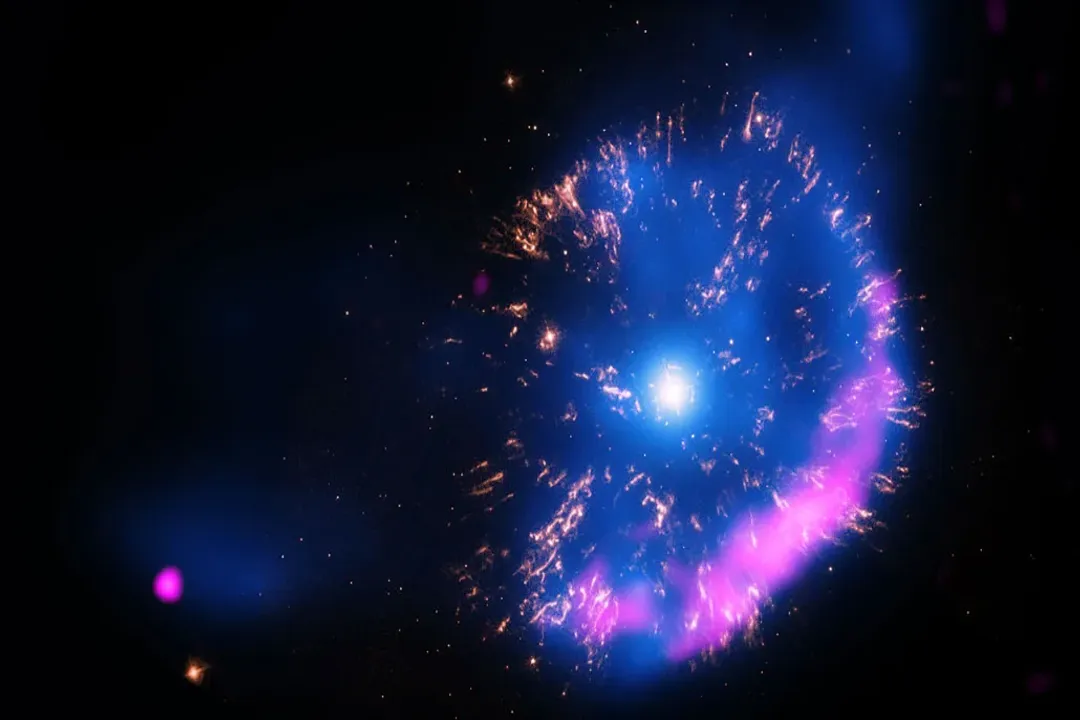
The immense inherent energy release of a supernova dictates that even events occurring at great distances remain remarkably visible. A supernova exploding at the galactic center, estimated to be roughly 26,000 light-years away from Earth, would still generate enough light to be prominently visible against the daytime sky on our planet. This capability to shine so brightly over vast cosmic distances underscores the difference in magnitude between a supernova and a nova, which may only be visible across significant stretches of the galaxy but not nearly with the intensity of a stellar death explosion at that range.
#Videos
How Common Are Novae? - Physics Frontier - YouTube
Related Questions
What process triggers the sudden brightening observed in a nova event?Why is a standard nova eruption inherently less rare than a supernova?What condition causes one type of supernova via runaway nuclear detonation?What is the lowest estimate cited for the annual rate of supernova explosions in the Milky Way?How much brighter is a supernova compared to a standard nova event across interstellar distances?What primary environmental factor causes variance in published supernova rate estimates for the Milky Way?If the Milky Way experiences four dozen supernovae per year, how many centuries would that equate to?What structural requirement is necessary for the recurring process that causes a nova eruption?If a supernova exploded 26,000 light-years away at the center of our galaxy, how visible would it be on Earth?What determines the commonality of a nova versus the rarity of a supernova?