Why is the current census of known exoplanets heavily weighted toward 'hot Jupiters' or 'hot super-Earths'?
Answer
Their short orbital periods make their transits easy to spot and confirm quickly.
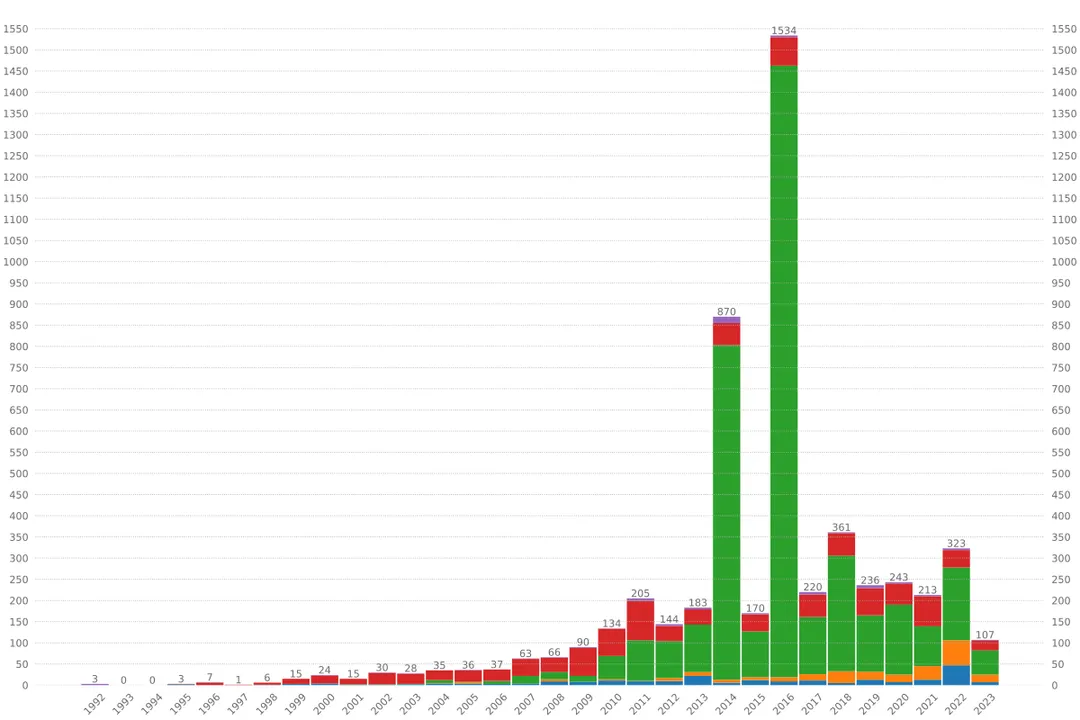
The transit method, being the most prolific, preferentially finds planets whose short periods allow for frequent monitoring and rapid confirmation of recurring dimming events.
Related Questions
What precise alignment must occur for the transit method to observe an exoplanet?What characteristic of the planet is directly related to the depth of the light decrease observed during a transit?Which planetary property is primarily determined by the radial velocity method?How does the radial velocity method reveal the star's movement along our line of sight?Under which specific viewing geometry does the radial velocity method fail to detect a planet's gravitational tug?What aspect of stellar motion does the astrometry technique monitor, distinguishing it from radial velocity?What instrument is employed in direct imaging to overcome the primary obstacle of detecting an exoplanet?Which phenomenon is gravitational microlensing reliant upon for detection?What crucial physical characteristic can be calculated when both the radius (from transit) and mass (from radial velocity) of a planet are known?Why is the current census of known exoplanets heavily weighted toward 'hot Jupiters' or 'hot super-Earths'?