Why is atmospheric oxidation slower on Earth compared to Mars regarding surface iron exposure?
Answer
Earth's strong magnetic field and thick ozone layer shield iron from intense radiation
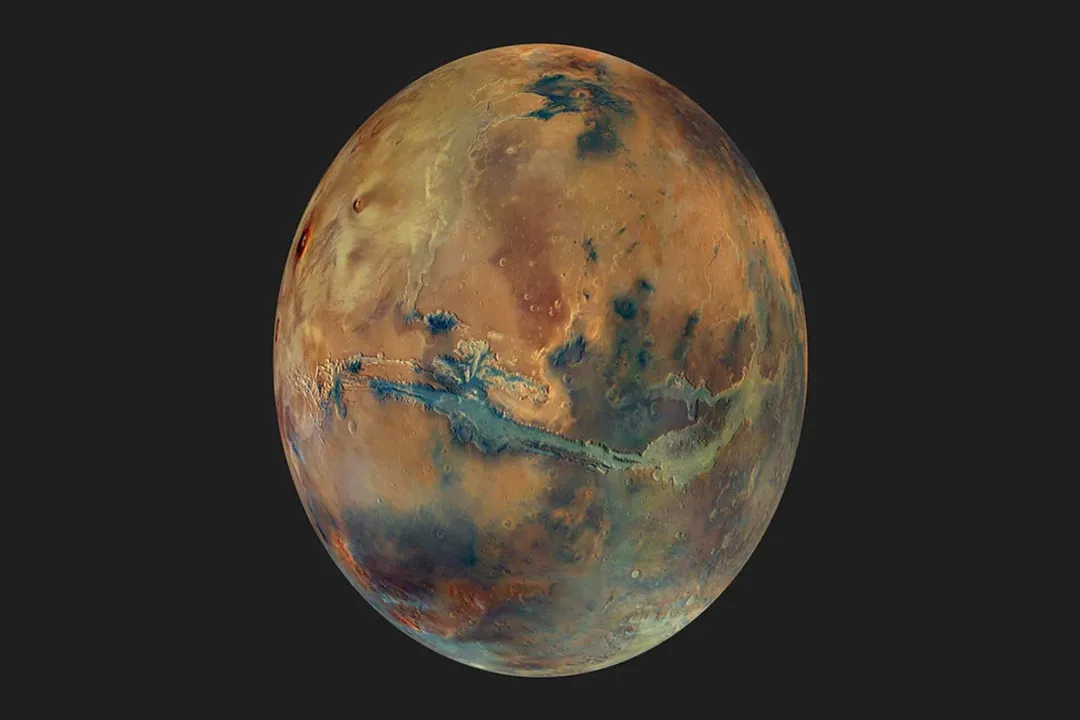
The difference in oxidation rates between Earth and Mars is strongly tied to planetary protection mechanisms. Earth benefits from a robust, strong global magnetic field and a thick ozone layer, both of which act as significant shields. These layers protect surface iron from harsh solar and cosmic radiation that drives chemical breakdown. In contrast, Mars lacks this comprehensive shielding, leaving surface iron directly exposed to intense radiation, which accelerates the photochemical reactions necessary to drive atmospheric oxidation, even if these reactions proceed slowly over vast geological timescales.
#Videos
New study explains why Mars is RED - YouTube
Related Questions
What chemical signature dominates the Martian surface, causing the ruddy glow?Which specific iron oxide provides the deep, characteristic red tint to Mars?What magnetic property characterizes stable, fully oxidized hematite ($ ext{Fe}_2 ext{O}_3$) on the Martian surface?What role is liquid water believed to have played during Mars's ancient epoch regarding iron oxidation?How do modern atmospheric processes continue surface rusting without significant standing liquid water?Why is atmospheric oxidation slower on Earth compared to Mars regarding surface iron exposure?Which mineral is noted spectrally as a less weathered or intermediate product compared to hematite?What does the surface coverage of non-magnetic hematite signify about the crustal iron inventory?How do Martian dust storms mechanically contribute to maintaining the oxidized state of the surface material?Which state of iron, associated with meteorites or the core, is described as being strongly ferromagnetic?What contrast exists between the Martian crustal inventory and the potential iron state in the core?