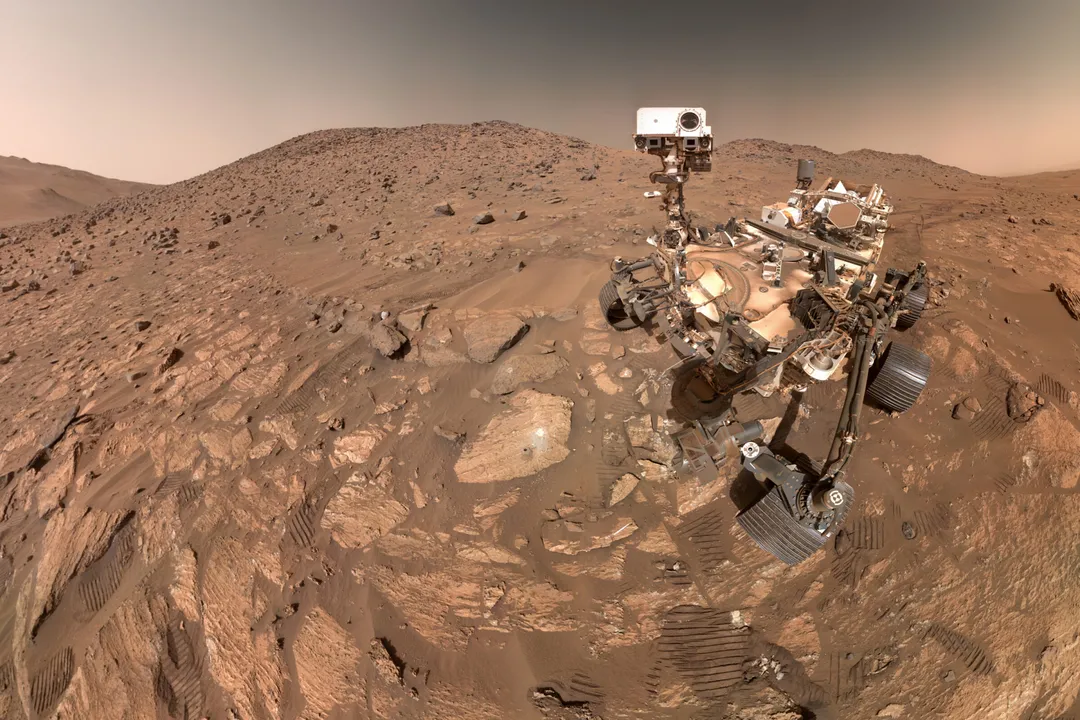
Which two elements define the highest standard of scientific proof currently aimed for in the search for Martian life?
In situ analysis followed by sample return.
The history of Martian life detection has been plagued by ambiguity, stemming from relying on remote observations—whether visual smudges or intermittent atmospheric signals. The limitations of single-instrument readings taken from millions of miles away necessitate a higher level of verification. The move toward the highest standard of scientific proof involves a two-pronged approach: first, performing detailed analysis of materials directly where they are found (in situ analysis) to characterize them thoroughly, and second, physically collecting tangible samples of Martian material and bringing them back to highly sensitive laboratories on Earth. This sample return capability allows for comprehensive testing across numerous independent instruments, mitigating the inherent uncertainty of remote investigation.