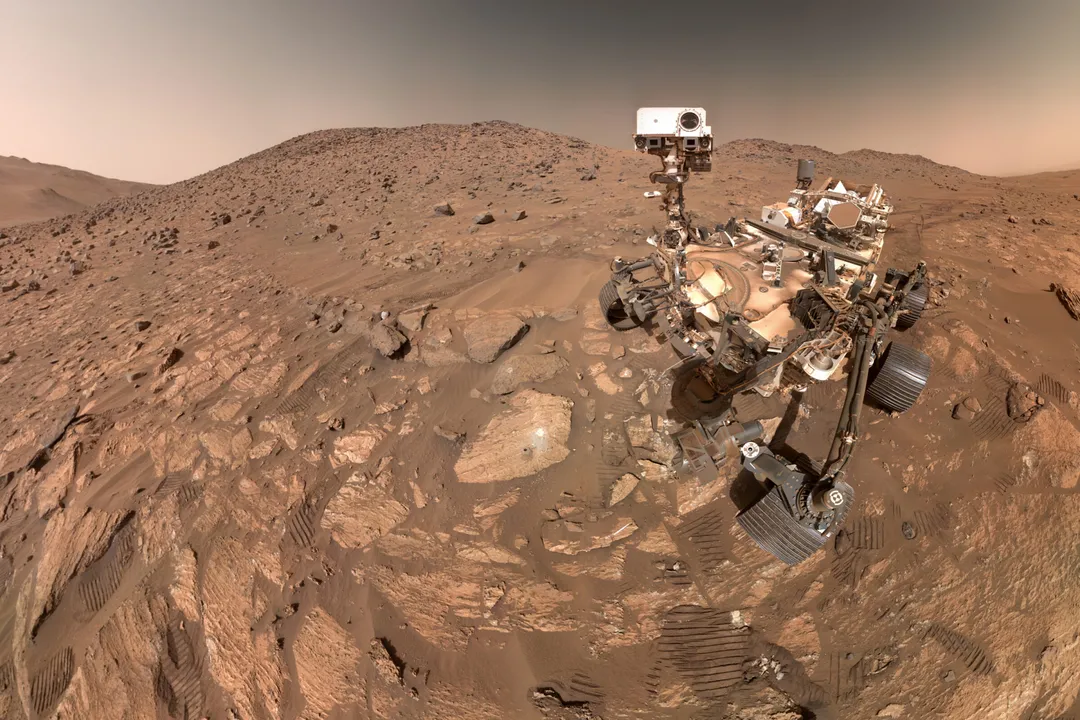
What two crucial factors change for potential life existing beneath the Martian surface?
Radiation shielding increases significantly, and subsurface water ice or liquid brine pockets can provide a solvent.
Life on the Martian surface faces insurmountable challenges due to the harsh environmental factors exacerbated by the thin atmosphere and absence of a global magnetic field. Consequently, subsurface existence is favored because conditions drastically improve. Firstly, the overlying layers of rock and soil provide substantial shielding against the destructive bombardment of intense solar and cosmic radiation. Secondly, this protected environment offers a higher probability that essential prerequisites for terrestrial-like life can be maintained, specifically the presence of a solvent—either subsurface water ice that can occasionally melt or pockets of liquid brine—necessary for chemical reactions to occur.