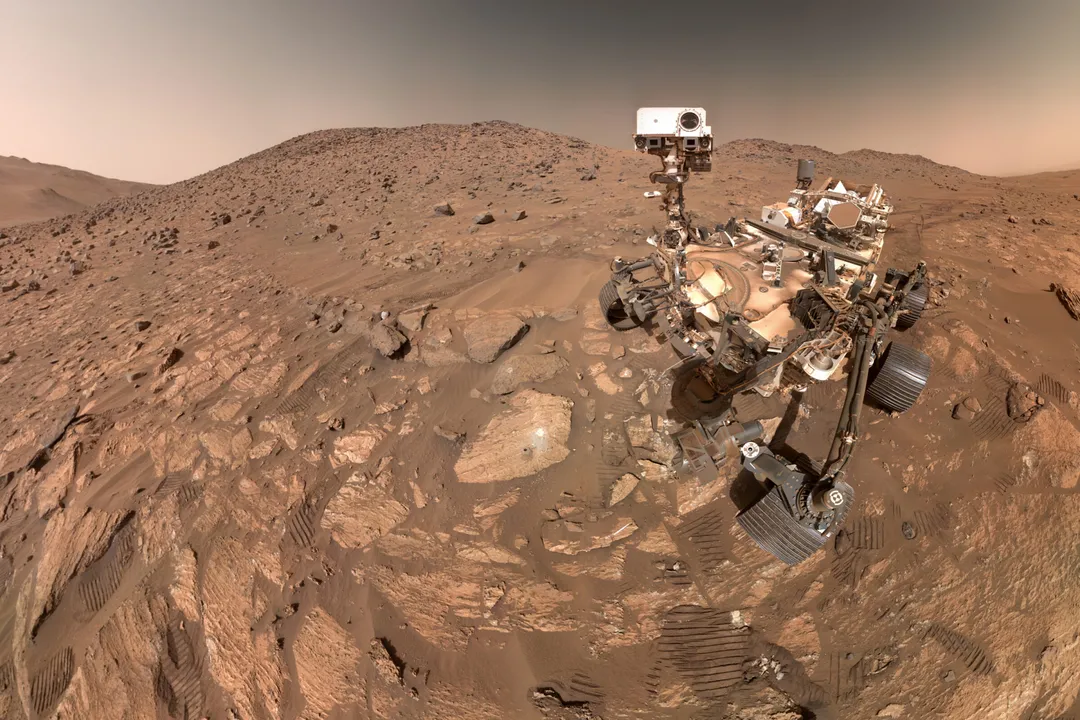
What major shift in the search for Martian life is highlighted by the move from visual sightings to chemical detection?
The search changed from looking for cities to looking for trace gases representing current activity.
The historical progression of Mars exploration represents a significant evolution in scientific methodology and expectation. Early speculation, heavily influenced by Percival Lowell, centered on finding visual evidence of intelligence, such as canals, implying cities or large-scale civilization. With technological advancements, the search pivoted away from these grand, highly unlikely visual targets. The current approach focuses on detecting subtle chemical markers, specifically trace gases like methane, that might indicate ongoing—though perhaps microbial—biological or geological activity. This shift represents moving from looking for overwhelming, obvious signs of life to searching for much harder-to-confirm, smaller-scale chemical signatures.