What specific geological features suggest Mars historically held liquid water on its surface?
Answer
Ancient river valleys, flood channels, and sedimentary rock layers.
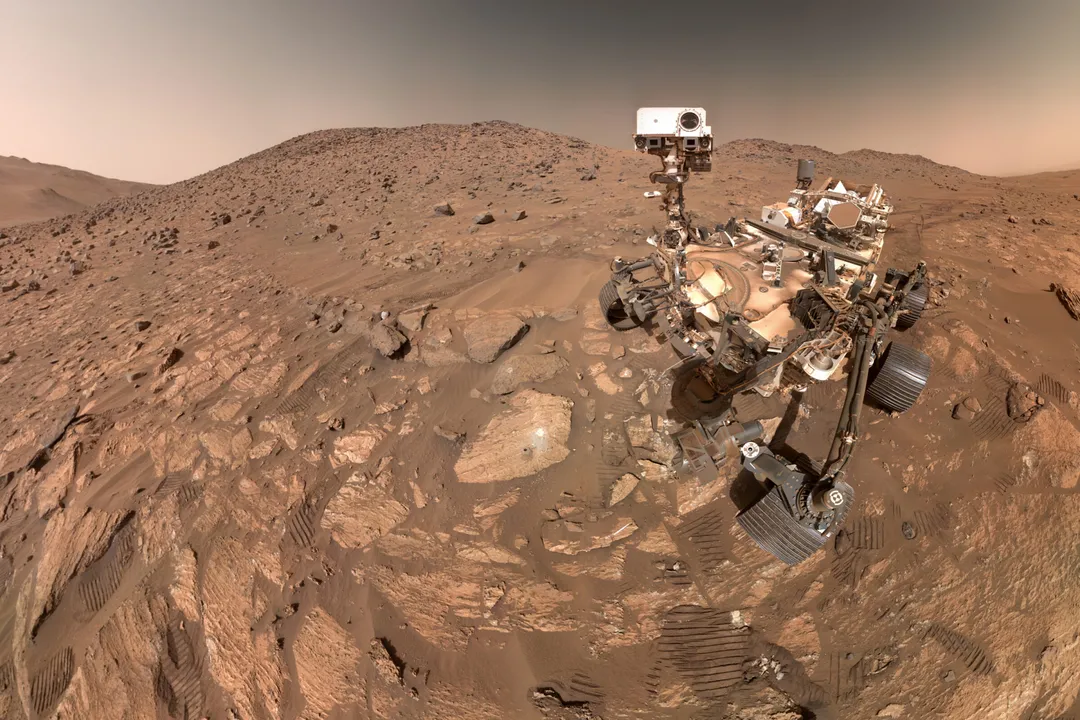
Evidence supporting the historical habitability of Mars rests heavily on interpreting its ancient surface geology. Scientists observing the planet noted clear topographical features that strongly resemble terrestrial formations created by flowing water. Specifically, the existence of ancient river valleys and extensive flood channels indicates periods when massive amounts of liquid water moved across the surface. Furthermore, the identification of sedimentary rock layers implies that materials were deposited and compacted under the presence of a fluid medium, most likely water, during a time when the planet was significantly warmer and wetter than its current arid state.
Related Questions
How did Percival Lowell interpret Giovanni Schiaparelli's observation of *canali*?What non-biological explanation was ultimately settled upon for the positive Labeled Release (LR) results from the Viking landers?What specific geological features suggest Mars historically held liquid water on its surface?Why is extant Martian life hypothesized to exist almost certainly in subsurface havens?Besides biological production, what geological process is cited as a source for Martian methane ($ ext{CH}_4$)?What major shift in the search for Martian life is highlighted by the move from visual sightings to chemical detection?What was the primary goal of the three biological experiments conducted by the Viking landers in 1976?What two crucial factors change for potential life existing beneath the Martian surface?Which two elements define the highest standard of scientific proof currently aimed for in the search for Martian life?What did Lowell's meticulous mapping at Mount Wilson Observatory reportedly reveal about the Martian canals?