Which NASA mission provides high-resolution orbital imagery crucial for identifying subtle tectonic features on the Moon?
Answer
Lunar Reconnaissance Orbiter (LRO).
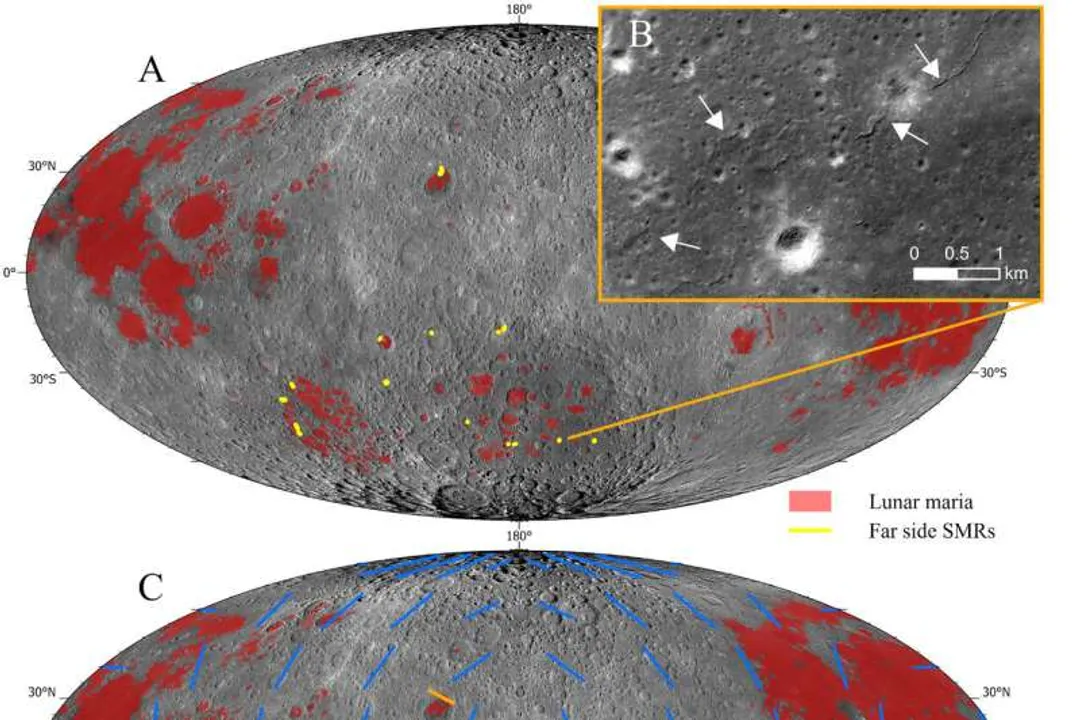
In situations where direct seismic instrumentation is impossible, planetary scientists rely heavily on remote sensing data, particularly high-resolution orbital imagery. For the Moon, NASA's Lunar Reconnaissance Orbiter (LRO) has been instrumental in providing the necessary sharp views of the surface. These precise images allow researchers to resolve subtle tectonic features, such as the edges of thrust faults or relatively fresh impact features. This capability enables scientists to use relative dating techniques by comparing younger, smoother terrain exhibiting distinct features against older, heavily cratered landscapes.
Related Questions
What process causes the powerful, erratic shallow moonquakes occurring less than 20 km beneath the lunar surface?What distinctive surface indicator is created when the crust buckles over solidified basaltic lava seas within the lunar maria?What is the approximate recent timeframe suggested by new analysis for when some lunar faulting occurred?What primary force is attributed to causing deep moonquakes originating below 70 kilometers on the Moon?What methodology remains the gold standard for investigating a distant moon's seismic activity, as demonstrated by the Apollo missions?What is the dominant energy source causing movement on the Moon, contrasting with Io's main driver?Besides impact craters, what specific features signal that volcanic processes continued on the Moon after heavy bombardment ceased?Which NASA mission provides high-resolution orbital imagery crucial for identifying subtle tectonic features on the Moon?What specific type of geologic feature is formed when the brittle lunar crust is squeezed due to ongoing interior contraction?What specific type of measurement is vital for detecting active volcanism by identifying localized hot spots on cold, airless bodies?