What structure is formed by the large envelope of gas and dust ejected by a dying, low-mass star?
Answer
A planetary nebula
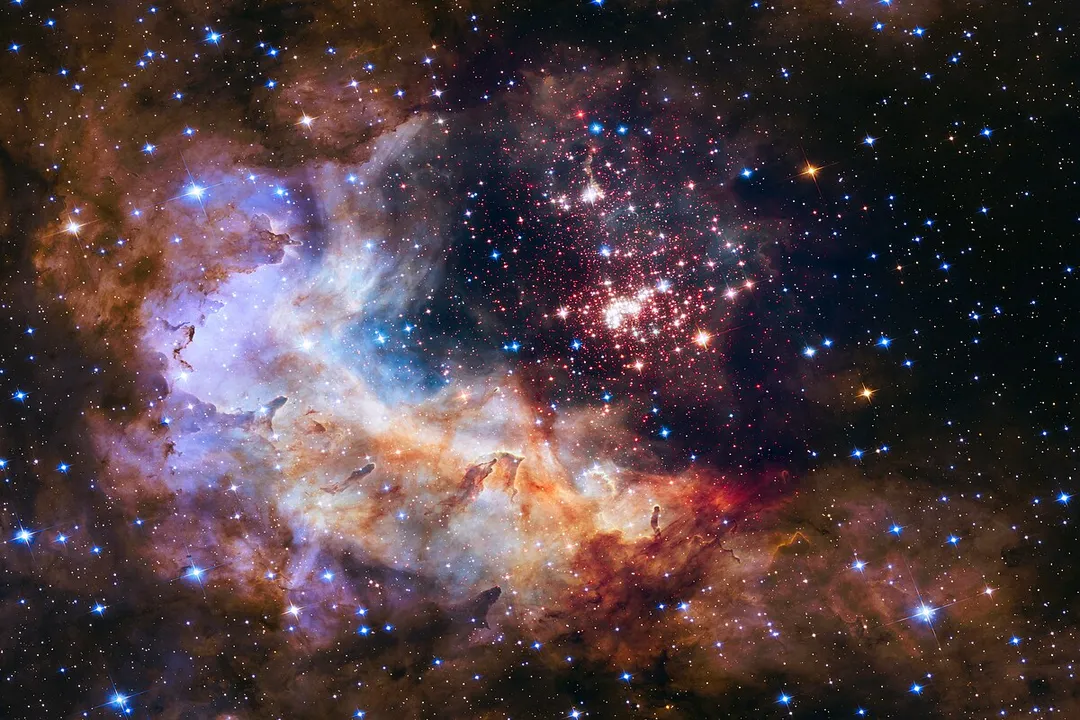
The vast shell of gas and dust expelled by a star like the Sun during its final transition phase expands and cools, creating the visually observable structure known as a planetary nebula.
Related Questions
What are the two fundamentally different processes through which stars lose mass?How much mass does the Sun convert into energy every second due to nuclear fusion?What is the approximate mass loss rate of the Sun due to the solar wind during its main-sequence phase?What fraction of its original mass does a Sun-like star lose via the steady solar wind over its entire main-sequence life?During which evolutionary phase does the most dramatic mass loss for a Sun-like star occur?How much faster is the mass loss rate during the Red Giant/AGB phase compared to the main sequence solar wind?What percentage of its total mass is estimated to be shed by a Sun-like star during its late-stage giant expansion?What structure is formed by the large envelope of gas and dust ejected by a dying, low-mass star?Why is accounting for mass loss during giant phases crucial when astronomers model stellar evolution?What cosmic phenomenon is directly linked to the observed abundance of heavy elements in modern stars?What is the approximate mass loss rate for a Sun-like star during the Red Giant/AGB phase, according to the provided table?