What physical mechanism causes reflection nebulae to appear blue when illuminated by nearby stars?
Rayleigh scattering
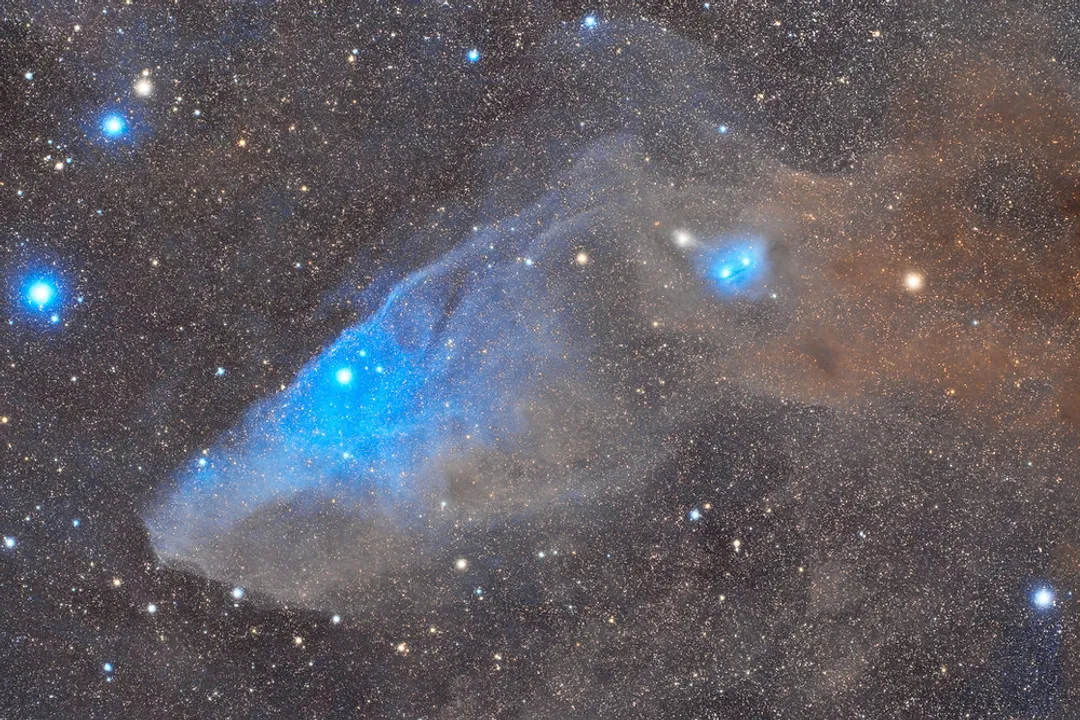
The blue coloration in reflection nebulae is fundamentally attributed to Rayleigh scattering. This physical process describes how light interacts with interstellar dust grains that are much smaller than the wavelength of the light itself. In this scenario, the shorter, higher-frequency wavelengths, which correspond to blue light, are scattered much more effectively and in more directions toward an observer than the longer, lower-frequency wavelengths, such as red light. This differential scattering means the nebula appears illuminated predominantly by the blue component of the incident starlight, similar to why Earth's atmosphere appears blue during the day. This mechanism is distinct from emission nebulae, which generate light through the ionization of gas by nearby hot stars.
#Videos
How to find the Blue Snowball Nebula (also known as NGC 7662 ...