What difference often exists between the appearance of M78 through an amateur eyepiece versus a long-exposure astrophotograph?
The eyepiece shows a faint, grayish smudge, while the deep blue is revealed photographically
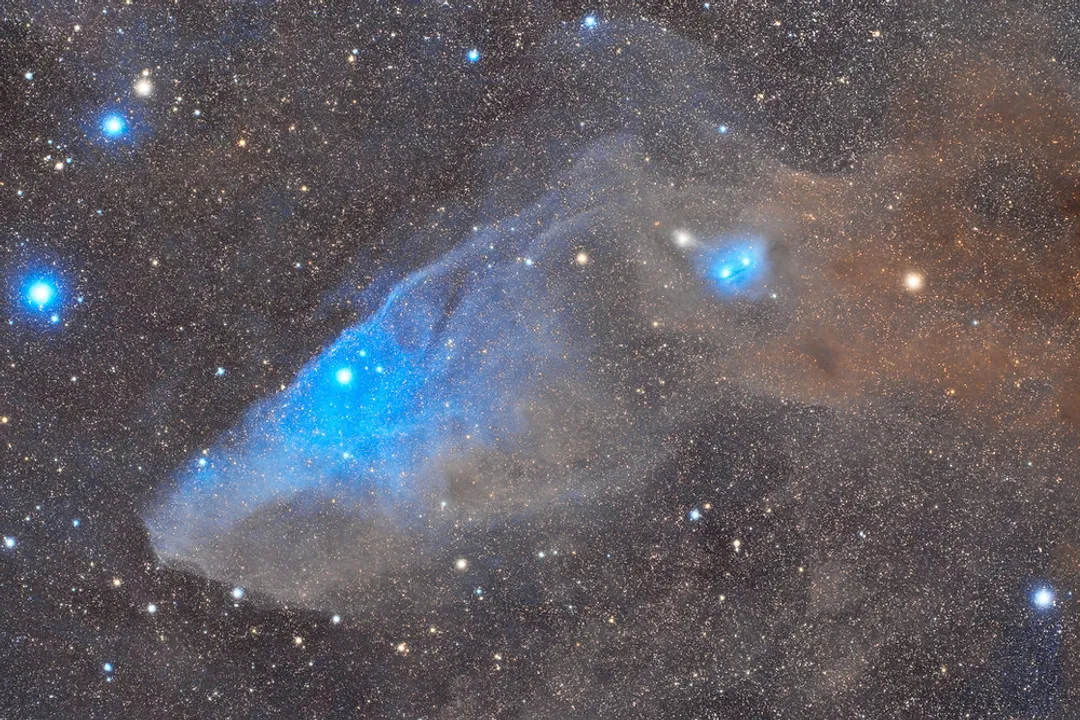
Visual observation through a standard amateur telescope eyepiece, especially in low light conditions, relies on the human eye's limited sensitivity, often resulting in faint objects like M78 appearing indistinct, possibly as a faint, grayish smudge. Conversely, long-exposure astrophotography allows sensors to collect photons over many hours. This extended integration time is crucial for gathering enough light to reveal the subtle color information inherent in the nebula, bringing out the distinct blue coloration that arises from the efficient scattering of stellar light by the intervening dust.
#Videos
How to find the Blue Snowball Nebula (also known as NGC 7662 ...