Which nebula is blue?
The cosmos is filled with clouds of gas and dust, and while many are famously red from glowing hydrogen, a striking number present themselves in shades of brilliant blue. This cool, ethereal color is a signature often associated with specific types of nebulae, signaling how light interacts with the interstellar medium across vast distances.
# Color Cause
The most common reason for a nebula to appear blue relates to the physics of light scattering, particularly in what astronomers term a reflection nebula. [5] These clouds do not generate their own visible light through ionization like emission nebulae do. Instead, they are illuminated by nearby stars. [5] The mechanism at play is similar to why our own daytime sky appears blue: Rayleigh scattering. Interstellar dust grains within the nebula are more efficient at scattering shorter, bluer wavelengths of starlight toward an observer than they are at scattering longer, redder wavelengths. The resulting spectacle is a luminous cloud bathed in the reflected blue glow of its stellar neighbor.
# Blue Reflections
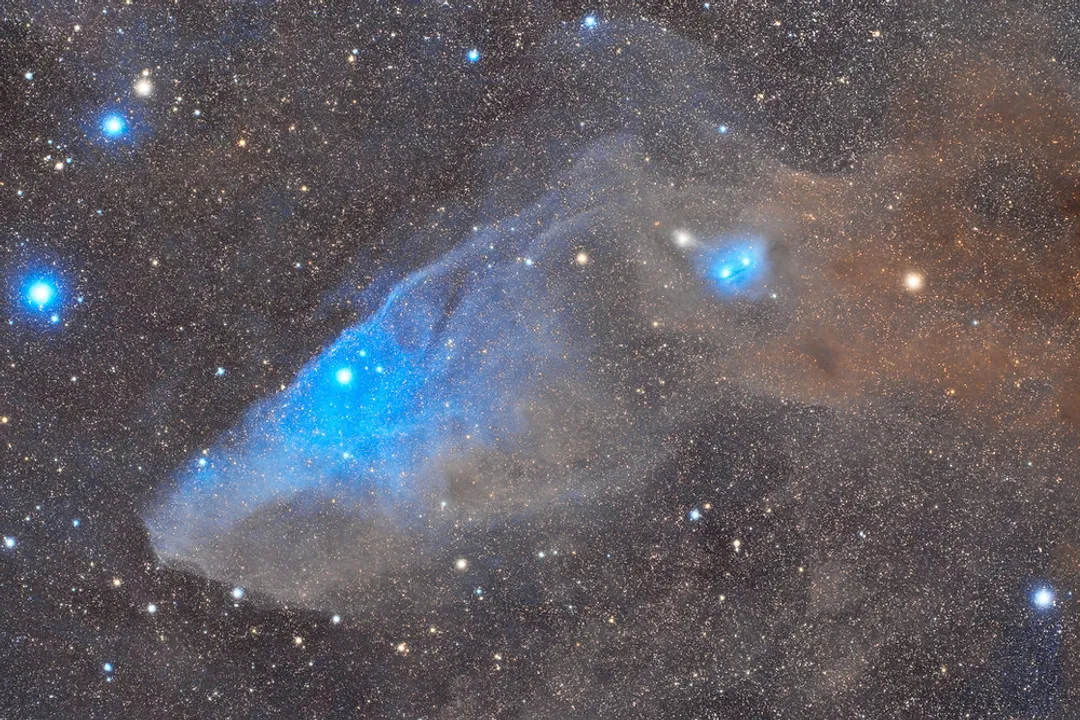
Several famous celestial objects showcase this phenomenon beautifully. One prominent example is IC 4592, often nicknamed the Blue Horsehead Nebula. This magnificent reflection nebula resides within the constellation Scorpius. Its distinct shape, reminiscent of its more famous emission counterpart, is vividly colored by the light from nearby hot, young stars. You can find stunning examples of this object shared among astrophotographers documenting their captures of this distinct asterism.
Another well-known object displaying this blue character is M78. Like IC 4592, M78 is classified as a reflection nebula and presents as a distinct blue cloud when viewed through telescopes or captured with sensitive cameras.
Considering the sheer volume of cosmic dust spread across the Milky Way, it's interesting to note that the density of the dust particles is as crucial as the presence of a bright star. If the dust cloud were too thin, the scattered light wouldn't be intense enough for us to easily perceive the blue, and if it were too thick, the light from the illuminating star would be completely blocked, leaving a dark nebula instead of a bright blue one. This precise balance results in objects like IC 4592 becoming visible highlights in the galactic plane.
# Emission Blue
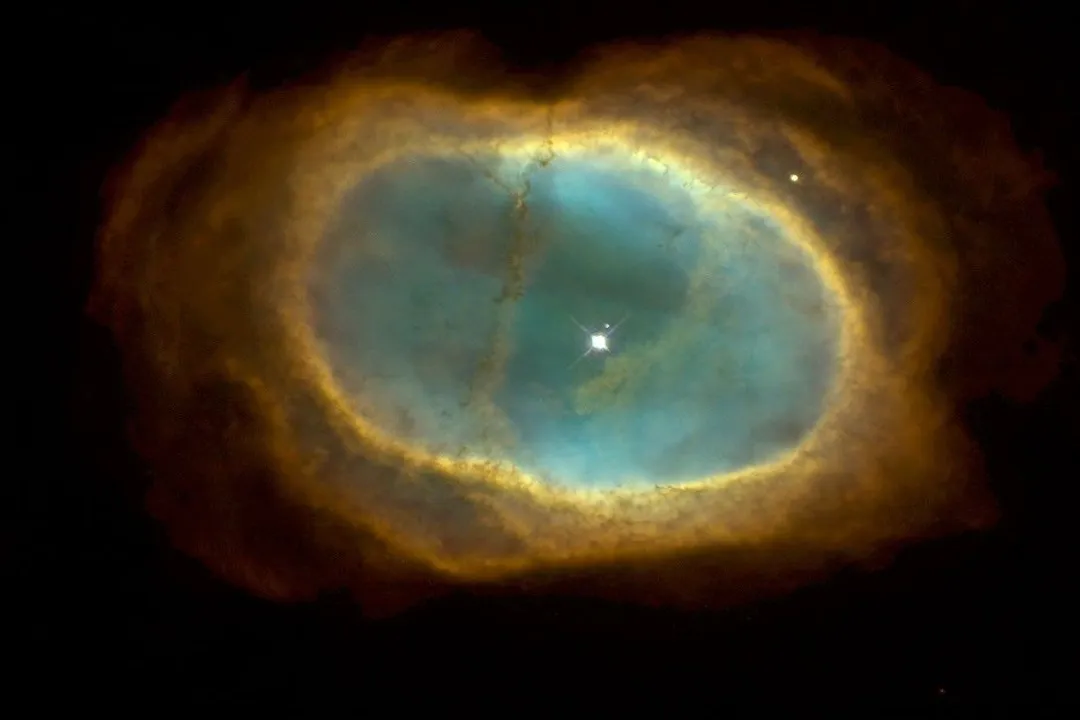
While reflection is the classic cause, the color blue can also manifest in other types of nebulae, often linked to the specific elements glowing or the processes captured during observation.
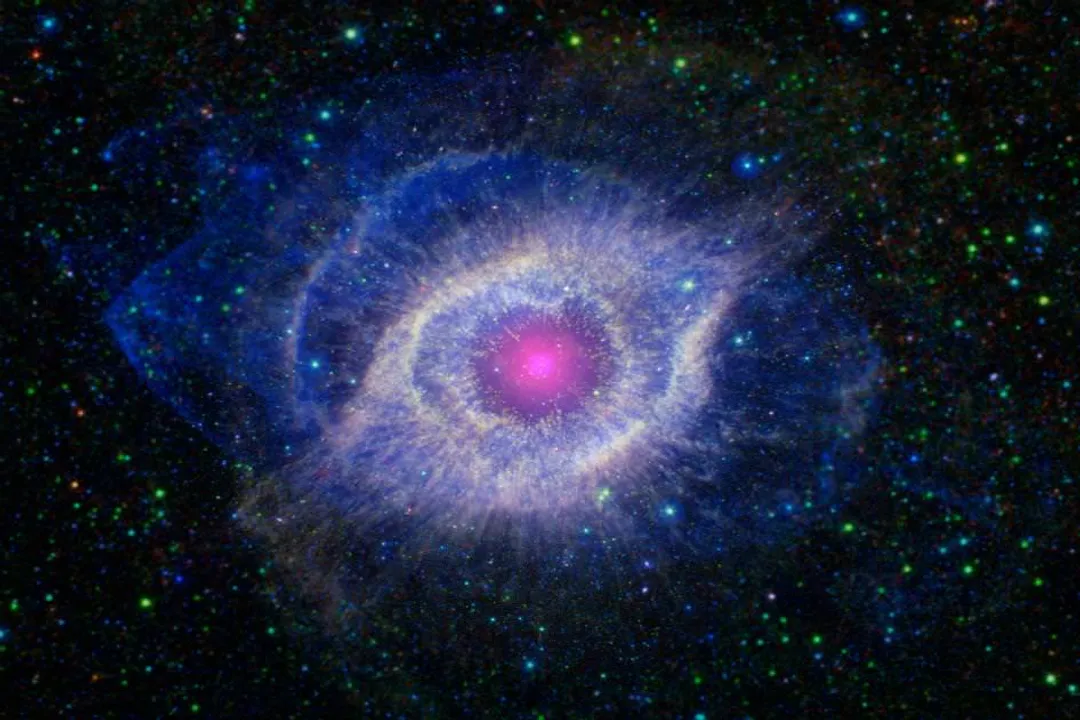
The Helix Nebula, officially designated NGC 7293, is a classic example of a planetary nebula, which generally glows from the excited gas ejected by a dying star. In newer imaging, this nebula has been observed displaying prominent blue tones. In this context, the blue coloration often stems from the light emitted by doubly ionized oxygen atoms, which show up at a blue-green wavelength, or sometimes from the processing choices made when mapping different emission lines to visible colors. This contrasts sharply with the scattering process seen in reflection nebulae.
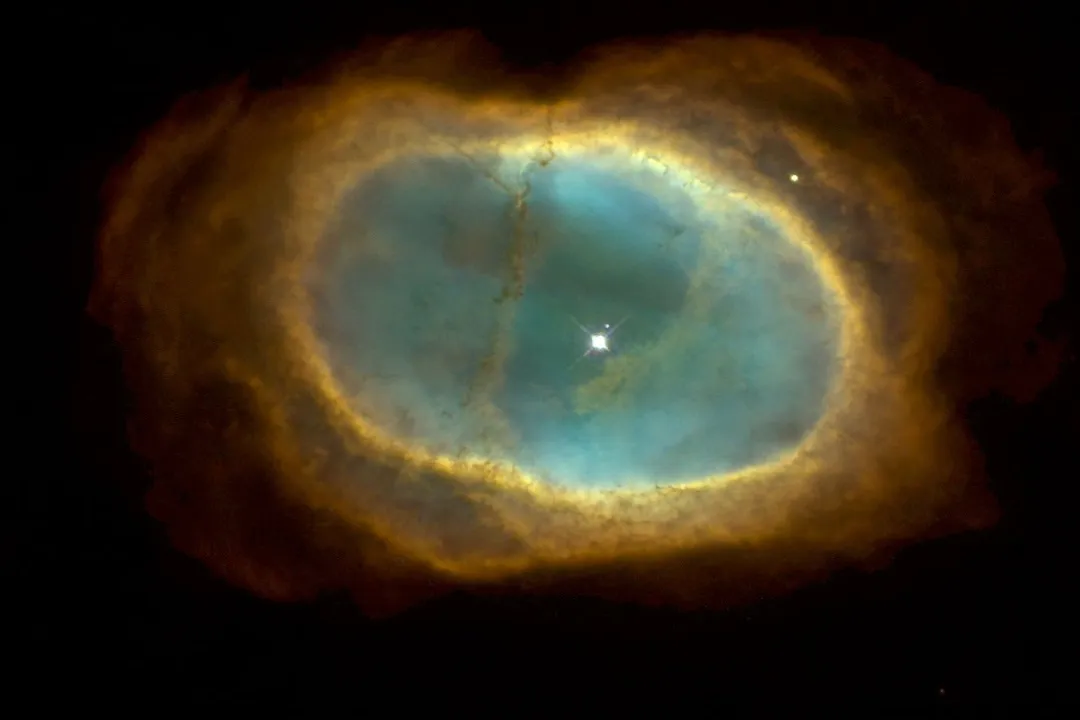
Similarly, the Eight-Burst Nebula or Southern Ring Nebula (NGC 3132) is described as a glowing pool of light. While planetary nebulae can exhibit varied colors, images of NGC 3132 frequently highlight significant blue structures surrounding the central stars.
It's important for a general observer to recognize that what we see through an eyepiece might differ significantly from a long-exposure astrophotograph. For instance, while an amateur telescope might show M78 as a faint, grayish smudge, the deep blue is only revealed after hours of collecting photons.
# Ring Structures
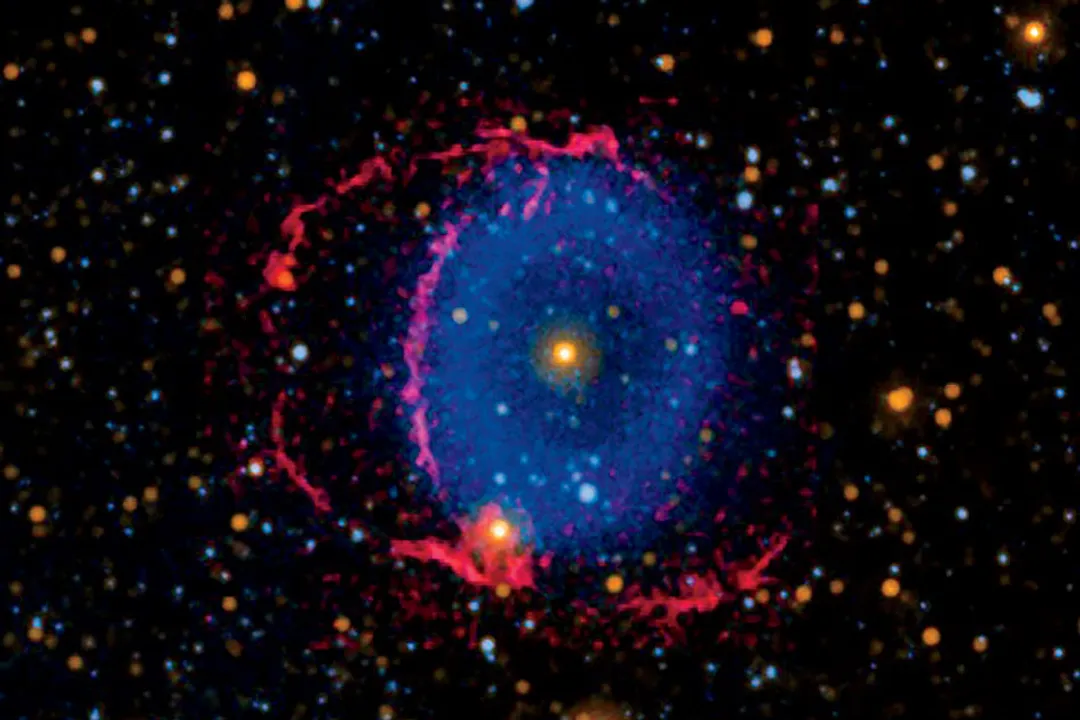
Some nebulae are named for their appearance, and the color is central to that naming convention. The Blue Ring Nebula is one such object, and scientists have been actively working to decipher the hidden history recorded within its structure. While the source material doesn't detail the exact mechanism causing this specific nebula's blue, its name strongly implies that the primary visual characteristic captured involves that scattering or emission of blue light, distinguishing it from redder nebulae.
If you are interested in capturing these blue wonders, remember that the filters you use significantly dictate the final color balance. A common technique in deep-sky imaging involves using specialized narrowband filters that isolate specific emission lines (like Hydrogen-alpha for red or Oxygen III for blue-green) and then assigning those captured monochrome images to the red, green, and blue channels of a final color image. A nebula appearing dominantly blue in a processed photograph might have a strong Oxygen III component that an observer should be aware is often enhanced digitally to bring out detail that the human eye misses in low light. This digital enhancement often boosts the visual impact of the inherent blue structures, whether they arise from dust scattering or ionized gas emission.
The sheer variety of blue nebulae—from the dust-driven glow of IC 4592 to the dying star remnant of NGC 7293—demonstrates that the color blue in the vastness of space signifies several different, though equally fascinating, physical processes occurring among the stars.
#Videos
How to find the Blue Snowball Nebula (also known as NGC 7662 ...
Related Questions
#Citations
The Blue Horsehead Nebula This glorious reflection ... - Facebook
M78 - A Blue Reflection nebula - Sun.org
A Glowing Pool of Light: Planetary Nebula NGC 3132 - NASA Science
Blue Horsehead Nebula : r/astrophotography - Reddit
Scientists Decipher the Hidden Past of the "Blue-Ring Nebula"
Reflection nebula - Wikipedia
IC 4592 - The Blue Horsehead Nebula Astrophotography
Eye-Like Helix Nebula Turns Blue in New Image - Universe Today
How to find the Blue Snowball Nebula (also known as NGC 7662 ...