What observational clue differentiates the steady light of Venus from the twinkling light of true stars?
Planets appear slightly larger in apparent size, making them less affected by atmospheric turbulence.
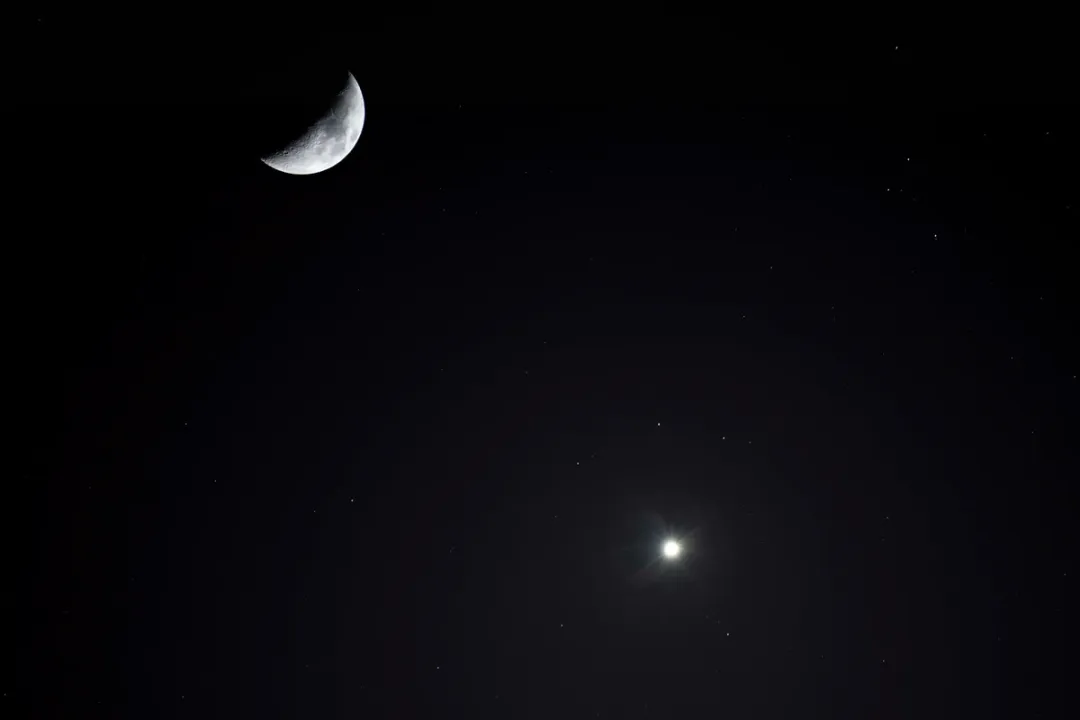
The phenomenon of twinkling, or scintillation, is caused by light rays passing through turbulent layers of Earth's atmosphere, which distort the apparent position of a point source of light. True stars are so distant that they appear as true pinpricks of light, making their light highly susceptible to this atmospheric blurring, causing noticeable twinkling. Planets, like Venus, are much closer to Earth. Although they still appear small, their angular diameter is slightly larger than that of a star, meaning the light beam is less easily scattered and distorted by atmospheric turbulence. Therefore, Venus produces a much steadier, non-twinkling light source.
#Videos
What's That Bright Star in the Sky? It's Not a Star, It's Venus - YouTube