What must a remnant core exceed to collapse into a black hole rather than remaining a neutron star?
Answer
Around three solar masses ($3 M_{\odot}$)
The maximum stable mass for a neutron star is estimated to be around three solar masses; if the remnant core exceeds this limit, neutron degeneracy pressure fails, leading to total collapse into a black hole.
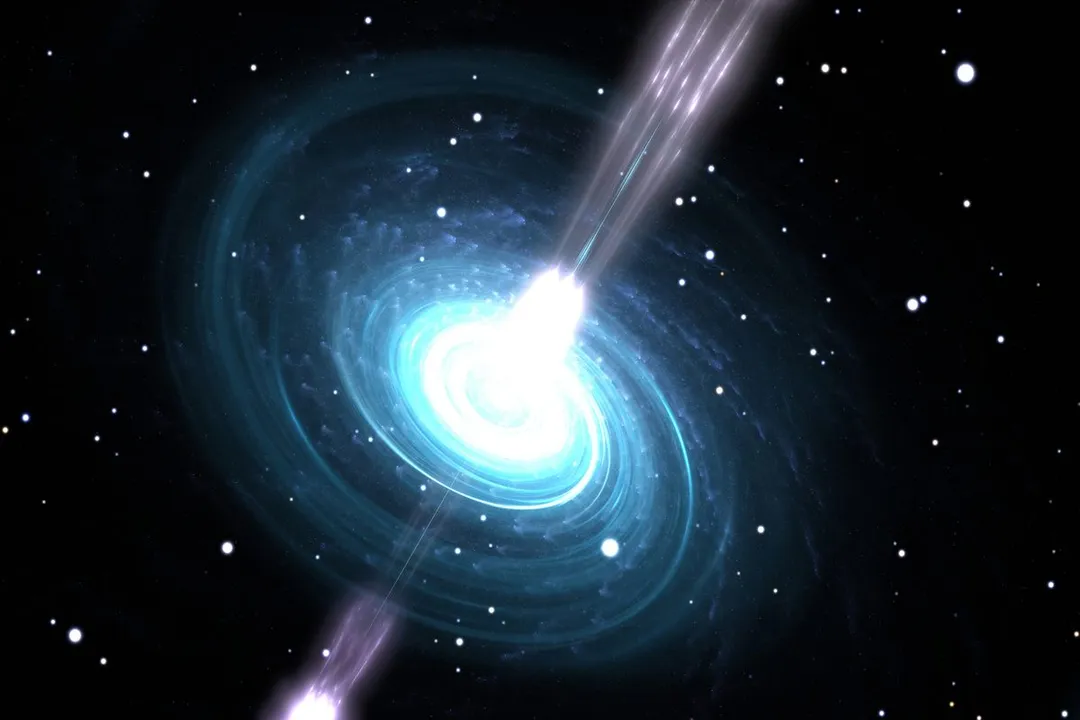
#Videos
Why Are Neutron Stars The Densest Objects In The Universe ...
Related Questions
Which stellar remnant holds the title for the densest type of star observed?What mass range must a star typically have at its birth to likely end its life as a neutron star?What process initiates the catastrophic implosion leading to the formation of a neutron star?What fundamental resistance force is overwhelmed by gravity in the core collapse that precedes neutron star formation?What new balance halts the final gravitational collapse, resulting in a neutron star?How does the typical physical size of a neutron star compare to familiar terrestrial objects?What is the density of a neutron star's interior compared to on the atomic scale?What defines a black hole structurally, setting it apart from a neutron star?What must a remnant core exceed to collapse into a black hole rather than remaining a neutron star?What are rapidly spinning neutron stars that emit detectable radiation pulses called?