What is the densest type of a star?
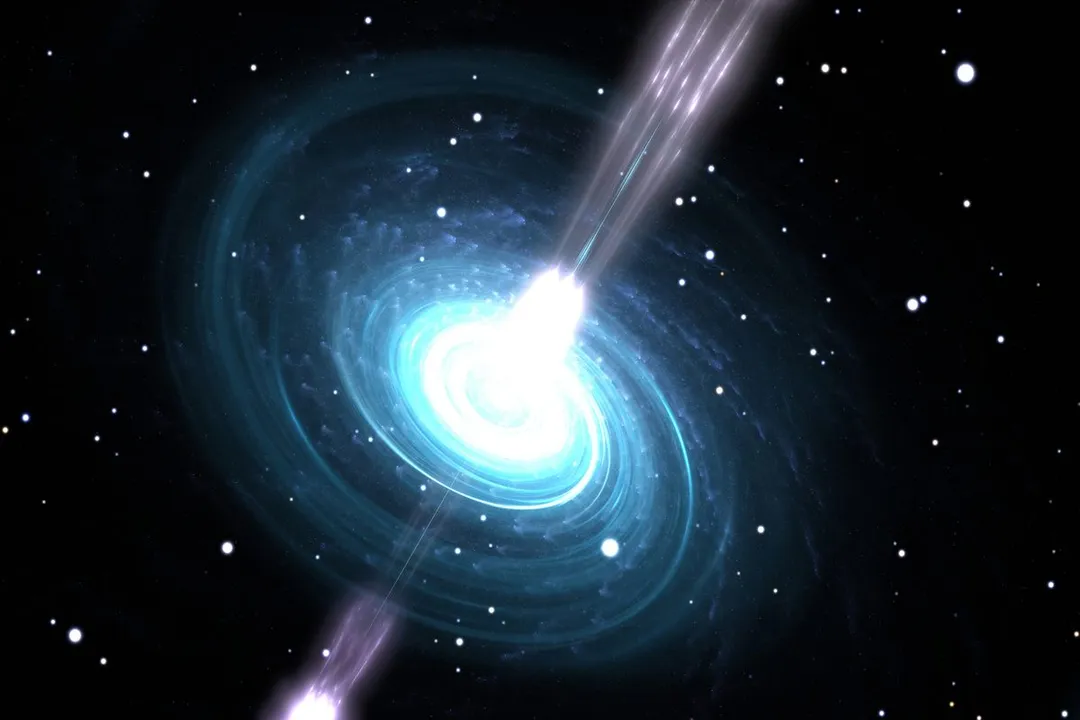
The objects we observe scattered across the cosmos come in an astonishing range of sizes and compositions, but when we talk about extreme compression—the sheer quantity of mass packed into the smallest possible volume—we inevitably land on the subject of collapsed stars. These stellar remnants represent the final, most violent stages of stellar evolution for certain massive stars, culminating in structures that defy everyday experience. [5][7] While the universe holds several candidates for the title of "densest," the title of the densest type of star firmly belongs to the neutron star. [2][7]
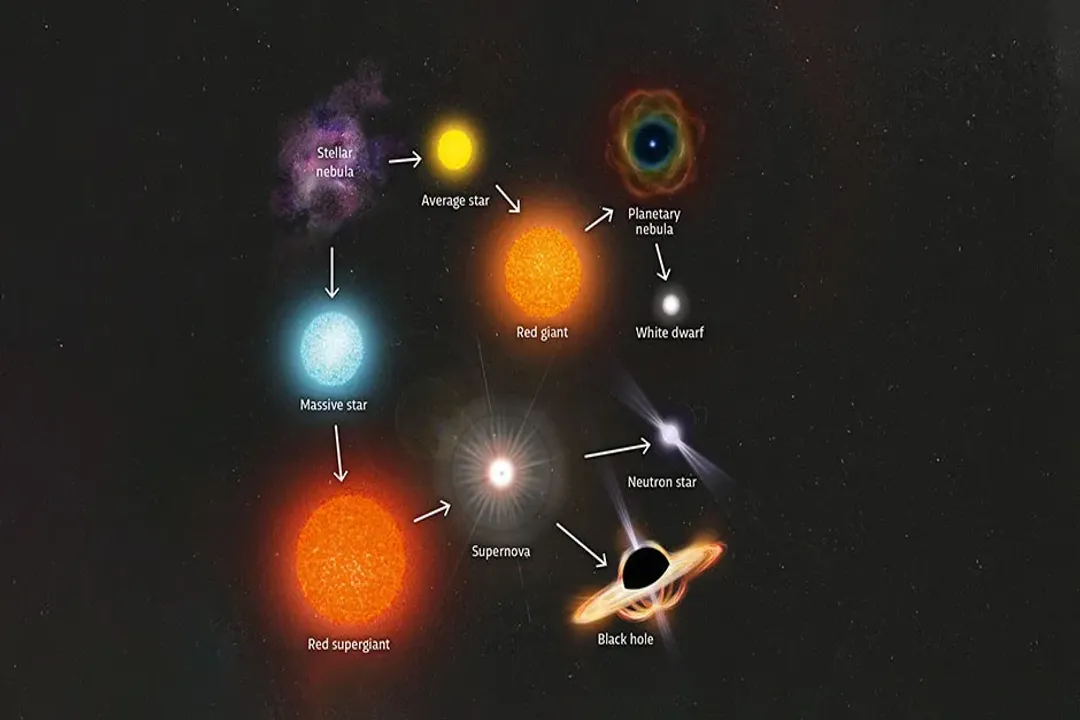
The creation of such an object is a dramatic process, requiring a progenitor star significantly larger than our own Sun. A star must typically begin its life with a mass between about eight and twenty times that of the Sun to end its life as a neutron star. [7] Once the star exhausts its nuclear fuel, the outward pressure generated by fusion ceases, and gravity takes over, causing a catastrophic implosion known as a supernova explosion. [5][7]
# Stellar Collapse
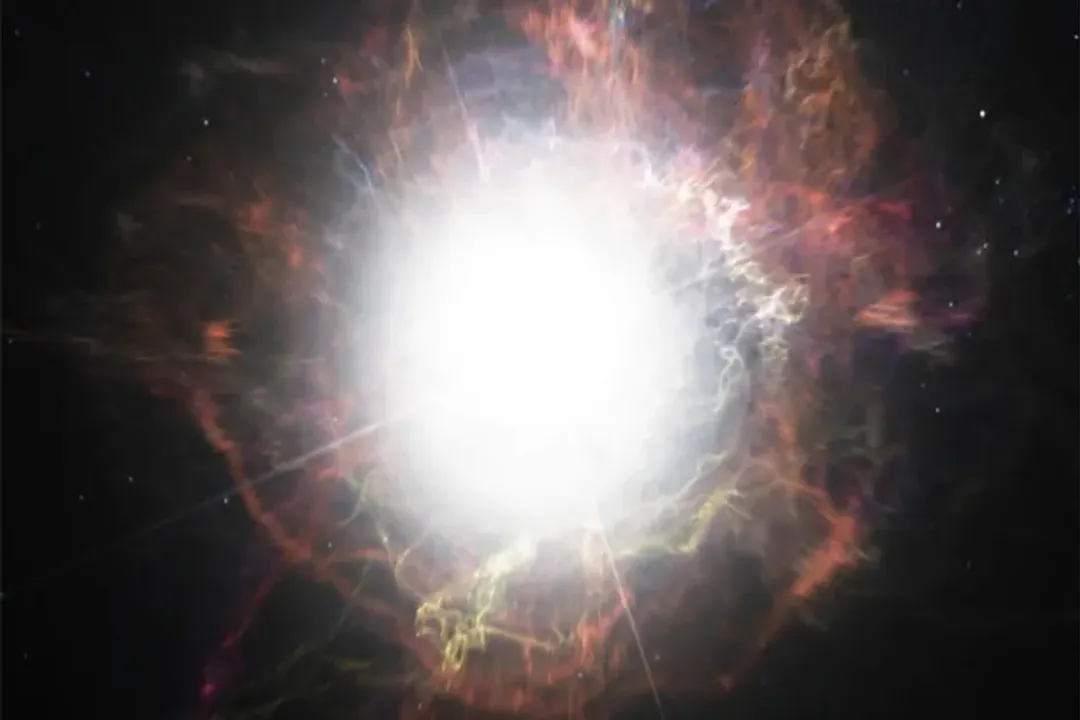
The core of the dying star collapses inward with incredible speed and force. [5] During this process, the immense gravitational pressure forces the subatomic particles to behave in ways impossible on Earth. Normally, matter resists further compression due to electron degeneracy pressure, which is the quantum mechanical principle that keeps electrons from occupying the same state. [1] However, when the core mass is sufficient—typically between $1.4$ and $2$ times the mass of our Sun ()—the gravity overwhelms even this force. [1][5]
This overwhelming pressure causes a fundamental change at the atomic level. Electrons are squeezed into the atomic nuclei, combining with protons to form neutrons. [1][5] The collapse is then halted, but only when the neutrons themselves establish a new balance, known as neutron degeneracy pressure. [1] The result is an object supported almost entirely by these tightly packed neutrons, hence the name neutron star. [1][7] The outer layers of the original star are blasted away in the supernova, leaving behind this incredibly dense cinder. [5]
# Extreme Matter
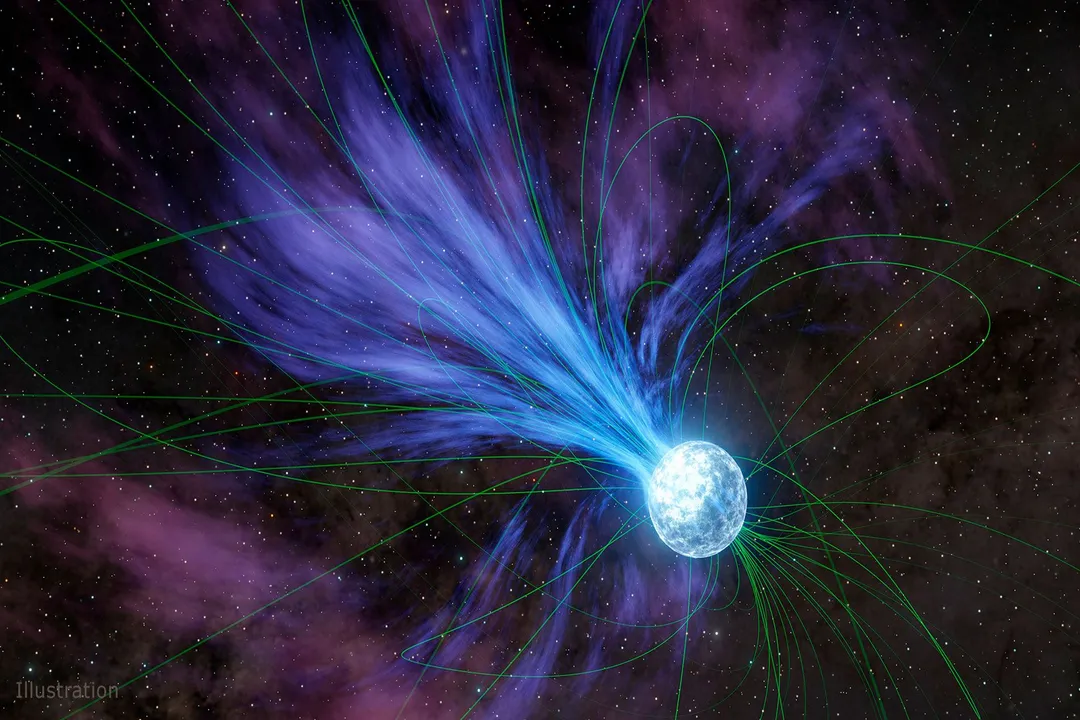
A neutron star is characterized by its remarkably small physical size paired with its substantial mass. These remnants typically measure only about $20$ kilometers ($12$ miles) across, a size comparable to a major metropolitan area like Manhattan or London, yet they contain more mass than our Sun. [1][7]
This concentration of mass results in densities that are truly mind-boggling. To put this into perspective, the density inside a neutron star is comparable to the density of an atomic nucleus. [1][7] If one could scoop up just a single teaspoon of neutron star material, that tiny sample would weigh billions of tons. [5] More precisely, established models place the density of a neutron star’s interior in the range of to kilograms per cubic meter, although it can likely exceed this figure depending on the star's exact mass and internal structure. [1][4]
The nature of this matter is often discussed in terms of its state. While the bulk of the star is composed of neutrons, the outer layers are more complex. There is a thin crust that may contain heavier nuclei and electrons, transitioning into a superfluid core of neutrons. [1] The extreme physics occurring at these pressures means our understanding of the very deepest core remains an active area of research, sometimes suggesting exotic states of matter like hyperons or deconfined quarks might exist under the most crushing conditions. [1]
To better appreciate this scale, consider the relationship between mass and radius across different stellar phases. The gravitational contraction during collapse is the mechanism that forces such small radii for such large masses:
| Stellar Object | Typical Mass Range () | Typical Radius (km) | Density Analogy |
|---|---|---|---|
| Sun (Main Sequence) | $1.0$ | Water | |
| White Dwarf | Small planet | ||
| Neutron Star | Atomic nucleus | ||
| Black Hole | $> 3$ (Approx.) | $0$ (Singularity) | Mathematically infinite |
The sheer disparity between the Sun's radius and a neutron star's radius, while holding $1.4$ times the mass, is what defines this object as the densest star. It has a measurable surface, unlike the final stage of collapse.
# Black Hole Rivalry
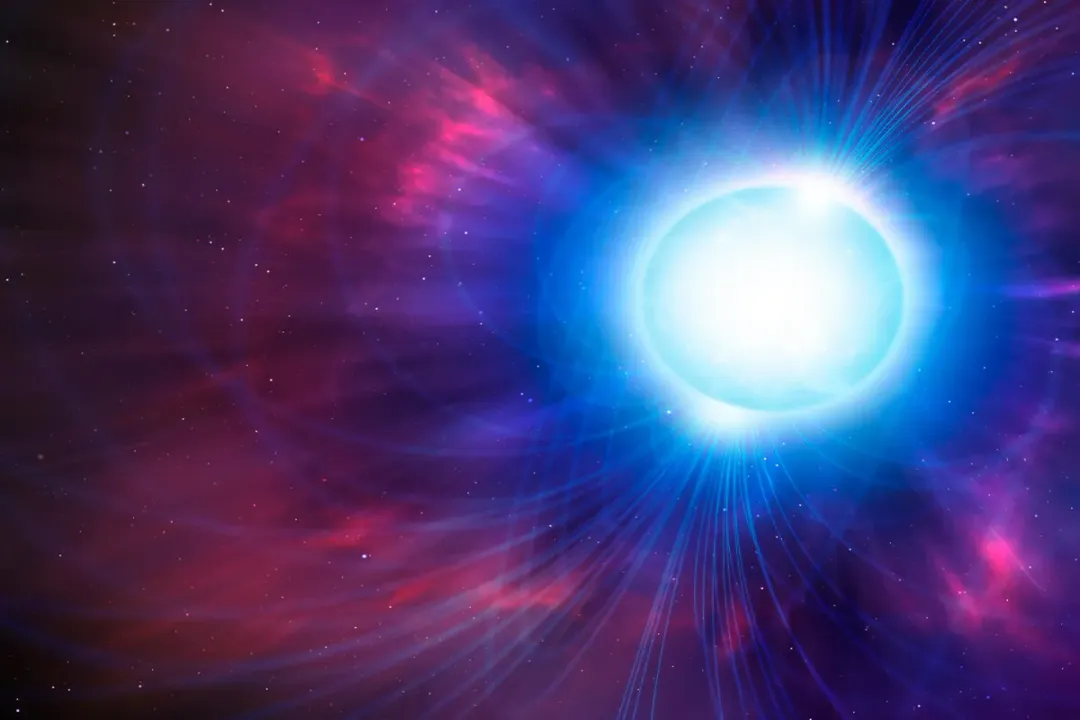
When discussing the densest objects, the topic naturally turns to black holes, which occupy the ultimate extreme. A black hole represents the fate of a collapsing stellar core that exceeds the maximum stable mass for a neutron star—estimated to be around three solar masses (). [1] If the remnant core is too heavy, neutron degeneracy pressure fails, and gravity wins completely, leading to total collapse. [4]
The critical difference is structural. A neutron star, despite its incredible density, possesses a defined physical surface where you could theoretically land (if you could survive the gravity and radiation). [4] A black hole, conversely, is defined by its event horizon, the boundary beyond which nothing can escape. [4] At the center of the black hole lies the singularity, a point where, according to current theory, the density becomes mathematically infinite. [4] Therefore, while a neutron star is the densest type of star we observe with a surface, the black hole represents a state of even greater density, moving past the state of being a "star" entirely into a purely gravitational phenomenon. [4]
# Cosmic Record Holders
Neutron stars are not just dense; they are often the most dynamically active objects in the galaxy. Many of them spin incredibly fast, sometimes completing hundreds of rotations every second. [1] This rapid spinning, combined with extremely powerful magnetic fields that can be times stronger than Earth's, causes them to emit beams of radiation. [1] If these beams sweep past Earth, we detect them as regular pulses, identifying them as pulsars. [1] Pulsars are simply rapidly spinning neutron stars observed from our vantage point. [7]
The search for the absolute densest neutron star often involves finding those near the theoretical mass limit. Recent research aims to precisely pin down the size of these ultra-dense stars based on gravitational wave signals from merging events, which helps astrophysicists test the "equation of state"—the relationship between pressure and density inside the object. [10] Better measurements of their radii help constrain how compressible the neutron-rich matter truly is before it inevitably collapses into a black hole. [10] It is this boundary—the tipping point between a stable neutron star and an inevitable black hole—that defines the upper limit of density for these stellar remnants.
The incredible forces at play mean that the mass you see advertised for a neutron star is held in a volume smaller than a large city. To put the scale into local terms: if we consider Earth's radius to be roughly $6,371$ km, a typical neutron star packs roughly $1.5$ times that mass into a sphere with a radius of only about $10$ km. This comparison highlights that the physics governing these objects requires completely different rules than those we experience daily, where matter is overwhelmingly governed by the electromagnetic forces between atoms, not the crushing power of gravity on subatomic particles.
#Videos
Why Are Neutron Stars The Densest Objects In The Universe ...
Related Questions
#Citations
Neutron star
Densest stars
Astronomy Jargon 101: Neutron Star
What is denser: A black hole or a neutrons star?
Neutron stars are among the densest objects in ...
Why is a neutron star so heavy?
What happens inside neutron stars, the universe's densest ...
Neutron stars explained
Why Are Neutron Stars The Densest Objects In The Universe ...
New research pins down the size of ultra-dense neutron stars