What mechanism is the scientific consensus for the dramatic relocation of Hot Jupiters?
Planetary migration
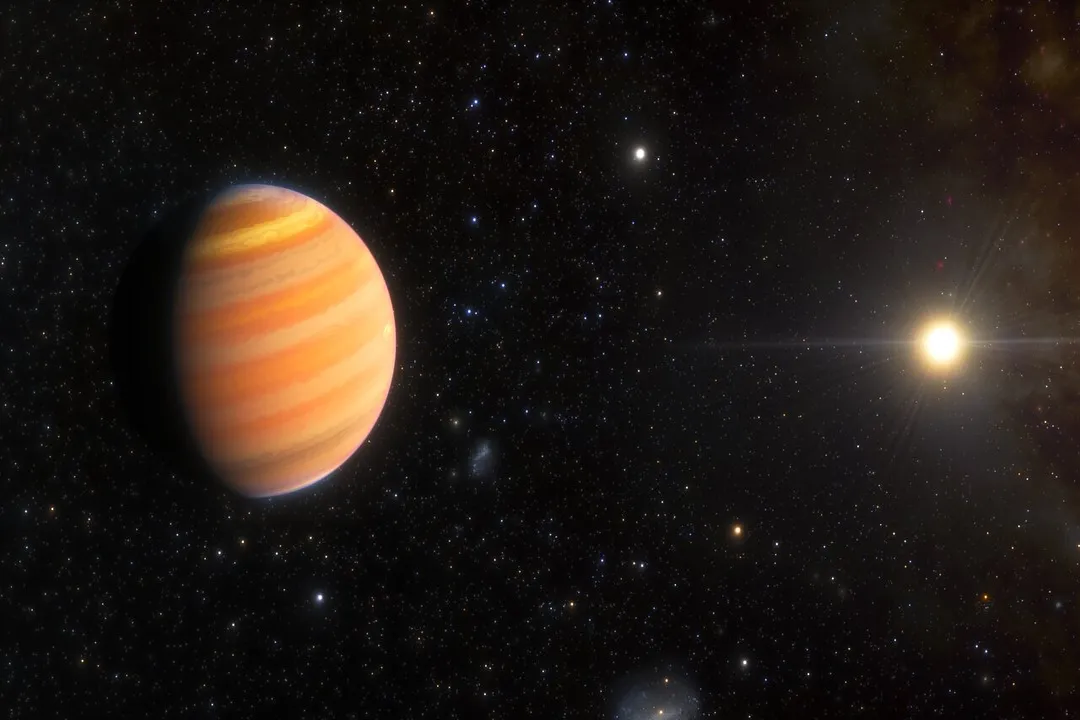
The prevailing scientific explanation for how gas giants end up in super-close orbits, defying their expected formation locations, is planetary migration. This process describes the phenomenon where a planet, initially formed in the cooler, outer regions of a stellar system, gradually spirals inward toward its host star. This inward spiral is facilitated by dynamic interactions. Primarily, the planet interacts with the remaining gas and dust of the protoplanetary disk, where friction and gravitational torque act as a brake, causing the planet to lose angular momentum and move closer to the star. Alternatively, gravitational encounters with other massive bodies within a complex, multi-planet system can physically toss one giant planet inward while potentially ejecting others entirely. Planetary migration encompasses all these movements leading to the observed close-in locations.
#Videos
What are Hot Jupiters? - YouTube