What acute challenge does a massive planet around a low-mass M-dwarf star present?
The initial protoplanetary disk would have had significantly less material available
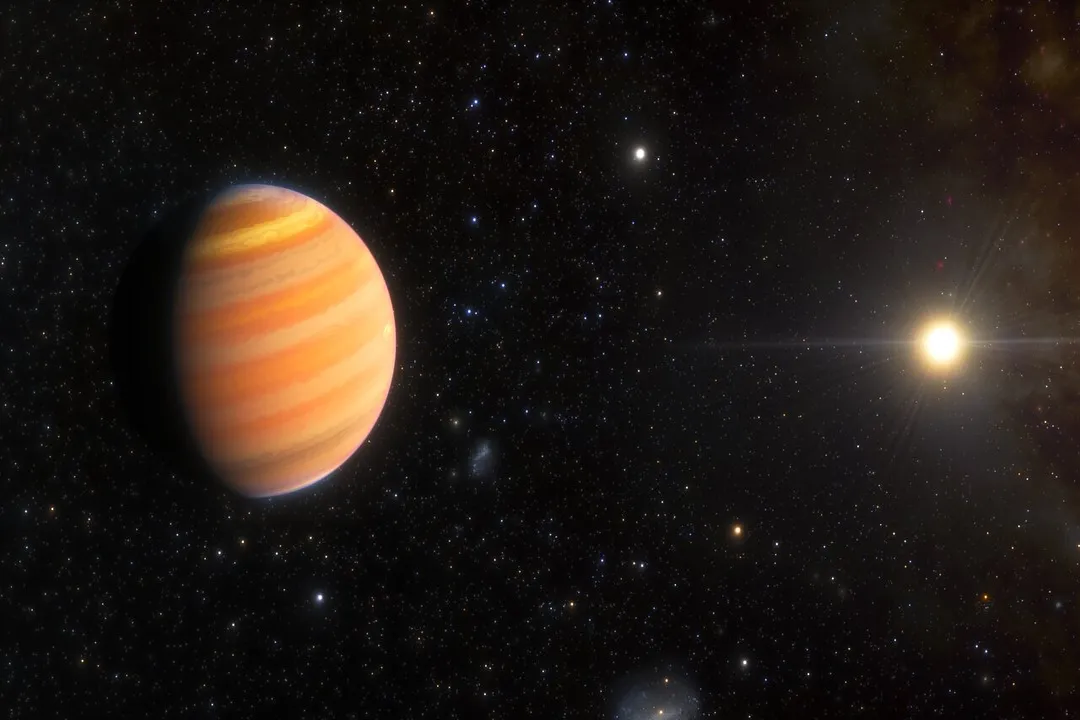
The existence of Hot Jupiters orbiting M-dwarf stars—stars significantly smaller and less massive than our Sun (which is about 1 solar mass)—presents a significant modeling hurdle. The quantity of material available in the initial protoplanetary disk is directly related to the mass of the star it surrounds. If a star is only one-third the mass of the Sun, the disk material available for planet building is substantially reduced. Standard models suggest that such a low-mass disk might only support the formation of small, rocky planets, making the existence of a Jupiter-sized gas giant unexpected. This observation challenges current understanding, suggesting either that the core accretion process is far more efficient in low-mass disks than previously calculated, or that migration mechanisms are universally effective regardless of the initial stellar environment.
#Videos
What are Hot Jupiters? - YouTube