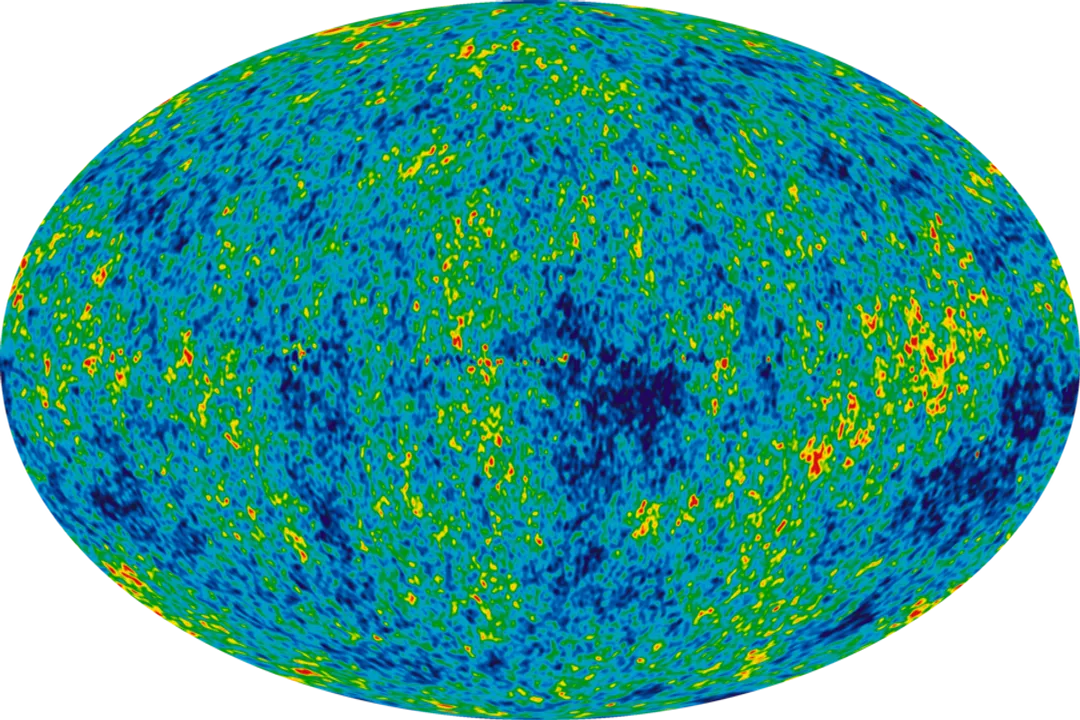
What is the standard interpretation for the anisotropy known as the CMB dipole?
Kinematic effect of our Solar System moving relative to the CMB rest frame
The CMB dipole represents the most recognized large-scale anisotropy in the Cosmic Microwave Background data, manifesting as a slight warming of the CMB in one direction and cooling in the opposite direction. Despite appearing to be a spatial asymmetry, the standard and accepted cosmological interpretation attributes this dipole entirely to kinematic effects. Specifically, it results from the velocity of our local cosmic neighborhood—including the Solar System and the Milky Way—moving at approximately 370 km/s relative to the reference frame of the CMB, which represents the average rest frame of the universe during the recombination era. This motion causes a Doppler shift in the observed CMB frequencies, distinguishing it from potential, more fundamental spatial anisotropies.