What are the two structural components forming the Cosmological Principle?
Answer
Homogeneity and isotropy
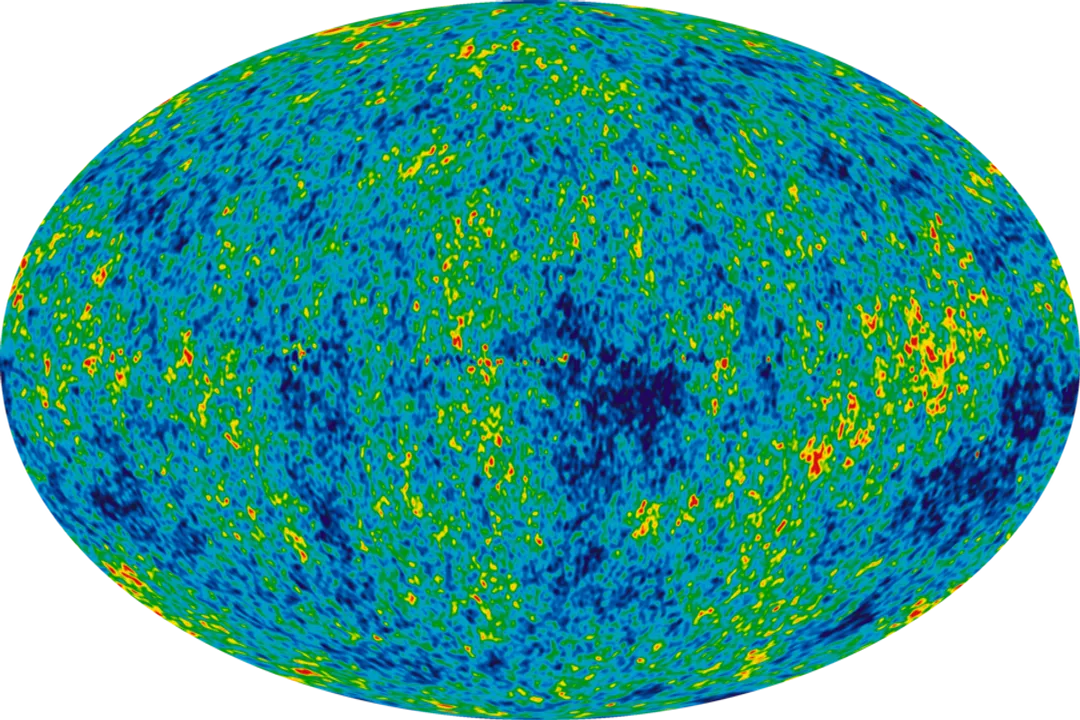
The Cosmological Principle, which underpins modern cosmological models like $\Lambda$CDM, is fundamentally built upon two key structural components: homogeneity and isotropy. Homogeneity dictates that matter distribution is uniform across positions when viewing sufficiently large scales, meaning there is no preferred location. Isotropy dictates that the universe appears the same in all directions from any observer's vantage point, meaning there is no preferred direction in space. While often grouped together, these two characteristics are distinct concepts essential for simplifying the mathematics used to model the entire cosmos.
Related Questions
What are the two structural components forming the Cosmological Principle?What property does isotropy imply when applied to all universe observers?Over what scale must averaging occur for the Cosmological Principle to hold?What dynamic solution emerges when CP combines with General Relativity?What analogy visualizes the expansion described by FLRW models?What observation provides the strongest empirical support for the Cosmological Principle?How does lookback time help resolve Olbers' Paradox regarding the dark night sky?What element does the Perfect Cosmological Principle add to the standard CP?Which reported structure tests the assumption of homogeneity due to its large size?What is the standard interpretation for the anisotropy known as the CMB dipole?