Does the universe look the same in all directions?
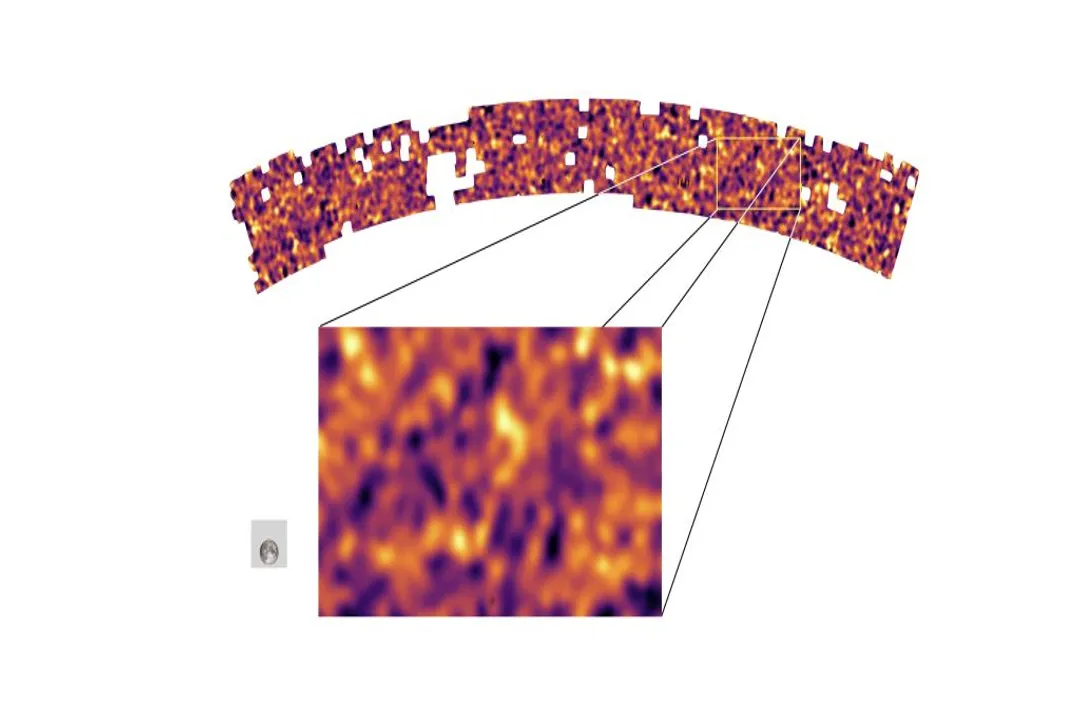
The sky, when viewed from Earth, presents a familiar face: stars are distributed across the dome, galaxies cluster in certain regions, and vast dark patches suggest emptiness. Yet, when cosmologists survey the most fundamental structure of the cosmos—the remnant heat from the Big Bang—they find something astonishingly uniform. The universe, at its largest scales, appears remarkably the same in every direction we look. This characteristic is known as isotropy, and it forms the bedrock of the standard cosmological model. [5]
If one were to travel billions of light-years away to another vantage point, the large-scale structure of the universe, as seen in the glow of the distant past, should look virtually identical to what we observe here. [7] This uniformity isn't just a casual observation; it’s a critical test for our understanding of the cosmos, meaning the physical laws and the average density of matter should not depend on the direction you are observing. [5]
# CMB Glow
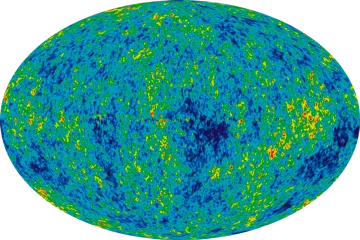
The most compelling evidence for this uniformity comes from the Cosmic Microwave Background (CMB) radiation. [5] This is ancient light, a faint afterglow permeating all of space, originating from when the universe was only about 380,000 years old. [7] For decades, measurements have shown this background radiation to be incredibly isotropic, meaning its temperature varies by less than one part in 100,000 across the entire observable sky. [5][8] Imagine taking the temperature of the entire sky using a perfect thermometer; no matter where you point it—toward the constellation Ursa Major, the plane of our own Milky Way, or the deepest void—the reading is essentially the same: about $2.725$ Kelvin. [5]
However, "virtually the same" isn't perfectly the same. These minuscule variations, known as anisotropies, are crucial. They represent the slight density fluctuations in the early universe that eventually seeded all the structures we see today—stars, galaxies, and galaxy clusters. [2] Animations of these fluctuations reveal a mottled map of hot and cold spots, representing regions that were slightly denser or less dense in the plasma soup of the early cosmos. [2]
# Precision Confirmation
The quest to confirm perfect isotropy is ongoing, driven by increasingly sensitive instruments. Scientists have looked for directional preferences in the expansion rate or in the properties of light traveling across cosmic distances. [4] One way to test this is by observing Type Ia supernovae, which act as standard candles to measure distances and expansion rates across different lines of sight. [4] If the universe were expanding faster in one direction than another, we would measure different distances or redshifts for supernovae at the same look-back time along those differing paths. [1]
A key finding often cited is that the observed temperature of the CMB exhibits a dipole anisotropy. [8] This is not evidence against isotropy in the fundamental sense, but rather a reflection of our own motion. Because the Earth and our solar system are moving relative to the cosmic rest frame defined by the CMB, the radiation appears slightly hotter (blueshifted) in the direction of our motion and slightly colder (redshifted) in the opposite direction. [7] Once this local motion is accounted for, the remaining pattern confirms the underlying isotropy with stunning precision. [8] Recent surveys, such as those studying the CMB, have confirmed that the universe is uniform on scales larger than about $1$ billion light-years. [4][8] The level of uniformity has been found to be even greater than initial cosmological predictions suggested. [8]
# Scale Viewing
The fact that looking out into space is equivalent to looking back in time is essential for understanding isotropy. When we observe light from a galaxy $10$ billion light-years away, we are seeing that galaxy as it was $10$ billion years ago. [7] If the universe is isotropic today, and the physical laws governing its evolution are consistent over time (a concept called homogeneity in time), then it should have been isotropic at those earlier epochs as well. [7] The CMB provides that snapshot of the infant universe, confirming the pattern held true when the universe was much, much younger.
To conceptualize this vast difference in scale, consider this comparison:
| Feature Observed | Typical Scale | Implication for Isotropy |
|---|---|---|
| Local Galaxy Clusters (e.g., Virgo Supercluster) | ~ $50$ Million Light-Years | Highly non-uniform (clumpy) |
| Observable Universe (CMB) | ~ $93$ Billion Light-Years Diameter | Highly uniform (isotropic) |
| Large-Scale Structure (Void/Filament Boundaries) | ~ $500$ Million Light-Years | Transitional region of structure |
The key insight here is that "looking the same in all directions" only applies when you zoom out far enough. Our immediate cosmic neighborhood is very lumpy; we have the Milky Way, the Local Group, and the Virgo Supercluster, which are clearly not identical to the empty void found between superclusters. [3] However, when the observing scale exceeds several hundred million light-years, these local lumps average out, and the universe settles into its smooth, uniform appearance. [3]
# Matter Clumping
While radiation (light) is uniform to nearly one part in $100,000$, matter distribution is decidedly not uniform on smaller scales. [3] On scales less than about $300$ million light-years, matter is organized into vast cosmic webs composed of filaments, walls, and enormous voids. [3] A void is a region largely devoid of galaxies, while filaments are long, thin structures where galaxy clusters line up. [3] This structure suggests that the universe is homogeneous (the same everywhere) only when averaging over volumes large enough to smooth out these filaments and voids. [3] If we only looked at a small patch of sky near the center of a massive galaxy cluster, our description of the universe would be severely skewed toward high density, contradicting the average picture seen in the CMB. [3]
The standard model relies on the Cosmological Principle, which assumes the universe is isotropic and homogeneous on the largest scales. [5] This principle simplifies the complex mathematics needed to describe cosmic expansion and evolution. The observed uniformity of the CMB provides the strongest support for this principle.
# Directional Stresses
Despite the overwhelming evidence for isotropy, modern cosmology must always account for potential systematic errors or real physical anomalies that might violate this assumption. [1] If the expansion of the universe were not the same in all directions—if it were slightly faster along one axis than another—it would imply a preferred direction in space, which contradicts the standard cosmological model. [1]
Some studies have examined the large-scale velocity field of galaxy clusters, looking for deviations that might suggest a "preferred" direction of motion across the cosmos, which could imply a directional asymmetry in the expansion. [1] These are subtle effects, often tested by mapping the orientation of gravitational lensing or by analyzing the specific patterns in the CMB polarization. [4] While current data strongly supports isotropy, these continuous checks are vital because any confirmed deviation would force a fundamental rewrite of our understanding of gravity or the very early universe, perhaps pointing toward physics beyond our current Standard Model of cosmology. [1]
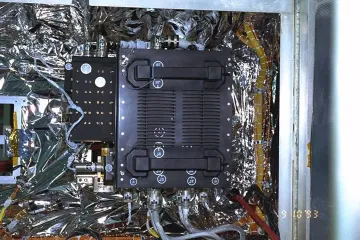
It is interesting to note the sheer difficulty in verifying this apparent simplicity. When we look at the nearly perfect microwave map, we are using instruments that can detect temperature differences smaller than a few microkelvins. [8] This extreme precision means that we are not just confirming that the universe is smooth; we are setting incredibly tight upper limits on how non-smooth it can possibly be. This mathematical constraint on deviation acts as a powerful filter on exotic theories of modified gravity or alternative dark energy models that might predict small, systematic directional preferences in the expansion rate over cosmic time. [1] The fidelity of the CMB map itself serves as a crucial constant against which all new cosmological theories must be measured.
#Videos
why does the universe look the same in all directions? - YouTube
Related Questions
#Citations
Universe's Expansion May Not Be The Same In All Directions - NASA
Universe's Expansion May Not Be The Same In All Directions
Is matter in universe evenly distributed in all directions? - Reddit
Scientists confirm the universe has no direction | Imperial News
Why does the Universe 'look much the same' no matter ... - Quora
How can the universe be observed as older and smaller ... - Facebook
If Looking Into Space is Like Looking Back in Time, Why is it the ...
The Universe is the Same, Everywhere We Look. Even More than ...
why does the universe look the same in all directions? - YouTube