What is the principle that the universe is the same in all directions?
The notion that the universe presents the same face regardless of which direction you turn your gaze, or where you happen to be standing within it, forms the bedrock of modern cosmology. This idea, known formally as the Cosmological Principle, is not merely an optimistic guess; it is a fundamental assumption derived from observations and is crucial for building workable models of the cosmos, such as the prevailing CDM model. At its heart, the principle is composed of two structural components: homogeneity and isotropy.
# Definition Components
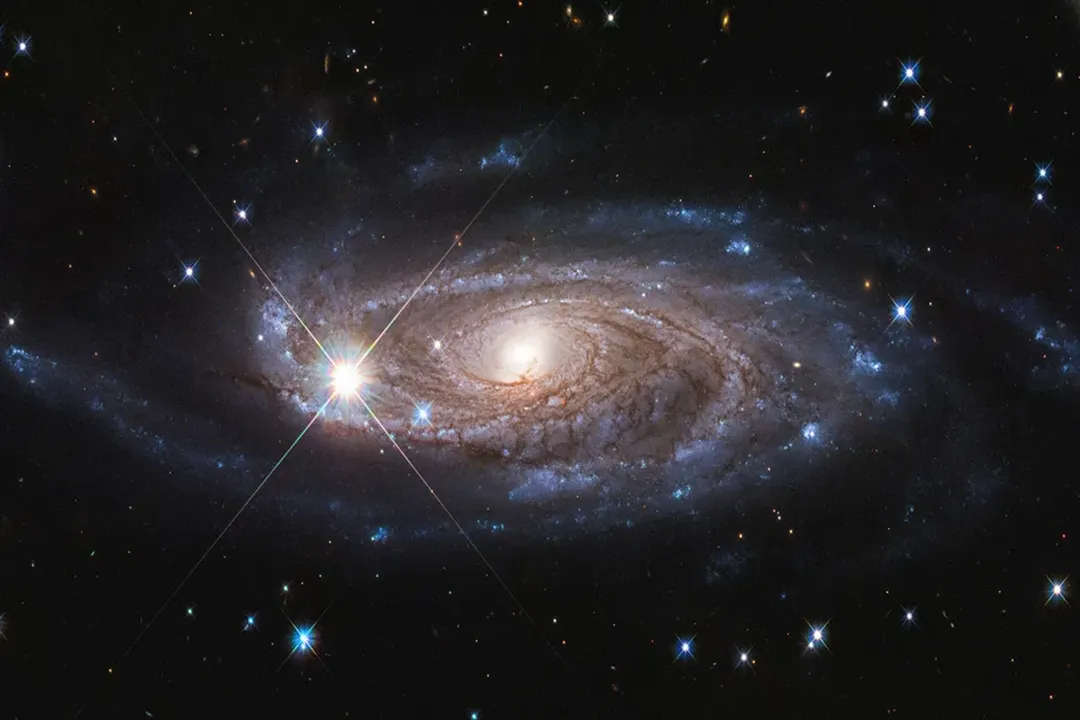
Homogeneity states that the distribution of matter does not vary significantly from one position to another. Put simply, there is no preferred location in the universe. If you could teleport across billions of light-years and take a census of galaxy density, you would find the same average count as you do here, provided you look at a sufficiently large patch of space.
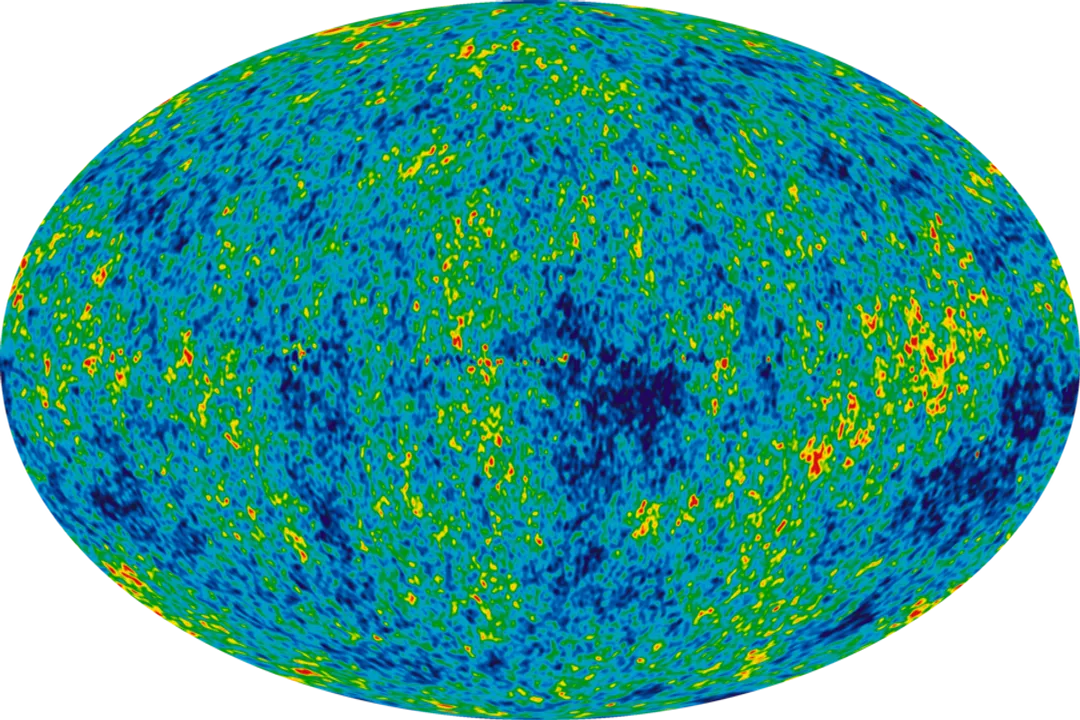
Isotropy means the universe looks roughly the same in every direction from the observer's point of view. There is no preferred direction in space. If you observe the cosmic microwave background (CMB) radiation in one direction, it should match the intensity and properties observed in any other direction.
It is vital to understand that these two properties are distinct, even though they are often bundled together in the principle. Isotropy implies homogeneity when applied to all observers throughout the universe, but a universe could theoretically be homogeneous (same average density everywhere) yet anisotropic (properties differ based on direction, perhaps due to large-scale bulk flows).
Crucially, the Cosmological Principle only holds on large scales. Locally, the universe is anything but uniform. Our solar system is dominated by the Sun; our Milky Way is concentrated in a galactic plane; and our Galaxy belongs to a Local Group, which itself is part of the massive Virgo Supercluster. These structures—galaxies, clusters, and superclusters—are lumps in the otherwise smooth cosmic distribution. Cosmologists only expect the principle to apply when averaging over scales larger than a few hundred million light-years, or roughly Megaparsecs (Mpc).
This large-scale perspective is intrinsically linked to the Copernican Principle, which posits that humanity and our location do not hold a privileged or central position in the universe. The Cosmological Principle extends this idea from just location to the very structure of the cosmos itself.
# Foundation Models
The assertion that the universe is homogeneous and isotropic in space is a powerful simplifying assumption that allows theorists to apply mathematics to the cosmos as a whole, rather than needing to account for local irregularities everywhere. When this principle is combined with Albert Einstein's theory of General Relativity, a specific set of dynamic solutions emerges: the Friedmann–Lemaître–Robertson–Walker (FLRW) metric.
This framework immediately implies a universe that is non-static. If the universe were static while simultaneously being homogeneous and isotropic, the laws of gravity derived from General Relativity suggest it would either immediately collapse or fly apart, meaning expansion or contraction must occur. The observational discovery of the Hubble-Lemaître Law—that galaxies are generally receding from us, and those farther away recede faster ()—fits perfectly into this non-static picture.
The expansion described by these models is often visualized using the analogy of raisins baking in rising bread. As the dough (spacetime) expands, the raisins (galaxies) move farther apart. Crucially, an observer sitting on any raisin would see all other raisins receding, with farther ones receding faster. This explains why we see an expansion directed away from us in all directions without implying that Earth or the Milky Way is at a special center point. The Big Bang, therefore, did not happen at one specific location in space; it happened everywhere space expanded from an initial hot, dense state.
A related concept is the Universality of physical laws, often considered a corollary to the CP. This assumption dictates that the physical laws and constants—like the speed of light or the gravitational constant—that we measure on Earth are the same ones governing processes in the most distant galaxy. Without this universality, observational astronomy would be nearly impossible, as we could never trust extrapolating our understanding across cosmic distances.
# Empirical Benchmarks
The strongest empirical support for the Cosmological Principle comes from observations of the Cosmic Microwave Background (CMB) radiation. This faint thermal glow, detected coming from every direction in the sky, is a relic of the early universe, emitted when the cosmos was only about 377,000 years old. The CMB's temperature uniformity is astonishingly precise, showing isotropy and homogeneity to about one part in 25,000 across the sky after accounting for our local motion. This snapshot of the early universe strongly validates the CP as it existed in the recombination era.
The finite speed of light, combined with the universe having a finite age (estimated around 15 billion years, derived by extrapolating Hubble's Law backward), introduces the concept of lookback time. Looking farther away means looking further back in time. This temporal aspect helps resolve classic puzzles like Olbers' Paradox—why the night sky is dark despite an infinite, unchanging universe filled with stars. The resolution lies in the fact that light from sufficiently distant (and therefore ancient) stars has not had time to reach us yet.
In a more advanced application of lookback time, when we compare observations of distant objects (the past elsewhere) to local ones (the present), we test the principle's consistency over time. If the CP holds, the average properties we see in the distant past should match the predictions for our own time, extrapolated across the intervening expansion.
# Scale Homogeneity
When examining structure formation, it becomes clear why the qualification "on large enough scale" is necessary. Matter is arranged hierarchically: planets orbit stars, stars form galaxies, galaxies group into clusters, and clusters group into superclusters, separated by vast Voids. The transition point where the universe starts to appear statistically smooth is a subject of ongoing measurement, but a fiducial scale often cited is around Mpc, with the homogeneity limit generally set above $250$ million light-years.
Consider the scale: the observable universe has a current comoving radius of roughly $14.25$ Gpc. The structures that violate local homogeneity, like superclusters, span perhaps a few hundred Mpc. When we look at the distribution of matter on scales smaller than the homogeneity scale, we observe patterns influenced by gravity and local collapse. However, if you take a cube of space significantly larger than this scale, the number of galaxies and the average density inside that cube should be statistically identical to any other cube of the same size elsewhere in the universe at the same cosmological time. This means that even though the Local Group is a messy, gravitationally bound system, if you took a cube $400$ Mpc on a side, it would contain the same average amount of "lumpiness" as a cube the same size centered on an arbitrary point in a distant supercluster, provided both cubes are viewed at the same cosmic age. This expectation allows the use of smooth geometry in our fundamental equations.
# Principle Challenges
Despite the powerful confirmation from the CMB, modern observations have introduced genuine tension regarding the absolute truth of the Cosmological Principle, particularly concerning isotropy.
One area of contention involves the existence of structures that seem far too large to fit comfortably within the assumed homogeneity scale. Structures such as the Sloan Great Wall ( Mpc), the Huge-LQG ( times longer than predicted), and even the Hercules–Corona Borealis Great Wall ( Mpc) have been reported. Discoveries like the Big Ring ( billion light-years in diameter) further test the model's assumption that structure sizes should eventually taper off. While some researchers argue that the existence of these individual, massive structures doesn't strictly violate the principle if the universe truly smooths out on scales much larger than the largest known object, they certainly complicate the simple picture.
More directly challenging isotropy is evidence suggesting that the expansion rate itself might depend on the direction we look. One study analyzing the X-ray emission properties (luminosity, , versus temperature, ) of over 800 galaxy clusters found that the derived distances showed strong directional dependence. If the distances derived from Hubble's Law based on a uniform expansion are systematically incorrect in certain directions, it implies the universe is not truly isotropic.
These findings must be distinguished from the CMB dipole, which is the most well-known large-scale anisotropy in the CMB data. The dipole shows the CMB is slightly warmer in one direction and cooler in the opposite one. However, the standard interpretation attributes this to the kinematic effect of our Solar System moving at about $370$ km/s relative to the CMB's rest frame. If this effect were fundamental to the universe, we would expect other, non-kinematic dipoles to align with it, but the directional dependence found in X-ray cluster data does not align with the CMB dipole direction, suggesting a more fundamental spatial asymmetry might be at play.
# Principle Versus Dogma
The foundation of the CP has faced philosophical scrutiny. Karl Popper famously criticized the principle, suggesting it substitutes a lack of knowledge for an actual principle of knowing something—that it was more of a dogma than a testable scientific hypothesis. Cosmologists, however, tend to view it as a necessary, working assumption that has been empirically successful, even if it faces anomalies.
The tension between observation and assumption is encapsulated by the Perfect Cosmological Principle (PCP), which extends the CP to include temporal homogeneity—the universe looks the same not just everywhere in space, but also at every moment in time. This PCP underpins the discredited Steady State Theory. Strong evidence against the PCP comes from observing distant quasars, which are more numerous at large lookback times, proving that the universe does evolve. This confirms that while the universe is homogeneous and isotropic at any given cosmological time, it is not unchanging across time.
It is a useful analytical distinction to consider the CP not as a binary truth, but as a statistical assertion of isotropy and homogeneity above a certain scale. The discovery of a single, massive structure like the Hercules–Corona Borealis Great Wall might seem to violate homogeneity, but if such structures are rare enough that the average property over a volume exceeding, say, $5$ Gpc remains constant, the CP holds statistically. The practical reality is that the mathematics of the FLRW metric, built on the CP, provide the only tractable starting point for predicting everything from the CMB to the existence of dark energy. Abandoning it would necessitate a massive paradigm shift, undermining a century of cosmological work, which is why observational tensions must be overwhelming before the principle is discarded. For now, the current best evidence, particularly the CMB, suggests the universe behaved very similarly to how we model it today, validating the core assumption that we are observing a fair sample of the cosmos.
Related Questions
#Citations
Cosmological principle - Wikipedia
Cosmological Principle - University of Oregon
The Cosmological Principle Fails? - Answers in Genesis
Glossary term: Cosmological Principle
cosmological_principle.html - UNLV Physics
Is matter in universe evenly distributed in all directions? - Reddit
Nature of the Universe-Chapter Nineteen
Universe is Uniform on Large Scales - Cosmology