What is the most reliable indicator for distinguishing a planet from a star when viewing objects in the west?
Answer
Steady, unwavering glow
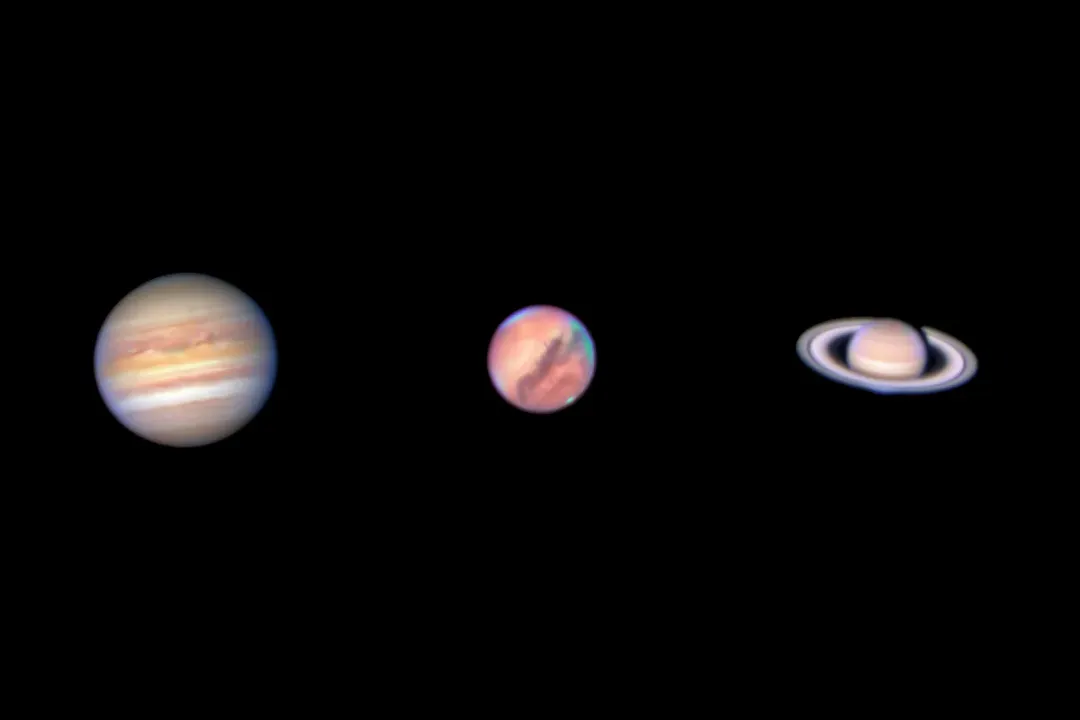
The most definitive way to differentiate a planet from a star, especially when observing bright objects low in the western horizon, is by observing the quality of the light emission. Stars are extremely distant point sources of light, causing their light rays to be easily scattered and distorted by the turbulence in Earth’s atmosphere, resulting in visible twinkling. Planets, being much closer celestial bodies, present themselves as tiny disks. This larger angular size means their light beams are less susceptible to atmospheric distortion, leading to a steady, unwavering glow that does not flicker.
Related Questions
If a dazzlingly bright object shines low in the west after sunset, what planet is it almost certainly?What is the most reliable indicator for distinguishing a planet from a star when viewing objects in the west?What feature might observers spot by using modest binoculars when viewing Jupiter in the western sky?Why does Mercury present the greatest challenge for skywatchers hoping to spot it in the western sky?What distinct color is associated with the planet Mars when visible as a star-like object in the west?What unique structural feature observable in telescopes makes observing Saturn particularly rewarding?What celestial condition defines a planet as an "evening object" visible in the western sky shortly after sunset?What apparent path does the Sun take across our sky throughout the year, which planets orbit relatively close to?When attempting to view Jupiter or Saturn in the western sky, why is setting a second viewing window 45 to 60 minutes after sunset recommended?Why are Mars and Saturn generally less prominent visitors to the post-sunset western sky compared to Venus and Jupiter?